
The digital world is evolving at record speed, making 2026 a critical year for businesses seeking to stay ahead. New technologies, shifting consumer preferences, and rising competition are transforming the landscape.
While these changes pose challenges, they also unlock opportunities for those willing to embrace innovative marketing and growth strategies. This guide is designed to help you navigate the future with confidence.
You will find proven, step-by-step approaches for sustainable marketing and growth in 2026. Explore emerging trends, data-driven marketing, customer-centric tactics, innovation, and effective measurement to set your business up for lasting success.
Understanding the 2026 Marketing Landscape
Navigating the marketing and growth landscape in 2026 requires acute awareness of rapid change. Businesses must adapt to evolving technologies, consumer demands, and regulatory shifts. To thrive, it is essential to understand the driving forces shaping the future of marketing and growth.
Key Trends Shaping Marketing in 2026
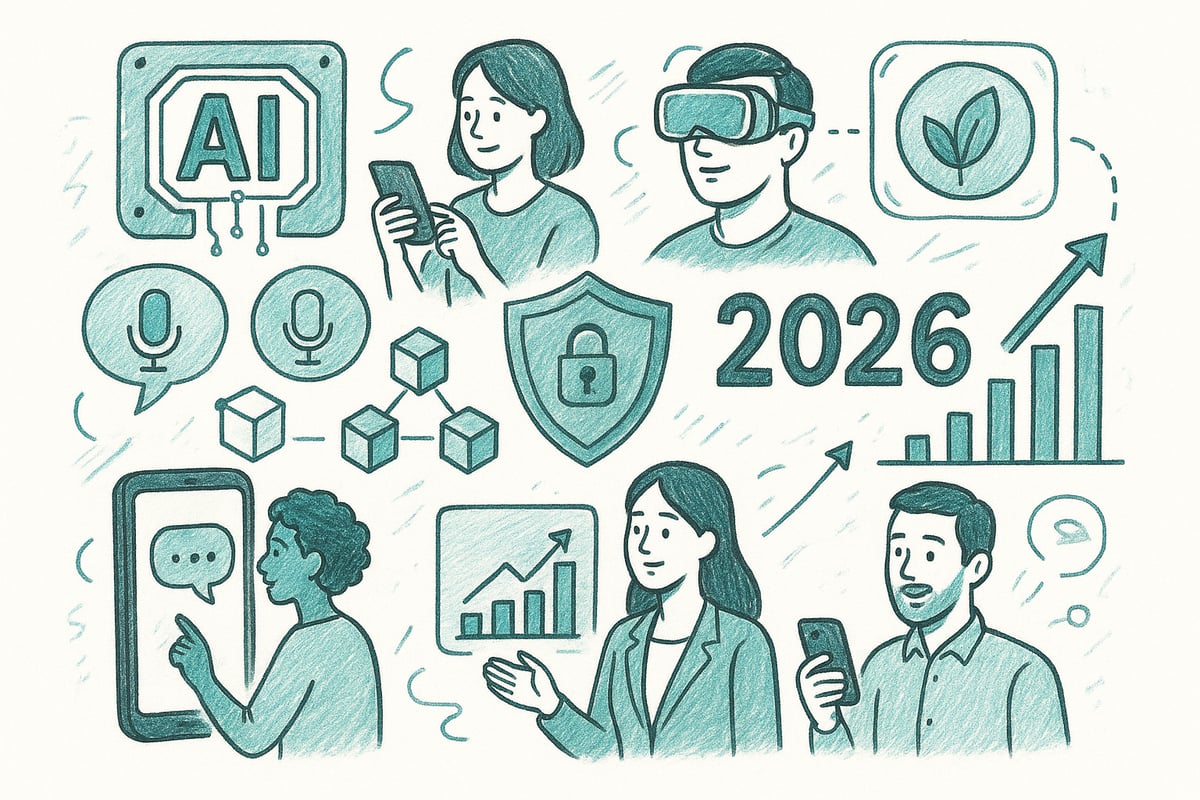
The marketing and growth environment in 2026 is defined by several transformative trends. Artificial intelligence and automation are now driving campaign management, making processes faster and more efficient. Privacy and data security have moved to the forefront as consumers demand greater protection.
Voice and visual search capabilities are expanding, offering new ways for customers to interact with brands. Immersive technologies like AR and VR are enhancing brand experiences, while omnichannel marketing delivers consistency across platforms. Sustainability and ethical branding are no longer optional, as consumers expect brands to align with their values.
- AI and automation streamline campaigns
- Privacy and data security are top priorities
- Voice and visual search reshape discovery
- AR/VR create immersive experiences
- Omnichannel marketing ensures brand cohesion
- Ethical and sustainable branding drive loyalty
A recent survey found that 70 percent of marketers plan to increase their investment in AI (HubSpot, 2024). For more on essential strategies, see the Digital Marketing Services Overview.
Changing Consumer Behaviours
Consumer expectations are evolving, and marketing and growth strategies must keep pace. There is a strong demand for hyper-personalisation, with customers seeking tailored experiences at every touchpoint. Attention spans have shortened, so brands need to capture interest in micro-moments.
Authenticity and transparency are now essential for building trust. Mobile-first and app-based engagement continue to rise as the primary means of connecting with audiences. These shifts require businesses to rethink how they approach marketing and growth.
- Hyper-personalisation at scale
- Micro-moment targeting
- Authentic, transparent brand messaging
- Mobile-first and app-centric strategies
Salesforce reports that 85 percent of consumers now expect personalised experiences (2023). Adapting to these behaviours is critical for long-term marketing and growth success.
Competitive Pressures and Market Saturation
The marketing and growth landscape is more competitive than ever. Digital-first businesses are proliferating, making it harder to stand out. Customer acquisition costs are rising, putting pressure on margins and budgets.
Brand differentiation has become a must, not a luxury. Building communities and fostering loyalty are key strategies for retaining customers in a saturated market. Companies that invest in these areas are better positioned to achieve sustainable marketing and growth.
- More digital-first competitors
- Higher acquisition costs
- Need for clear brand differentiation
- Community and loyalty as retention drivers
Statista notes that digital ad costs increased by 22 percent year over year in 2024. To succeed in marketing and growth, businesses must focus on what sets them apart.
Regulatory and Technological Disruptions
Marketing and growth strategies must also account for ongoing regulatory and technological changes. Updates to data privacy laws, such as GDPR, CCPA, and the Australian Privacy Act, are reshaping how businesses collect and use data.
The deprecation of third-party cookies and tracking limitations are pushing marketers towards first-party and zero-party data. Emerging technologies, including Web3 and blockchain, are opening new avenues for secure, transparent marketing.
- Stricter data privacy regulations
- Shift from third-party to first-party data
- Emphasis on zero-party data collection
- Adoption of new marketing technologies
According to Deloitte, 60 percent of marketers are now shifting to first-party data strategies (2024). Staying ahead of regulatory and technological shifts is fundamental for ongoing marketing and growth.
Building a Future-Proof Marketing Strategy
In 2026, sustainable marketing and growth hinge on strategies that are flexible, data-driven, and customer-focused. To excel, businesses must align objectives, leverage technology, and optimise continuously. Let us break down each essential component for building a future-proof approach.
Setting Clear Objectives and KPIs
Establishing clear objectives is the foundation of any effective marketing and growth plan. In 2026, goals should directly support core business outcomes, such as revenue, market share, or customer retention.
Apply the SMART framework—specific, measurable, achievable, relevant, and time-bound—to each objective. Select KPIs that reflect your unique business, like customer lifetime value, retention rate, or campaign ROI.
| Objective Type | Example KPI |
|---|---|
| Customer Retention | Retention Rate (%) |
| Revenue Growth | Monthly Revenue ($) |
| Brand Awareness | Share of Voice (%) |
Businesses that define and track KPIs see a 30% higher ROI, according to Forrester (2023). For a deeper dive into strategic planning, explore Strategic Digital Marketing Planning, which outlines methodologies essential for long-term success.
Customer Journey Mapping and Segmentation
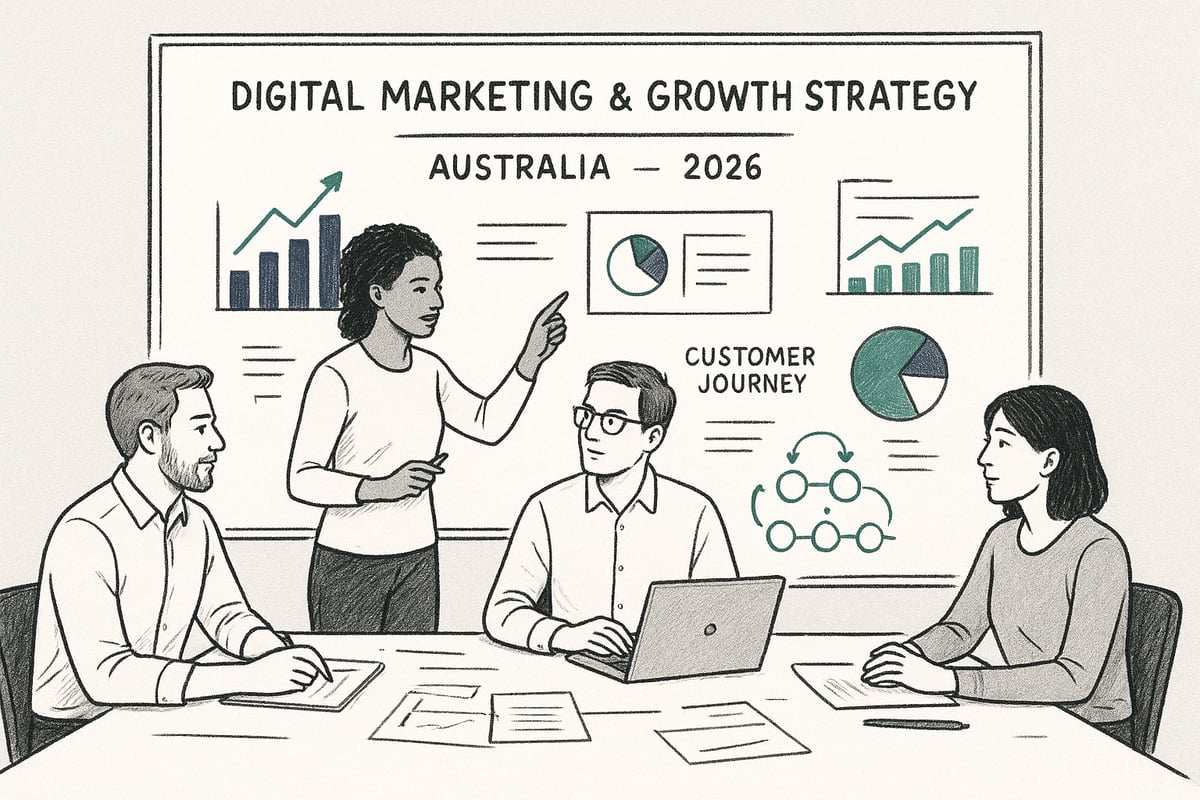
A future-proof marketing and growth strategy requires a deep understanding of the customer journey. Map every touchpoint, from first interaction to post-purchase support, to identify both pain points and moments of delight.
Leverage AI and predictive analytics to segment your audience more effectively. This enables targeted messaging and personalised experiences, which are vital for modern customers.
Segmented campaigns deliver 14% higher open rates (Mailchimp, 2024). Use visual journey maps and data dashboards to keep teams aligned, ensuring every segment receives relevant communication and offers.
Integrating Multi-Channel and Omnichannel Approaches
Consistency is king in marketing and growth. Customers expect seamless experiences across social, email, web, and even offline channels.
Omnichannel strategies unify messaging and leverage automation for smooth transitions between platforms. For example, a campaign that connects in-store promotions with mobile push notifications can boost engagement and loyalty.
Research from Harvard Business Review (2023) found that omnichannel approaches increase purchase frequency by 250%. Integrate platforms, automate workflows, and monitor customer interactions to create a frictionless journey.
Leveraging Data and Analytics for Decision-Making
Data is the backbone of effective marketing and growth. Real-time analytics platforms, such as GA4 or Mixpanel, offer immediate insights into campaign performance and customer behaviour.
Attribution modelling helps identify which channels drive results, so you can invest wisely. Use dashboards to visualise trends and inform decisions about content, timing, and channel selection.
McKinsey (2024) reports that data-driven marketers are 23 times more likely to acquire customers. Make data a daily tool, not just an afterthought, to drive continual improvement.
Agility and Continuous Optimisation
The pace of change in marketing and growth demands agility. Build marketing teams capable of rapid iteration, using A/B testing and feedback loops to refine campaigns quickly.
Embrace a culture of experimentation. Encourage teams to test new formats, channels, or creative ideas, learning from both wins and failures.
AgileSherpas (2023) found that agile teams deliver campaigns 40% faster. Continuous optimisation ensures your marketing and growth strategies evolve with the market, keeping your business ahead of competitors.
Harnessing Technology and Innovation for Growth
Staying ahead in marketing and growth requires embracing the latest technology and innovative strategies. In 2026, businesses must integrate intelligent tools and platforms to capture attention, personalise engagement, and drive measurable results. Let us explore how leading-edge solutions are reshaping the path to sustainable marketing and growth.
Artificial Intelligence and Automation
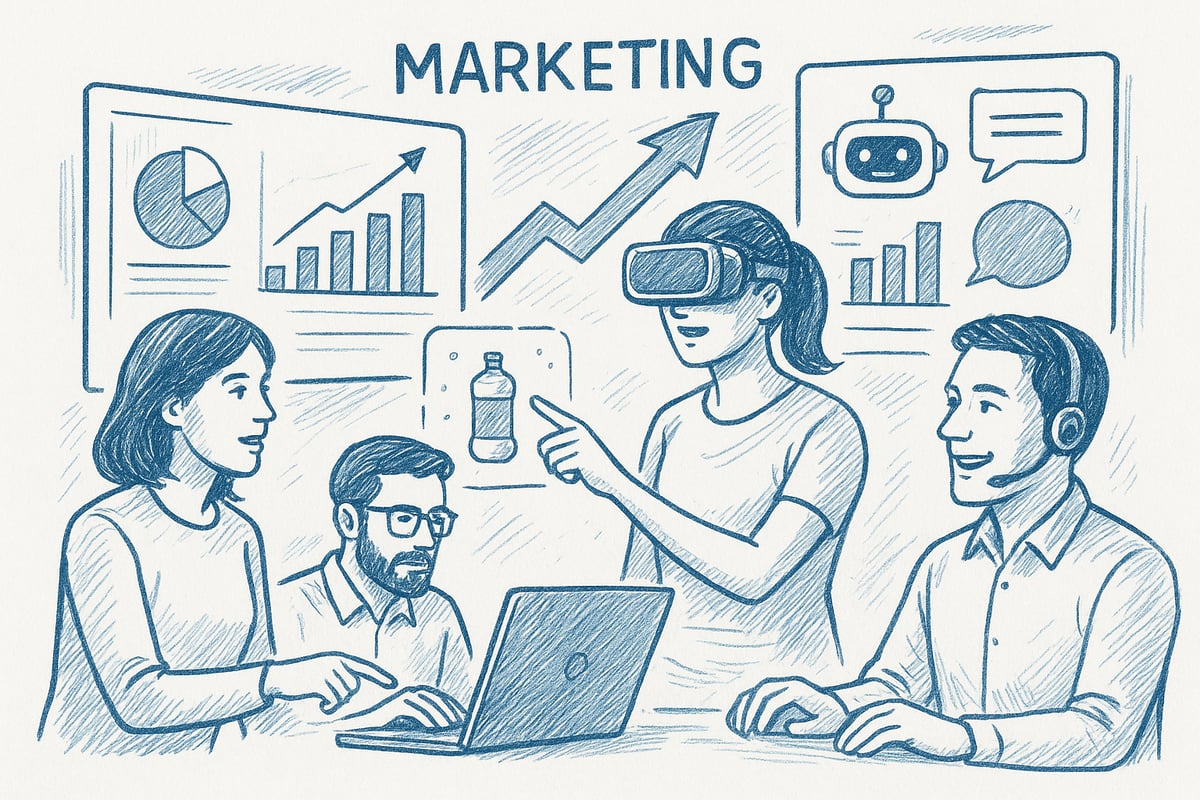
Artificial intelligence and automation have become fundamental to marketing and growth strategies. AI-powered tools now generate personalised content, automate ad buying, and manage campaigns with remarkable efficiency. Chatbots handle real-time customer queries, ensuring consistent engagement across channels.
For marketers, AI not only reduces manual workload but also delivers smarter targeting and creative testing. Automated workflows speed up campaign launches and provide instant insights for optimisation. According to Gartner, AI adoption can reduce campaign costs by 35%, freeing resources for innovation.
The shift from experimental AI pilots to core infrastructure is accelerating. As highlighted in AI Trend: From Experiment to Infrastructure, businesses are embedding AI deeply within their operations to scale marketing and growth. This transformation empowers teams to respond faster to market changes and personalise experiences at scale.
Advanced Personalisation and Predictive Marketing
Personalisation has evolved beyond basic segmentation. In 2026, marketing and growth strategies rely on real-time data and predictive analytics to anticipate customer needs. Offers and messaging are tailored dynamically, adapting to each user’s behaviour and preferences.
Predictive models forecast buying intent, helping brands serve the right content at the perfect moment. Dynamic website and email content respond instantly to user actions, increasing relevance and engagement. Segment reports that predictive personalisation can boost conversions by 20%, making it a key driver of marketing and growth success.
Marketers can use AI-powered analytics to identify high-value segments, optimise campaigns, and allocate budget more effectively. This data-driven approach ensures that every interaction is meaningful, increasing customer loyalty and lifetime value.
Immersive Experiences: AR, VR, and Interactive Content
Immersive technologies are redefining how brands connect with audiences. Augmented reality and virtual reality are now central to marketing and growth, enabling interactive product demos, virtual try-ons, and immersive storytelling.
Retailers deploying AR see 40% higher engagement rates, while interactive video and gamification drive participation and retention. Gen Z, in particular, prefers brands that offer these immersive experiences, with 60% favouring interactive and engaging content according to Accenture.
Brands are using these tools to stand out in crowded markets, creating memorable touchpoints that inspire loyalty and advocacy. By integrating AR, VR, and interactive elements, marketers can foster deeper connections and differentiate their offerings.
Emerging Platforms and Technologies
The rise of emerging platforms is shaping the future of marketing and growth. Web3, NFTs, and blockchain technologies are opening new avenues for customer engagement, loyalty programs, and secure transactions. Voice commerce and smart assistants are streamlining the path to purchase, allowing consumers to shop and interact hands-free.
Early adopters are already allocating significant budgets to experiment with these tools. eMarketer predicts that by 2026, 25% of digital marketing budgets will be dedicated to new technology. Brands that embrace these innovations can gain a competitive edge, attract tech-savvy audiences, and future-proof their marketing and growth strategies.
By continuously exploring and integrating new platforms, businesses can stay relevant and resilient in a rapidly evolving digital landscape.
Data-Driven Growth: Measurement, Attribution, and Optimisation
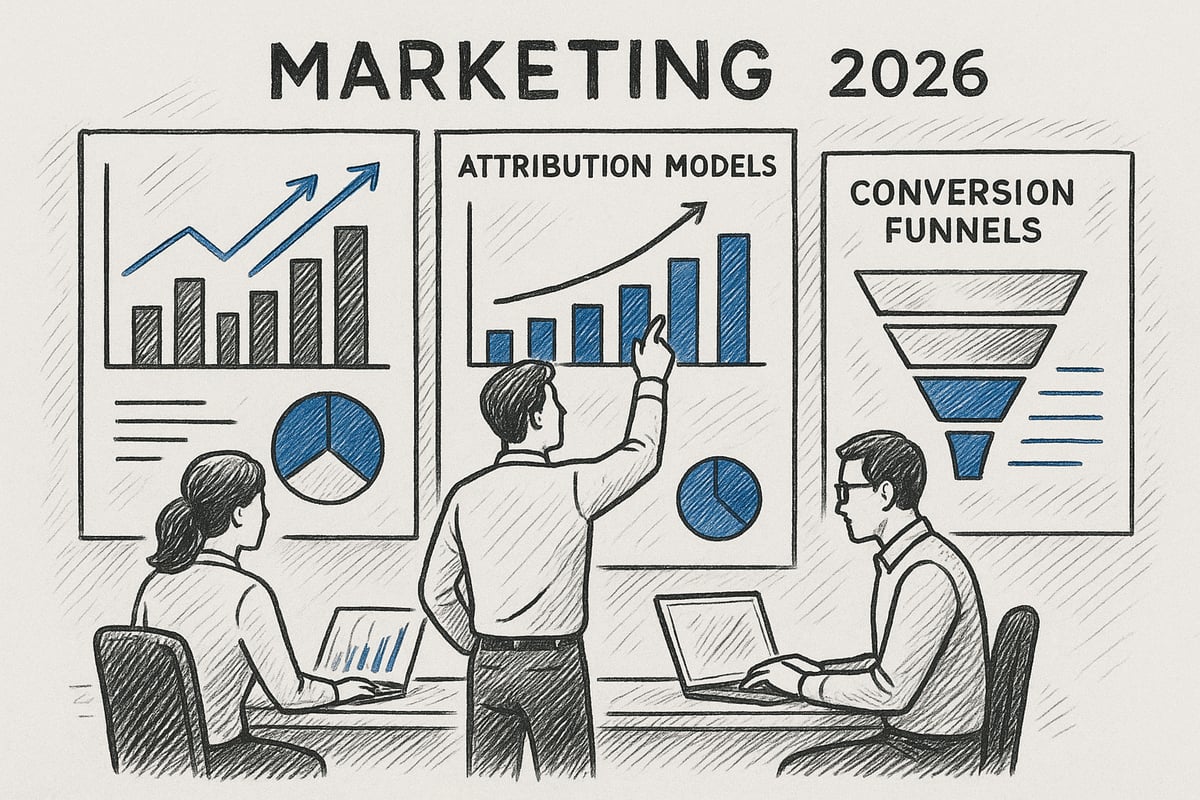
Achieving success in marketing and growth for 2026 depends on how effectively businesses leverage data. With evolving technology and customer expectations, measurement and optimisation are no longer optional—they are mission-critical. Building a data-driven culture allows organisations to identify opportunities, optimise campaigns, and realise sustainable results.
Establishing a Robust Analytics Framework
A solid analytics framework forms the backbone of any effective marketing and growth strategy. This means integrating platforms like GA4 or Mixpanel to track user behaviour across all digital channels. Unified dashboards allow teams to monitor performance holistically and identify trends in real time.
Data hygiene and governance are equally important. Regularly auditing your data sources ensures accuracy and trustworthiness. With privacy laws tightening, secure data storage and compliant tracking are essential.
To streamline this process, businesses can explore Data-Driven Marketing Tools that automate collection, reporting, and visualisation. Companies with unified analytics platforms see growth rates 33 percent faster than their peers, reinforcing the value of a data-centric approach to marketing and growth.
Attribution Models for 2026
Attribution models are evolving rapidly as marketers adapt to new privacy restrictions and channel fragmentation. Multi-touch attribution, which assigns value to each customer interaction, remains popular. However, data-driven attribution is gaining traction for its ability to use machine learning and real user data.
The challenge in 2026 is overcoming tracking limitations due to cookie deprecation and regulatory change. Selecting the right attribution model is crucial for understanding which efforts drive results. Businesses should evaluate options such as last-click, linear, or algorithmic models based on their specific marketing and growth goals.
By improving ROI accuracy by 15 percent, data-driven attribution empowers leaders to allocate budgets efficiently and optimise campaigns with confidence.
Conversion Rate Optimisation and Funnel Analysis
Conversion rate optimisation (CRO) and funnel analysis are at the heart of performance-driven marketing and growth. The process begins by identifying drop-off points in the user journey and addressing friction through targeted improvements.
Personalised landing pages and dynamic calls to action boost engagement, while ongoing A/B testing ensures continuous refinement. User feedback, heatmaps, and session recordings provide deeper insights into customer behaviour.
A practical approach includes:
- Mapping each funnel stage
- Testing page elements regularly
- Using analytics to prioritise changes
On average, CRO initiatives drive an 18 percent sales increase, making them indispensable for brands seeking measurable marketing and growth outcomes.
Leveraging First-Party and Zero-Party Data
With third-party cookies on the decline, first-party and zero-party data are now the gold standard for marketing and growth strategies. First-party data is collected directly from customer interactions, while zero-party data is intentionally shared by users through surveys, quizzes, or preference centres.
Building trust is essential. Transparent data practices, clear opt-ins, and value exchanges encourage customers to share information. Strategies like loyalty programs, gated content, and interactive experiences increase voluntary data sharing.
The impact is clear: 61 percent of consumers are more likely to buy from brands they trust with their data. By activating owned data, businesses can deliver personalised experiences, improve retention, and fuel long-term marketing and growth.
Customer-Centric Growth: Engagement, Retention, and Advocacy
Delivering sustainable marketing and growth in 2026 hinges on putting the customer at the centre of every strategy. Businesses that excel in engagement, retention, and advocacy outperform competitors by focusing on experience, loyalty, and continuous improvement. Explore how these pillars drive lasting results in an ever-evolving digital landscape.
Creating Exceptional Customer Experiences
Exceptional customer experiences are the foundation of marketing and growth success. In 2026, consumers expect brands to anticipate their needs, deliver seamless interactions, and personalise every touchpoint. Businesses are leveraging AI-powered tools to make personalisation scalable and context-aware. For example, AI-powered personalisation at scale is enabling marketers to deliver relevant content and proactive support in real time.
To stand out, brands must:
- Map the entire customer journey, identifying critical moments.
- Offer proactive support through chatbots and self-service.
- Implement loyalty programs that reward individual preferences.
By focusing on these areas, companies can foster trust, increase satisfaction, and lay a strong foundation for ongoing marketing and growth.
Community Building and Brand Advocacy
Building a passionate community around your brand amplifies marketing and growth efforts. In 2026, consumers value authentic connections and are more likely to recommend brands they trust. Creating online forums, hosting live events, and encouraging user-generated content are effective ways to foster engagement.
Consider strategies such as:
- Launching ambassador and referral programs.
- Showcasing customer stories and testimonials.
- Facilitating peer-to-peer support networks.
For businesses looking to grow your local business online, harnessing community power can extend reach and deepen loyalty. Advocacy not only reduces acquisition costs but also drives organic growth, making it a critical component of a robust marketing and growth strategy.
Retention Marketing Strategies
Retention is at the heart of sustainable marketing and growth. With rising customer acquisition costs, focusing on existing customers delivers higher ROI. Effective retention marketing uses lifecycle email and SMS campaigns, targeted re-engagement offers, and subscription models to keep customers coming back.
Key tactics include:
- Personalised onboarding to ensure early success.
- Automated win-back campaigns for lapsed users.
- Exclusive perks for loyal customers.
Increasing retention rates even marginally can boost profits substantially. By prioritising retention marketing strategies, brands create a stable foundation for long-term marketing and growth.
Feedback Loops and Continuous Improvement
Continuous improvement is vital for marketing and growth in 2026. Gathering actionable feedback through NPS, CSAT, and direct surveys allows businesses to identify strengths and address weaknesses quickly. Acting on feedback demonstrates commitment to the customer, which enhances loyalty and advocacy.
Best practices involve:
- Closing the loop with customers after feedback.
- Using insights to refine products and services.
- Regularly testing new approaches for better results.
Embedding feedback loops into business processes ensures that marketing and growth strategies remain agile and customer-focused. This approach supports sustainable success in a highly competitive landscape.
As you look to put these 2026 marketing strategies into action, remember you don’t have to navigate the evolving digital landscape alone. At My Heart Studio, we combine deep expertise in web design, SEO, and digital marketing with a personalised, data-driven approach to help Australian businesses like yours thrive. Whether you want to refresh your website, boost your online presence, or develop a future-proof growth plan, we’re here to support your journey every step of the way. If you’re ready to unlock measurable results and sustainable growth, Book a Free Strategy Call and let’s start planning your next chapter together.