
In 2026, digital transformation is accelerating and consumer demands are higher than ever, creating a new landscape for marketing growth.
This guide delivers expert-backed strategies and practical insights, equipping you to drive marketing growth that is measurable and sustainable, even as industry challenges evolve.
The need to adapt quickly is urgent. You want proven tactics that deliver real results. These strategies can boost ROI, customer loyalty, and give your business a true competitive edge.
Ready to unlock the next level of success? Explore the essentials, frameworks, and future-proofing techniques you need for marketing growth in 2026.
Understanding Growth Marketing in 2026
The landscape of marketing growth is evolving quickly in 2026. Brands must move beyond outdated tactics and embrace a holistic, data-driven mindset to stay ahead. In this section, we’ll break down what modern marketing growth means, how it differs from other approaches, and the essential components for building a high-performing growth engine.
Defining Growth Marketing: Beyond Buzzwords
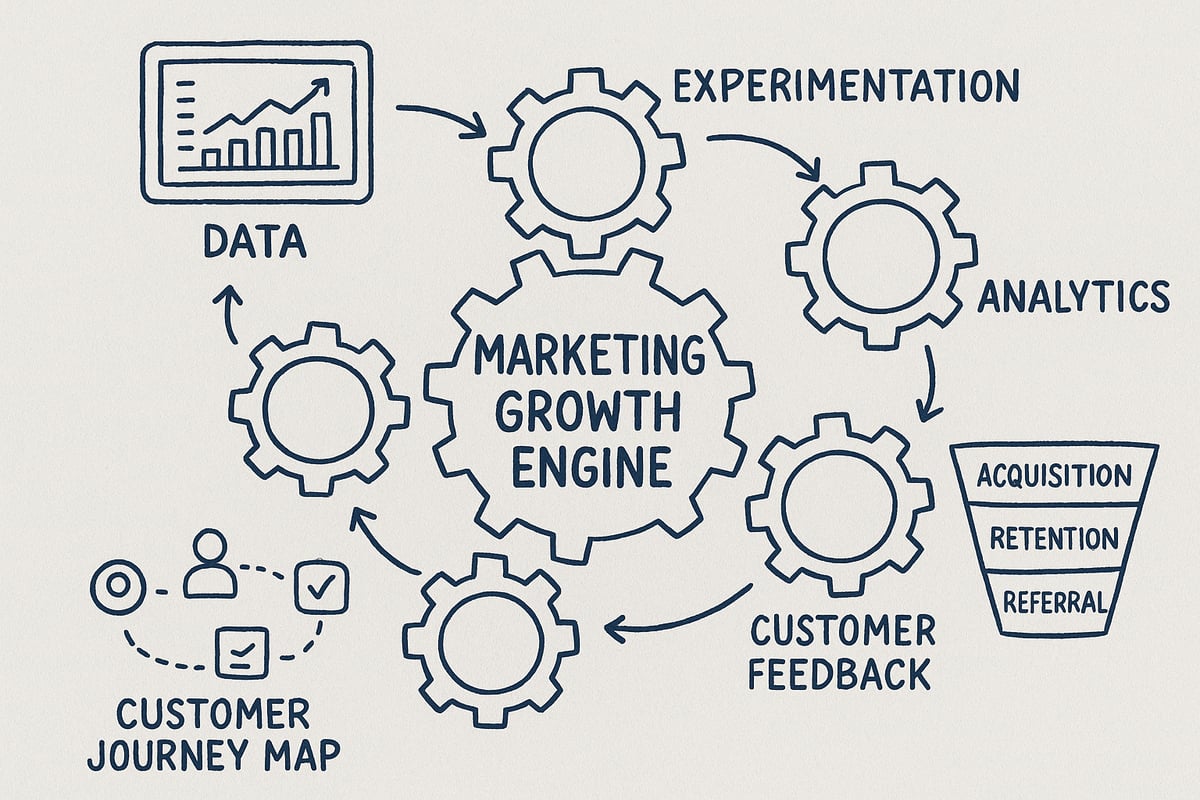
Marketing growth is more than just a trending term. It is a structured, data-driven approach that covers every stage of the customer journey. Instead of relying only on brand or performance marketing, marketing growth blends creativity with scientific testing to drive measurable outcomes.
Unlike traditional marketing, which often focuses on awareness or one-off campaigns, marketing growth is full-funnel. It looks at acquisition, activation, retention, monetisation, and referrals as interconnected levers. This shift has led to the rise of dedicated growth roles, where teams take ownership of the entire customer lifecycle.
The most effective organisations now prioritise holistic, customer-centric strategies and measure success by clear business outcomes. For a deeper dive into these principles, see this Growth marketing strategies overview.
Growth Marketing vs. Growth Hacking vs. Product Management
It is important to separate marketing growth from growth hacking. Growth marketing is about building long-term, scalable systems, not just quick wins. Growth hacking, by contrast, often focuses on short-term tactics that may not be sustainable.
Marketing growth also intersects with product management, especially in tech and SaaS. Product-led growth strategies use product features and user experience to drive acquisition and retention. Effective collaboration between marketing and product teams helps ensure that experiments are aligned with user needs and business goals.
For example, a SaaS company might use marketing growth to run A B tests on onboarding flows, while product managers analyse user feedback to improve features. In eCommerce, marketers and product teams work together to reduce friction in the checkout process, increasing both sales and customer loyalty.
Key Components of Modern Growth Marketing
Modern marketing growth demands a multi-disciplinary skill set. Teams are often made up of “T-shaped marketers” who have broad knowledge across channels and deep expertise in at least one area. Data, analytics, and measurement form the backbone of every decision.
Continuous experimentation is critical. Teams run A B tests, iterate quickly, and use customer feedback to refine campaigns. Strategic agility is a must: successful marketers pivot based on insights, not assumptions.
A table can help summarise the key pillars:
| Pillar | Description |
|---|---|
| Data & Analytics | Inform every tactic and measure outcomes |
| Experimentation | Test, learn, and iterate quickly |
| Customer Feedback | Integrate into ongoing optimisation |
| Full-Funnel Focus | Manage acquisition to referral |
| Agility | Adapt strategies using real-time data |
Ultimately, marketing growth is about taking full-funnel responsibility and driving sustainable business results. By adopting these principles, organisations can unlock new levels of efficiency and impact in 2026.
Step-by-Step Framework: Building a High-Growth Marketing Engine
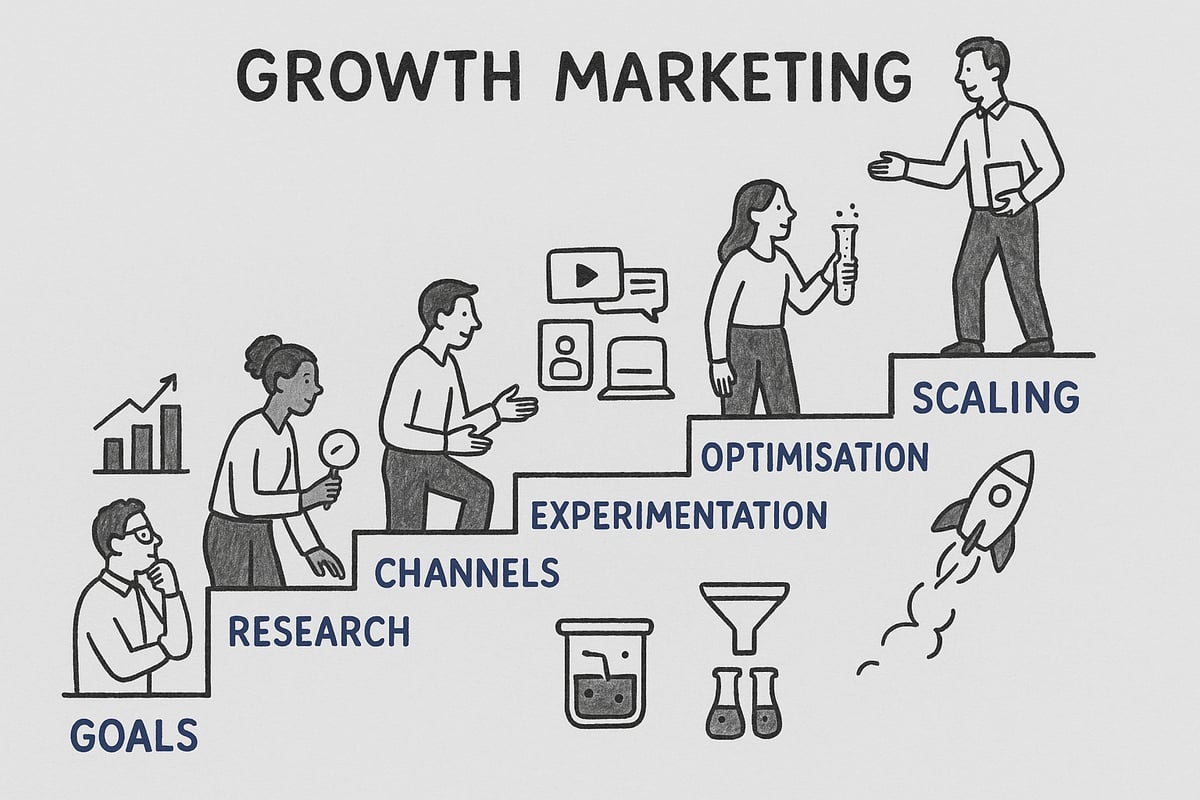
Unlocking exceptional marketing growth in 2026 requires a methodical, adaptable framework. Whether you're scaling a startup or transforming an established brand, these six steps form the foundation of a high-growth marketing engine. Each step builds on the last, ensuring your marketing growth strategy is both robust and future-ready.
Step 1: Setting Growth Goals and KPIs
The first step in any marketing growth journey is aligning your marketing objectives with overall business goals. Start by defining what success looks like for your brand in 2026. Are you focused on customer acquisition, retention, revenue, or brand advocacy?
Select the right metrics to track progress. Popular choices include Customer Acquisition Cost (CAC), Lifetime Value (LTV), retention rates, and Net Promoter Score (NPS). Establish robust analytics and clear attribution models to ensure accurate measurement.
For a detailed guide on setting measurable objectives and aligning them with your organisation's strategy, explore these strategic marketing planning insights.
Step 2: Deep Customer and Market Research
Effective marketing growth relies on a deep understanding of your audience and market trends. Combine qualitative research, like interviews and customer surveys, with quantitative data from analytics platforms.
Map out the customer journey to pinpoint friction points. Use segmentation to tailor your messaging and offers. Regularly revisit your research to adjust to shifting consumer behaviours and market conditions.
- Conduct customer interviews
- Analyse website and app analytics
- Segment audiences by behaviour or demographics
This research-driven approach ensures your marketing growth efforts remain relevant and impactful.
Step 3: Channel Selection and Prioritisation
Not all channels deliver equal results. Evaluate each marketing channel based on data, not assumptions. Balance organic methods such as SEO and content with paid options like PPC and social ads.
Stay open to testing emerging platforms, including AI chatbots or new social networks. Prioritise channels with the greatest potential for efficient marketing growth, and review performance regularly.
| Channel | Strengths | Considerations |
|---|---|---|
| SEO/Content | Long-term traffic | Needs ongoing effort |
| PPC/Social Ads | Fast results | Can be costly |
| Personalised engagement | List management needed |
Step 4: Experimentation and Rapid Iteration
Continuous experimentation is the heartbeat of marketing growth. Develop hypotheses to test new ideas, such as messaging, creative, or offers. Launch minimum viable experiments (MVEs) using A/B or multivariate testing.
Track results with cohort analysis to measure impact over time. Remain agile by iterating quickly based on what the data reveals.
- Design A/B tests for landing pages
- Test new ad creatives
- Analyse results and pivot fast
This culture of experimentation drives ongoing marketing growth and innovation.
Step 5: Full-Funnel Optimisation
Optimise every stage of your funnel, from acquisition through to referral. Use automation and personalisation tools to scale your efforts efficiently. Integrate customer feedback loops for continuous refinement.
Focus on:
- Acquisition: Attracting the right leads
- Activation: Creating seamless onboarding
- Retention: Building loyalty programs
- Monetisation: Upselling and cross-selling
- Referral: Incentivising word-of-mouth
Full-funnel optimisation ensures your marketing growth strategy delivers results at every touchpoint.
Step 6: Scaling What Works
Once you've identified what drives marketing growth, it's time to scale. Systematise successful campaigns and allocate more resources to high-performing initiatives. Build repeatable growth loops by automating processes and documenting learnings.
Encourage cross-team collaboration to unlock new opportunities. Regularly review performance to ensure scalability aligns with evolving business goals.
By following this step-by-step framework, your organisation can create a resilient marketing growth engine ready for the challenges and opportunities of 2026.
Data-Driven Strategies for Sustainable Growth
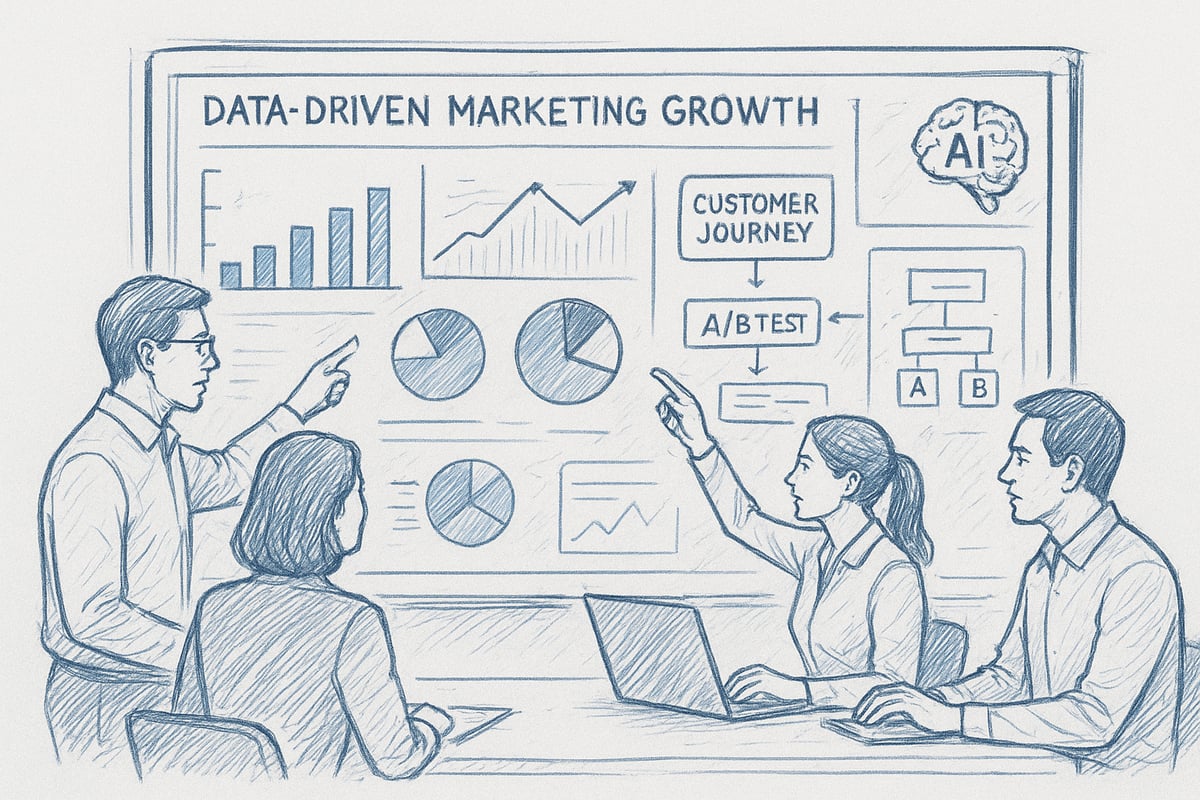
Staying ahead in marketing growth requires more than intuition. In 2026, leading brands rely on data-driven strategies to make every decision count. By harnessing analytics, fine-tuning segmentation, testing relentlessly, listening to customers, and embracing AI, businesses can achieve sustainable results through actionable insights.
Leveraging Analytics and Attribution
Robust analytics platforms are the backbone of marketing growth in 2026. Teams must set up advanced tools like GA4 or Mixpanel to track user behaviour across all touchpoints. This enables a clear view of how prospects interact with content, ads, and product pages.
Accurate attribution models are essential for understanding what drives conversions. Multi-touch attribution, for instance, allocates value to every step in the customer journey, not just the last click. This approach helps marketers allocate budget more effectively and optimise campaigns for higher ROI. For additional insights on how data principles are shaping marketing ROI, see these Data-Driven Principles for B2B Marketing ROI in 2026.
By integrating analytics and attribution, businesses gain the clarity needed to fuel marketing growth and outperform competitors.
Advanced Segmentation and Personalisation
Segmentation is no longer just about demographics. In modern marketing growth, leading brands combine behavioural, psychographic, and lifecycle data for deeper audience insights. This enables precise targeting and personalisation at every stage.
For example, segmenting users by purchase history or engagement level allows marketers to craft tailored messages and offers. Dynamic website content and automated email flows can adjust in real time based on a user’s intent or actions.
Personalisation drives relevance, boosts engagement, and increases conversion rates. As competition intensifies, advanced segmentation becomes a key differentiator for marketing growth outcomes.
Continuous A/B and Multivariate Testing
A culture of experimentation is vital for sustainable marketing growth. Continuous A/B and multivariate testing empowers teams to validate creative ideas, refine messaging, and optimise user experiences with confidence.
Start with hypotheses about what might improve conversions, then run controlled tests on landing pages, ad creatives, or call-to-actions. Analysing results for statistical significance ensures that changes are based on evidence, not assumptions.
Over time, iterative testing leads to compounding gains. Businesses that prioritise experimentation are better positioned to adapt quickly and drive ongoing marketing growth.
Customer Feedback and Voice of Customer
Listening to customers is essential for refining marketing growth strategies. Gathering feedback through surveys, Net Promoter Score (NPS), and social listening tools reveals pain points and new opportunities.
Integrating these insights into marketing and product development helps align offerings with real customer needs. For example, brands can identify why users churn or what features they value most, then adjust messaging and campaigns accordingly.
Companies that act on customer feedback foster loyalty and achieve higher retention. This direct voice of the customer is a powerful lever for sustainable marketing growth.
Predictive Analytics and AI
Predictive analytics and artificial intelligence are transforming marketing growth in 2026. By leveraging machine learning, brands can forecast customer behaviour, predict churn, and recommend content or offers with greater accuracy.
AI-driven tools enable real-time campaign optimisation, automatically adjusting budgets or creative assets based on performance data. Predictive personalisation ensures each customer receives timely, relevant experiences.
Embracing these technologies gives businesses a competitive edge. As AI continues to evolve, its role in marketing growth will only expand, unlocking new levels of efficiency and impact.
Full-Funnel Growth Tactics: Acquisition to Advocacy
Full-funnel marketing growth tactics are essential for brands aiming to win customers at every touchpoint. By strategically aligning acquisition, activation, retention, monetisation, and advocacy, businesses can unlock compounding results. Let’s break down the latest, most effective approaches for each stage of the funnel, ensuring your marketing growth engine is primed for 2026.
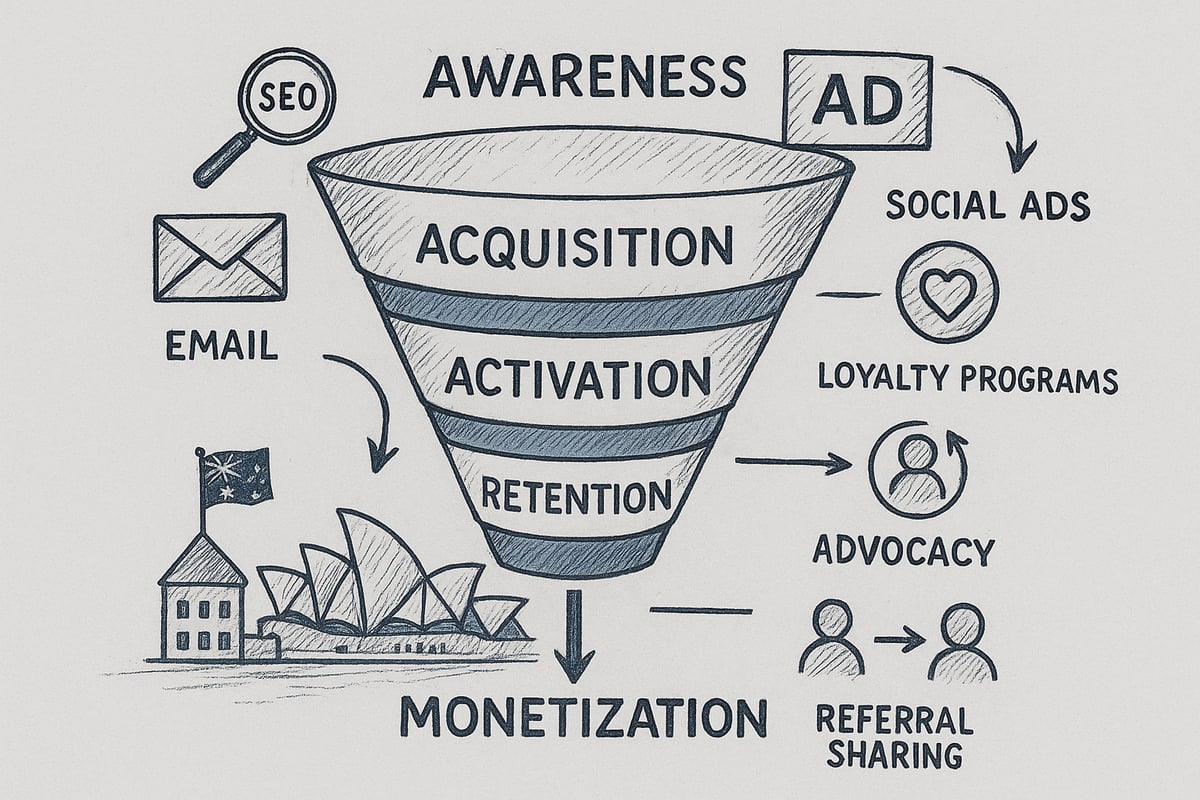
Top of Funnel: Awareness and Acquisition
The top of the funnel is all about capturing attention and driving high-quality leads into your ecosystem. In 2026, marketing growth at this stage relies on a blend of cutting-edge SEO, programmatic advertising, and compelling content.
- SEO: Focus on Core Web Vitals, semantic search, and AI-generated content to rank for intent-driven queries.
- Paid Acquisition: Leverage programmatic ads, social media campaigns, and influencer partnerships for scalable reach.
- Content Marketing: Prioritise thought leadership, video, and interactive experiences to engage prospects.
Companies investing in multi-channel acquisition strategies are seeing up to 30 percent higher lead volumes, according to LinkedIn. To stand out, ensure your marketing growth tactics integrate both organic and paid methods, always backed by real-time analytics for ongoing optimisation.
Middle of Funnel: Activation and Engagement
Moving prospects from interest to action requires a sharp focus on activation and engagement. Here, the effectiveness of your marketing growth plan depends on seamless user experiences and timely communication.
- Landing Pages: Design high-converting, mobile-first landing pages with clear CTAs.
- Email Automation: Implement nurturing sequences that deliver value at every step.
- Onboarding: Personalise onboarding to reduce friction and accelerate activation.
For example, SaaS platforms have boosted activation rates by up to 25 percent through targeted onboarding improvements. Sustained marketing growth in this stage is achieved by analysing user behaviour, segmenting audiences, and delivering content tailored to each journey phase.
Bottom of Funnel: Retention, Monetisation, and Referral
Retaining customers and maximising their lifetime value is critical for long-term marketing growth. At the bottom of the funnel, focus on strategies that deepen relationships and encourage advocacy.
- Loyalty Programs: Build customer communities and reward repeat engagement.
- Upselling/Cross-Selling: Use data-driven recommendations to increase average order value.
- Referral Marketing: Incentivise satisfied customers to refer new business.
Retained customers are five times more likely to refer others, according to Salesforce. By embedding these tactics into your marketing growth strategy, you foster a virtuous cycle of retention and acquisition, driving sustainable results.
Cross-Funnel: Omnichannel and Lifecycle Marketing
Creating a unified customer experience across all touchpoints is the backbone of modern marketing growth. Omnichannel tactics ensure messaging is consistent, relevant, and timely from awareness through to advocacy.
- Integrated Messaging: Align campaigns across web, email, social, and even offline channels.
- Customer Data Platforms (CDPs): Build unified customer profiles for precise targeting.
- Loyalty and Personalisation: Use lifecycle insights to deliver meaningful rewards and offers.
Retailers are increasing customer lifetime value by connecting omnichannel loyalty programs to every stage of the journey. For more on optimising every step, explore these customer journey optimisation tips. Embedding these principles in your marketing growth approach ensures you adapt quickly, retain more customers, and maximise advocacy.
Future-Proofing Your Marketing Growth Strategy for 2026
The pace of change in digital marketing shows no sign of slowing as 2026 approaches. To ensure your marketing growth remains sustainable, it is vital to anticipate shifts in technology, regulation, and consumer behaviour. Future-proofing your strategy means being proactive, adaptable, and committed to continuous learning across all areas of your organisation.
Embracing Emerging Technologies and Trends
Adopting new digital solutions is central to future-proofing marketing growth. Artificial intelligence is now foundational, powering everything from campaign optimisation to content creation. Automation tools streamline workflows, allowing teams to focus on innovation and strategy.
Voice search and conversational marketing are becoming standard, requiring brands to optimise for natural language queries. Chatbots deliver instant support, enhancing customer journeys and data capture. Web3 and decentralised platforms are reshaping data ownership and community engagement, while privacy-first marketing is now a necessity, not an option.
For a comprehensive view of what's next, see Future Digital Marketing Trends to Watch in 2026, which explores AI integration, hyper-personalisation, and privacy-first strategies in detail.
Data Privacy, Compliance, and Trust
Strict privacy regulations are redefining how brands collect and use data. The GDPR and the Australian Privacy Act require businesses to prioritise transparency and consent. These changes directly affect targeting, attribution, and personalisation in marketing growth strategies.
To build trust, companies must adopt clear data practices. This means explaining data collection, providing opt-out choices, and regularly auditing compliance. Privacy-centric marketing growth also means exploring alternatives to third-party cookies, such as first-party data and contextual targeting.
A checklist for compliance:
- Map all customer data flows.
- Update privacy policies regularly.
- Train teams on evolving regulations.
- Monitor for potential data breaches.
By embedding trust at every touchpoint, brands can maintain customer loyalty and reduce legal risk.
Building Agile, Cross-Functional Teams
The marketing growth landscape now demands collaboration across marketing, product, and sales teams. Breaking down silos enables faster decision-making and more innovative problem-solving. Agile teams can pivot quickly, experiment with new tactics, and respond to real-time data.
Upskilling is essential. Equip your team with expertise in analytics, automation, and experimentation. Encourage a culture where failure is seen as a learning opportunity. Cross-functional workshops and regular knowledge sharing foster creativity and accountability.
A typical agile marketing growth team might include:
| Role | Core Skill | Contribution |
|---|---|---|
| Data Analyst | Analytics, Reporting | Insight for optimisation |
| Product Marketer | Product Knowledge | Messaging alignment |
| Content Strategist | Content Creation, SEO | Engagement, acquisition |
| Automation Expert | Tool Integration | Workflow efficiency |
Continuous learning and flexibility are the foundation for long-term marketing growth.
Measuring and Demonstrating ROI
Proving the impact of marketing growth initiatives is critical for gaining stakeholder buy-in and securing future investment. Advanced attribution models help track the customer journey across multiple touchpoints, ensuring accurate measurement of ROI.
Dashboards provide real-time visibility into campaign performance and business outcomes. Linking marketing spend directly to revenue or customer lifetime value (CLV) allows for more strategic resource allocation.
Key steps to measure ROI:
- Implement multi-touch attribution.
- Set up custom dashboards for KPIs.
- Regularly review metrics against business goals.
- Communicate outcomes clearly to all stakeholders.
By demonstrating tangible results, you ensure that your marketing growth strategy remains a priority and continues to drive business success in 2026.
Case Studies and Real-World Success Stories
Australian businesses are leading the charge in marketing growth, leveraging data, technology, and customer insights to drive measurable outcomes. Their stories demonstrate how innovative strategies can produce real impact across diverse industries.
Australian Success Stories in Growth Marketing
A leading local eCommerce brand recently expanded from a regional player to a national powerhouse by adopting a holistic marketing growth strategy. By integrating multi-channel campaigns and using advanced analytics, they increased their customer base and improved retention rates significantly.
In the B2B SaaS sector, an Australian company focused on reducing churn through continuous experimentation. By implementing targeted onboarding flows and segmenting users based on behavioural data, they achieved a 20% reduction in churn and saw steady growth in customer lifetime value.
The hospitality industry has also embraced marketing growth. One prominent business harnessed full-funnel personalisation, adapting offers and communications to each guest’s journey. This approach resulted in a noticeable uptick in repeat bookings and positive word-of-mouth.
These examples show how marketing growth can be achieved by blending technology, creativity, and a relentless focus on customer needs.
Insights from Global Leaders
Internationally, top brands are embracing cross-functional teams and data-driven experimentation to fuel sustainable marketing growth. For instance, companies with integrated marketing and product teams outperform their peers by 35%, according to LinkedIn. These organisations focus on rapid iteration, using real-time analytics to adjust campaigns and optimise spend.
A recent report highlights how UK channel partners are prioritising data-driven innovation for 2026 growth, reflecting a broader industry shift towards real-time analytics and agile marketing. Lessons from failed experiments are valued, as they inform future pivots and help refine scalable strategies.
By learning from these global leaders, Australian marketers can better position themselves for long-term marketing growth in a competitive landscape.
Actionable Takeaways for Australian Businesses
To capitalise on marketing growth opportunities in 2026, consider the following checklist:
- Align marketing and business objectives.
- Invest in data analytics and measurement tools.
- Foster cross-functional collaboration between teams.
- Prioritise continuous experimentation and customer feedback.
- Personalise campaigns across the full funnel.
- Stay updated on privacy regulations and best practices.
Adapting global best practices to the Australian market is crucial. Tap into local consumer insights and tailor your approach to cultural nuances for maximum impact. For ongoing professional development, explore industry events, webinars, and certifications focused on marketing growth.
By applying these actionable strategies, Australian businesses can unlock sustainable marketing growth and maintain a strong competitive edge.
As you look to put these expert strategies for 2026 into action and drive real results for your business, you don’t have to go it alone. At My Heart Studio, we combine industry-leading digital marketing, web design, and strategic planning to help you achieve measurable growth and engage your customers across every touchpoint. If you’re ready to discuss how these proven frameworks can be tailored for your unique goals, let’s connect and shape a winning marketing plan together.