
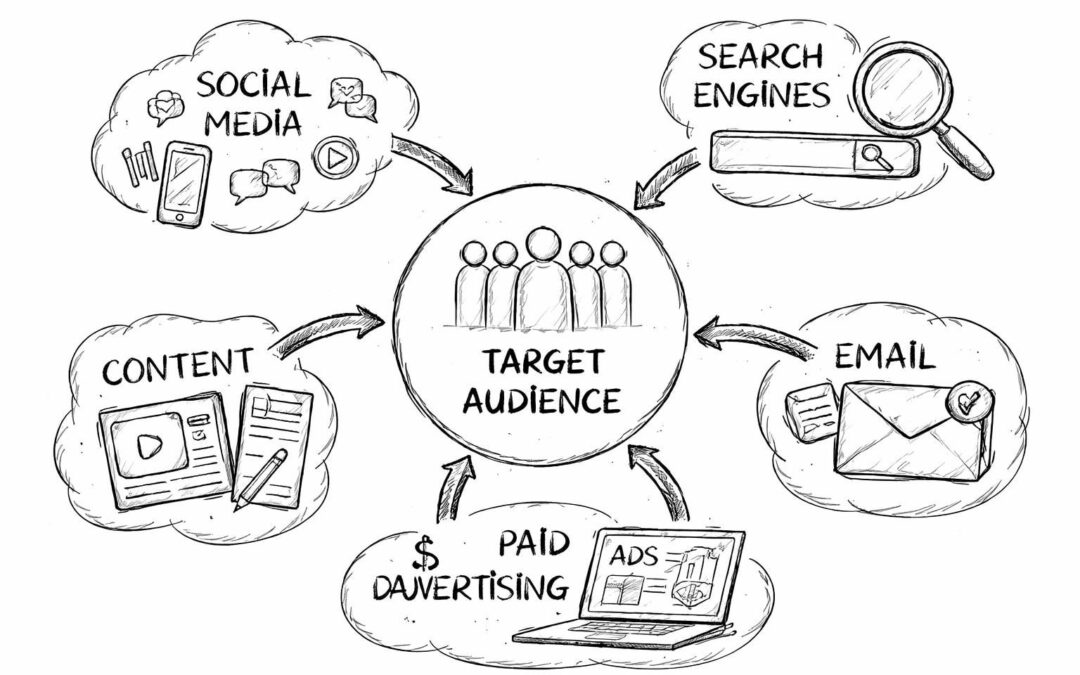
The landscape of digital media and marketing has transformed dramatically over the past decade, evolving from simple banner advertisements and email campaigns into a sophisticated ecosystem of channels, technologies, and strategies. For Australian businesses seeking to expand their online presence and engage customers effectively, understanding the full spectrum of digital media and marketing opportunities is no longer optional. It's essential for survival and growth in an increasingly competitive marketplace where consumer attention is fragmented across countless platforms and devices.
Understanding the Digital Media and Marketing Landscape
Digital media and marketing encompasses all marketing efforts that use electronic devices and the internet to connect with current and prospective customers. This broad definition includes everything from search engine optimisation and social media marketing to email campaigns and content marketing strategies.
The Australian market presents unique opportunities and challenges for businesses navigating this space. With internet penetration exceeding 90% and mobile usage continuing to climb, consumers expect seamless digital experiences across all touchpoints. My Heart Studio has observed that businesses combining multiple digital channels in coordinated campaigns consistently outperform those relying on single-channel approaches.
Core Components of Modern Digital Media
The foundation of successful digital media and marketing rests on several interconnected pillars:
- Search marketing (organic and paid)
- Social media platforms (organic content and advertising)
- Content marketing (blogs, videos, podcasts)
- Email marketing (newsletters, automation, segmentation)
- Display advertising (banner ads, retargeting campaigns)
- Influencer partnerships (brand ambassadors, sponsored content)
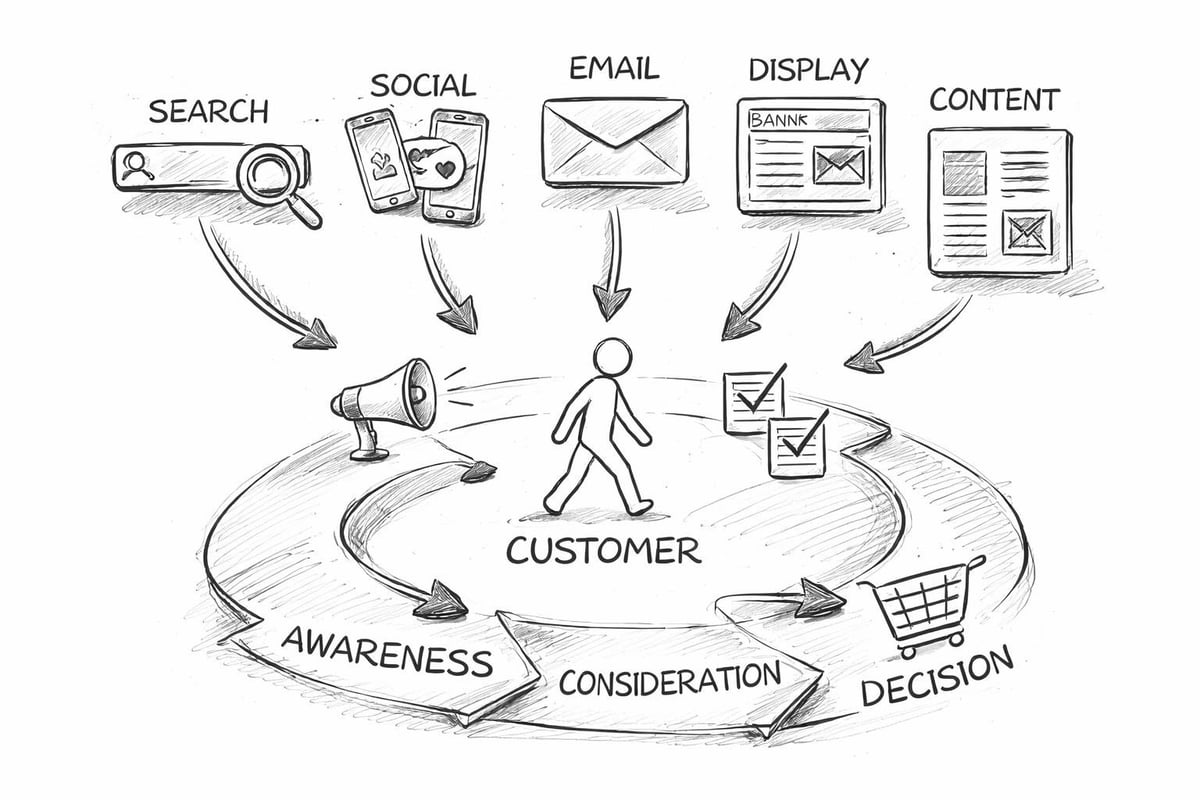
Each component serves distinct purposes within the broader marketing strategy, and the most effective approaches integrate multiple channels to create cohesive customer journeys.
Strategic Planning for Digital Success
Developing a comprehensive digital media and marketing strategy requires careful planning and clear objectives. Without strategic direction, businesses risk wasting resources on tactics that don't align with their goals or audience needs.
Setting Measurable Objectives
Every successful digital campaign begins with specific, measurable goals. Whether you're focused on brand awareness, lead generation, or direct sales, your objectives should follow the SMART framework: Specific, Measurable, Achievable, Relevant, and Time-bound.
For Adelaide-based businesses, local market considerations often influence objective-setting. A retail business might prioritise foot traffic conversion, while a B2B service provider focuses on qualified lead generation. Understanding your unique business context shapes every subsequent decision in your digital strategy.
Audience Research and Segmentation
Effective digital media and marketing demands deep understanding of your target audience. Demographics alone no longer suffice. Modern marketers must consider:
- Psychographic factors including values, interests, and lifestyle preferences
- Behavioural patterns such as browsing habits and purchase history
- Technology usage across devices and platforms
- Content preferences for format, length, and delivery timing
- Pain points that your products or services address
According to eMarketer, businesses using advanced audience segmentation see conversion rates increase by up to 50% compared to broad-based targeting approaches.
| Segmentation Type | Key Variables | Best Applications |
|---|---|---|
| Demographic | Age, gender, income, location | Mass market products, local services |
| Psychographic | Values, interests, personality | Lifestyle brands, premium services |
| Behavioural | Purchase history, browsing patterns | E-commerce, retargeting campaigns |
| Technographic | Device usage, platform preference | App marketing, mobile-first campaigns |
Content Strategy in Digital Media and Marketing
Content serves as the fuel for virtually every digital marketing channel. From blog posts that improve search rankings to social media updates that engage followers, quality content differentiates successful campaigns from forgettable ones.
The shift toward content-first strategies reflects fundamental changes in consumer behaviour. Modern buyers research extensively before making purchase decisions, consuming an average of 11.4 pieces of content before converting. This reality makes content creation and distribution central to any digital media and marketing approach.
Content Types and Formats
Different content formats serve different purposes within your marketing funnel:
Top-of-Funnel Content educates and attracts new audiences through blog posts, infographics, and social media content. This material addresses broad industry topics and common questions, positioning your business as a helpful resource rather than immediately pushing for sales.
Middle-of-Funnel Content nurtures prospects with case studies, comparison guides, and webinars that demonstrate your expertise and value proposition. At this stage, potential customers actively evaluate solutions, making detailed, informative content crucial.
Bottom-of-Funnel Content includes product demonstrations, testimonials, and free trials that overcome final objections and encourage conversion. The focus shifts from education to persuasion, addressing specific concerns that might prevent purchase decisions.
Businesses investing in web design must ensure their content strategy aligns with website architecture, creating intuitive pathways that guide visitors from awareness to action.
Search Engine Optimisation and Paid Search
Search marketing remains foundational to digital media and marketing success. When potential customers actively seek solutions, appearing prominently in search results captures high-intent traffic that converts at significantly higher rates than passive advertising impressions.
Organic Search Optimisation
SEO requires ongoing attention to technical factors, content quality, and authority building. The fundamentals haven't changed dramatically, but Google's algorithms grow increasingly sophisticated in evaluating content value and user experience.
Key SEO priorities for 2026 include:
- Core Web Vitals optimisation ensuring fast loading speeds and responsive design
- Entity-based search understanding helping search engines comprehend topic relationships
- User experience signals including engagement metrics and navigation patterns
- E-E-A-T principles (Experience, Expertise, Authoritativeness, Trustworthiness)
- Local SEO factors for businesses serving specific geographic markets
Australian businesses particularly benefit from local SEO strategies, given the country's geographic dispersion and strong local search intent. Research from Search Engine Watch indicates that 46% of Google searches have local intent, making location-based optimisation critical for most businesses.
Paid Search Advertising
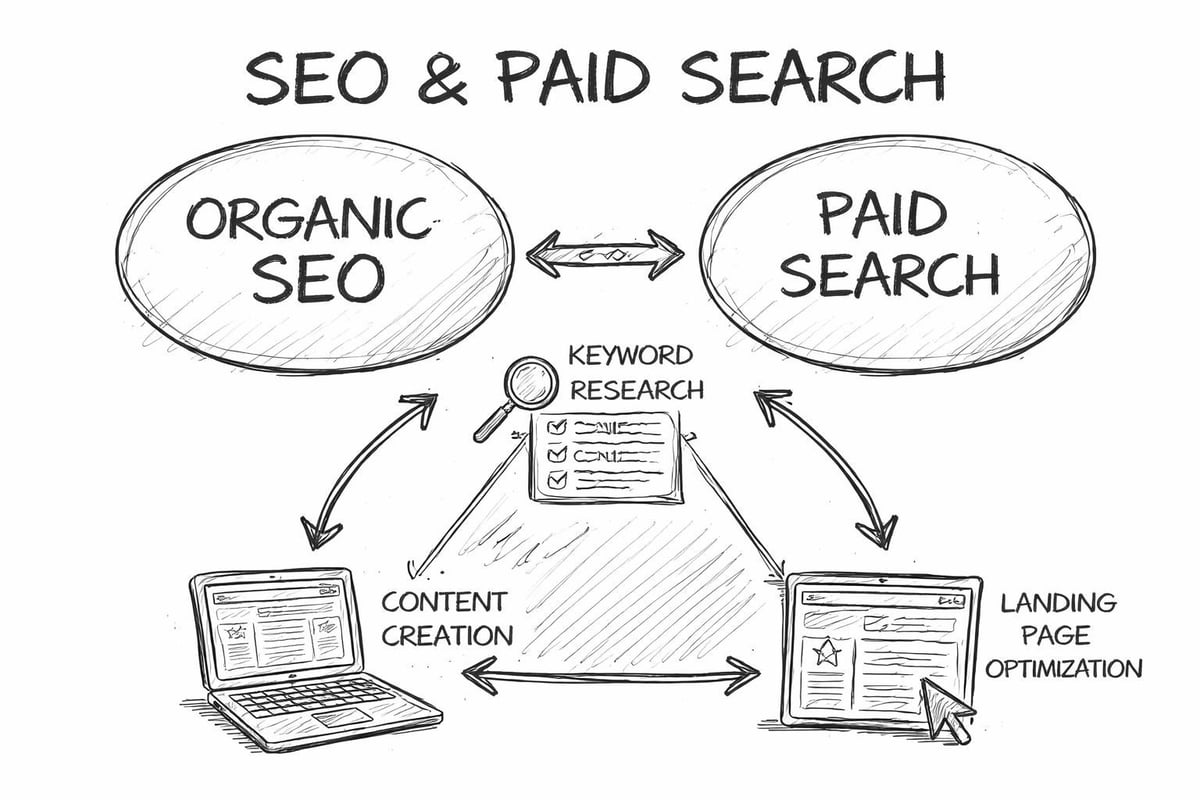
While SEO builds long-term visibility, paid search delivers immediate results. Google Ads and Microsoft Advertising enable precise targeting based on search queries, demographics, location, and device type. Understanding how to balance PPC and SEO efforts maximises return on marketing investment.
Successful paid search campaigns require:
- Comprehensive keyword research identifying high-value search terms
- Compelling ad copy that differentiates your offering from competitors
- Optimised landing pages aligned with ad messaging and search intent
- Conversion tracking measuring actual business outcomes, not just clicks
- Ongoing optimisation based on performance data and testing results
Social Media Marketing Strategies
Social platforms have evolved from simple networking sites into sophisticated marketing channels with advanced targeting capabilities and diverse content formats. Digital media and marketing strategies must account for the unique characteristics of each platform and the audiences they attract.
Platform Selection and Optimisation
Not every business needs presence on every platform. Strategic social media marketing focuses resources where target audiences actively engage.
LinkedIn dominates B2B marketing, professional services, and recruitment. The platform's professional context makes it ideal for thought leadership content, industry insights, and relationship building with decision-makers.
Facebook and Instagram serve diverse purposes depending on business type. Retail, hospitality, and lifestyle brands often find strong ROI, while service providers may struggle to generate meaningful engagement without significant creative investment.
TikTok continues expanding beyond its youth demographic origins, presenting opportunities for brands willing to embrace authentic, entertaining content formats. The platform's algorithm rewards creativity over production budget, levelling the playing field for smaller businesses.
According to insights from Digiday, video content generates 1200% more shares than text and images combined, making video production capabilities increasingly important across all platforms.
Paid Social Advertising
Organic reach limitations on major platforms make paid advertising essential for most businesses. Social advertising offers targeting precision that traditional media cannot match, enabling campaigns directed at specific demographics, interests, behaviours, and custom audiences.
| Platform | Best For | Average CPC (AUD) | Targeting Strength |
|---|---|---|---|
| Local businesses, B2C | $1.20-$2.50 | Excellent demographic and interest targeting | |
| Visual brands, lifestyle | $1.50-$3.00 | Strong for younger demographics | |
| B2B, professional services | $4.00-$8.00 | Unmatched professional targeting | |
| TikTok | Brand awareness, younger audiences | $0.80-$2.00 | Emerging targeting capabilities |
Email Marketing and Marketing Automation
Despite predictions of its demise, email remains one of the highest-ROI channels in digital media and marketing. For every dollar spent on email marketing, businesses average $42 in return, according to data from MarketingProfs.
The effectiveness of email stems from its direct nature and the permission-based relationship with subscribers. People who opt into your email list have expressed interest in your business, creating opportunities for personalised communication that social algorithms don't filter.
Building Effective Email Campaigns
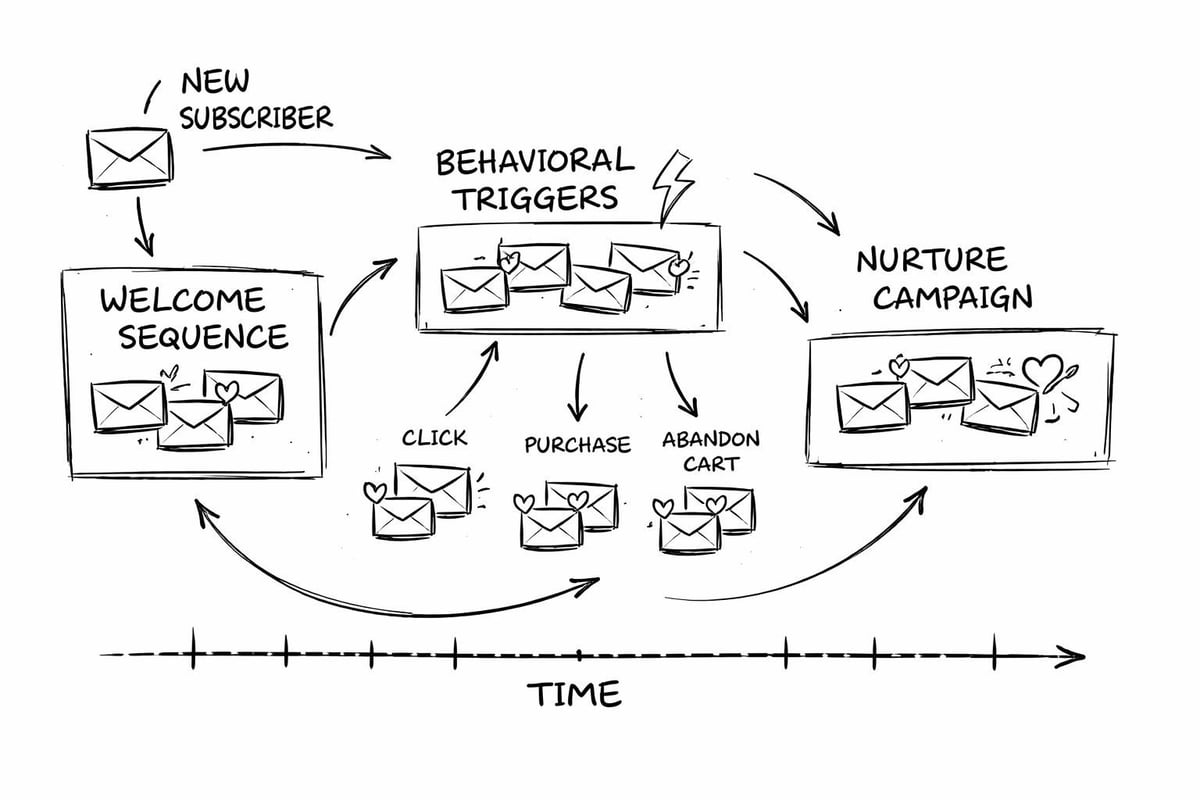
Modern email marketing extends far beyond monthly newsletters. Sophisticated segmentation and automation enable personalised journeys that respond to subscriber behaviour and preferences.
Welcome sequences introduce new subscribers to your brand, set expectations for future communications, and often include special offers encouraging first purchases. These automated series typically achieve open rates 50-80% higher than standard promotional emails.
Behavioural triggers respond to specific actions like abandoned carts, browsing particular product categories, or downloading resources. This responsiveness creates timely, relevant communications that feel helpful rather than intrusive.
Re-engagement campaigns target inactive subscribers with compelling content or offers designed to rekindle interest. These campaigns help maintain list health by identifying truly disengaged contacts who should be removed.
Measuring Digital Media and Marketing Performance
Analytics capabilities distinguish digital marketing from traditional channels. Every interaction, click, and conversion can be tracked, measured, and optimised. However, the abundance of data often overwhelms marketers who struggle to identify meaningful metrics among vanity numbers.
Key Performance Indicators by Objective
Different business objectives require different measurement frameworks. Aligning KPIs with strategic goals ensures you optimise for outcomes that matter.
Brand Awareness Campaigns prioritise reach, impressions, and engagement metrics. While these don't directly indicate sales, they measure progress toward visibility goals that support longer-term conversion.
Lead Generation Efforts focus on cost per lead, lead quality scores, and lead-to-customer conversion rates. Tracking the complete funnel from initial contact through closed sale reveals true campaign profitability.
E-commerce Sales demand attention to conversion rates, average order value, customer acquisition cost, and customer lifetime value. Understanding these relationships guides decisions about acceptable acquisition costs.
Resources from ClickZ emphasise that businesses tracking at least 10 relevant KPIs achieve 23% better performance than those monitoring fewer metrics, though tracking too many creates analysis paralysis.
Attribution Modelling Challenges
Understanding which marketing touchpoints deserve credit for conversions remains one of digital media and marketing's persistent challenges. Customers rarely convert after a single interaction. Most engage with multiple channels before purchasing.
- Last-click attribution credits the final touchpoint before conversion
- First-click attribution assigns credit to the initial discovery channel
- Linear attribution distributes credit equally across all touchpoints
- Time-decay attribution gives more weight to recent interactions
- Data-driven attribution uses machine learning to assign credit based on actual influence
Each model tells a different story about campaign performance. The "right" approach depends on your business model, sales cycle length, and strategic priorities.
Emerging Trends Shaping Digital Media and Marketing
The digital landscape evolves constantly, with new technologies, platforms, and consumer behaviours reshaping best practices. Staying informed about emerging trends helps businesses adapt strategies before competitors gain advantages.
Artificial Intelligence and Machine Learning
AI technologies transform digital media and marketing across numerous applications. From chatbots providing instant customer service to predictive analytics forecasting customer behaviour, machine learning enables personalisation at scale previously impossible.
Google and Facebook advertising platforms increasingly rely on AI for campaign optimisation, automating bidding strategies, audience targeting, and even creative testing. Marketers who understand how to work alongside these systems rather than manually controlling every variable achieve better results with less effort.
Content creation tools powered by AI assist with everything from headline generation to full article drafts, though human oversight remains essential for quality and brand alignment. As noted by Adweek, 61% of marketers now use AI tools regularly, up from just 29% in 2023.
Privacy-First Marketing Approaches
Regulatory changes and platform policies are fundamentally altering digital media and marketing practices. Cookie deprecation, iOS tracking limitations, and privacy regulations like Australia's Privacy Act amendments require new approaches to audience targeting and measurement.
First-party data strategies become increasingly valuable as third-party tracking diminishes. Building direct relationships with customers through email lists, loyalty programmes, and account creation provides data that no privacy change can eliminate.
Contextual targeting resurges as an alternative to behavioural tracking, placing advertisements based on page content rather than user history. This approach respects privacy while still enabling relevant ad placement.
Video and Interactive Content Dominance
Video consumption continues accelerating across all demographics and devices. Short-form video particularly explodes in popularity, with platforms like TikTok, Instagram Reels, and YouTube Shorts commanding increasing attention.
Interactive content including quizzes, calculators, and assessments generates engagement rates up to eight times higher than static content. These formats provide value to users while collecting zero-party data, information customers voluntarily share in exchange for personalised experiences.
Businesses offering digital marketing services must adapt to these format preferences, developing capabilities in video production and interactive content creation to meet evolving audience expectations.
Integration and Omnichannel Experiences
The most sophisticated digital media and marketing strategies transcend individual channels, creating cohesive experiences regardless of where customers interact with brands. This omnichannel approach acknowledges that modern buyers move fluidly between devices and platforms throughout their purchase journey.
Consistent messaging across channels reinforces brand identity and key value propositions. While tactical execution varies by platform, core themes and positioning should remain recognisable whether customers encounter your brand through search ads, social posts, or email campaigns.
Cross-channel data integration enables understanding of the complete customer journey. When marketing platforms share data, you can see how social media awareness leads to website visits, email nurturing, and eventual conversion, informing smarter budget allocation.
Seamless transitions between channels create friction-free experiences. A customer who clicks a social ad should find messaging and offers that match their expectations. Cart abandoners who receive email reminders should return to find their selections preserved.
According to research highlighted by Econsultancy, companies with strong omnichannel customer engagement retain 89% of customers compared to just 33% for companies with weak omnichannel strategies.
Mastering digital media and marketing requires ongoing learning, strategic thinking, and tactical execution across multiple channels and technologies. The businesses that thrive are those that view digital marketing not as a set of isolated tactics but as an integrated ecosystem designed to attract, engage, and convert customers throughout their journey. Whether you're just beginning to build your digital presence or looking to optimise existing efforts, partnering with experienced professionals accelerates results and avoids costly mistakes. My Heart Studio helps Australian businesses develop and execute comprehensive digital strategies that drive measurable growth, combining web design, SEO, and strategic marketing planning tailored to your unique goals and market position.