

The world of digital marketing is transforming at an unprecedented pace. By 2026, brands looking to grow globally will face both exciting opportunities and complex risks as new technologies and consumer behaviours reshape the market.
To succeed, businesses must master international digital marketing. This guide delivers practical strategies for navigating cultural, technological, and regulatory challenges, ensuring your brand stands out worldwide.
You will learn how to research new markets, localise content, optimise for multilingual SEO, and measure international campaign success. Avoid common mistakes and leverage proven tactics for sustainable growth.
Ready to unlock global revenue and brand loyalty? Dive in and future-proof your digital marketing approach.
Understanding the 2026 International Digital Marketing Landscape
The international digital marketing landscape in 2026 is more complex and dynamic than ever. Businesses must navigate rapid changes in technology, consumer behaviour, and regulations to remain competitive. Understanding these shifts is the first step to building a successful global strategy.

The Global Shift to Digital: Trends & Opportunities
Since 2024, the pace of digital adoption worldwide has surged. International digital marketing strategies now prioritise cross-border e-commerce and digital services, as businesses seek to reach new audiences and revenue streams. According to Harvard Business School, small businesses with a global digital presence report a 5 to 10 percent increase in revenue, highlighting the tangible benefits of expanding online.
Emerging markets in Asia, Africa, and Latin America are experiencing some of the fastest digital growth rates, creating significant opportunities for brands willing to adapt. The integration of AI, automation, and data-driven marketing tools is transforming how campaigns are scaled and optimised. For a deeper dive into upcoming innovations, see these Digital Marketing Trends in 2026.
To succeed, companies must monitor shifting consumer trends, regulatory changes, and technology breakthroughs in every market they target.
Evolving Consumer Behaviours & Cultural Nuances
Consumer preferences are evolving rapidly, and international digital marketing must keep pace. Audiences in many regions are now mobile-first, with video content becoming a primary medium for engagement. Understanding local customs, humour, and values is crucial to building trust and driving conversions.
For example, German consumers tend to respond best to detailed, informative ads, while American audiences prefer concise, direct messages. Payment preferences also vary, with some countries favouring digital wallets or cash-on-delivery options. Local delivery expectations can significantly impact conversion rates, so adapting offers and checkout processes is essential.
Brands that invest in cultural research and tailor their messaging for each region see greater loyalty and higher campaign performance.
Regulatory & Compliance Challenges
Global expansion brings a complex web of regulations for international digital marketing. Privacy laws like GDPR in Europe, CCPA in California, and various local data residency rules are reshaping how businesses collect and use consumer data. Marketers must also account for localisation requirements, such as providing information in local languages and currencies, and ensuring websites meet accessibility standards.
Increasing scrutiny surrounds cross-border data transfers and advertising transparency. Non-compliance can lead to legal penalties and damage brand reputation. To navigate these challenges, companies should work closely with legal advisers and ensure all aspects of their digital presence align with regional laws.
Staying proactive and informed about evolving compliance landscapes will be critical for sustainable global growth.
Technology & Platform Fragmentation
The international digital marketing ecosystem is fragmented across regions and platforms. While Facebook and Instagram dominate in much of the West, WeChat is central in China, WhatsApp in Latin America, and VKontakte in Russia. Search behaviour also differs, with Baidu leading in China and Yandex in Russia.
Adapting to these local platforms is vital. The rise of AI translation, multilingual chatbots, and automation tools now enables brands to engage audiences across languages and cultures more efficiently. Table 1 below summarises key platforms by region.
| Region | Social Platform | Search Engine |
|---|---|---|
| China | Baidu | |
| Latin America | ||
| Russia | VKontakte | Yandex |
| Western World | Facebook, Insta |
To maximise reach, international digital marketing teams must stay agile, leveraging technology to connect with customers wherever they are.
Step-by-Step: Building a Future-Ready International Digital Marketing Strategy
To succeed in 2026, brands need a robust international digital marketing strategy that addresses shifting consumer behaviours, regulatory complexity, and rapid technological change. The following step-by-step framework will help you build a future-ready approach, whether you’re entering new markets or scaling global campaigns. For more in-depth guidance, see these digital marketing strategy insights.

1. In-Depth Market Research & Opportunity Analysis
Effective international digital marketing starts with comprehensive market research. Use tools like Google Analytics, SEMrush, and Ahrefs to identify high-potential regions. Analyse market size, growth trajectories, and local competition. Examine regulatory environments to ensure your approach aligns with local laws.
Dive into cultural research by exploring consumer behaviour, local holidays, and buying triggers. For example, leveraging Yelp listings can lead to a 5 to 10 percent revenue uplift in new markets. Always account for legal considerations such as advertising restrictions and product compliance. This foundation is crucial for targeting the right audiences and ensuring your international digital marketing efforts deliver measurable results.
2. Setting Clear Global Objectives & KPIs
The next step in international digital marketing is establishing precise objectives and key performance indicators (KPIs) tailored to each region. Define campaign goals, such as brand awareness, lead generation, sales, or customer retention.
Align these objectives with your broader business growth targets. Remember, KPIs should reflect the maturity of each market. For instance, a new market might focus on reach and engagement, while a mature market targets conversions and retention. By setting region-specific KPIs, you can accurately track the impact and ROI of your international digital marketing activities and make informed decisions.
3. Multilingual Website Localisation & UX Optimisation
Website localisation is about more than translation. In international digital marketing, you must adapt tone, imagery, and offers to resonate with local audiences. Technical localisation matters too: implement hreflang tags, use local domains, and ensure mobile responsiveness.
Consider user experience from a global perspective. Offer local payment gateways and customer support. Accessibility and speed optimisation are vital for users with different devices and internet speeds. Brands like Polaar have doubled US organic traffic by using tools such as Weglot, saving over 100 hours in the process. Make localisation a cornerstone of your international digital marketing plan.
4. International SEO: Visibility Across Borders
For international digital marketing to succeed, visibility in local search engines is essential. Begin with local keyword research and search intent analysis for each target market. Implement hreflang tags and dedicated language URLs to help search engines understand your site’s regional relevance.
Build local backlinks and optimise metadata for every market. For example, 84 percent of marketers report revenue growth from effective localisation. Use tools like SEMrush, Ahrefs, and Moz Pro to manage international SEO and track performance. This ensures your brand is discoverable wherever your customers are searching.
5. Culturally Relevant Content & Social Media Strategy
Content is at the heart of international digital marketing. Create region-specific content that aligns with local trends, humour, and values. Choose the right social platforms for each market, such as WeChat in China or VKontakte in Russia.
Leverage video content, influencers, and user-generated material to boost engagement. Adapt your campaign schedule to local events and time zones to maximise relevance. A case study might involve tailoring campaigns for TikTok or WeChat, demonstrating how nuanced content can drive results in international digital marketing.
6. Paid Media & Search Engine Marketing (SEM) Adaptation
Customising paid campaigns is vital for international digital marketing success. Tailor ad copy and visuals for cultural resonance, and select local ad networks like Baidu or Yandex where relevant. Allocate budgets based on each market’s opportunity and channel ROI.
Data shows that nearly 40 percent of US ad spend is dedicated to search ads. Conduct A B tests on creatives and landing pages by region to optimise performance. This level of adaptation ensures your international digital marketing investments deliver the highest possible returns.
7. Performance Measurement & Continuous Optimisation
Ongoing measurement is the backbone of international digital marketing. Set up region-specific analytics and dashboards to track KPIs and user behaviours. Use platforms like Google Analytics and Hotjar for deep insights into campaign effectiveness.
Rapid iteration is essential. Adjust strategies based on real-time data, learning from what works in each market. Brands that embrace agility and adapt quickly consistently outperform those with static approaches. Make continuous optimisation a core part of your international digital marketing strategy to stay ahead in global markets.
Website Localisation & Multilingual SEO Best Practices
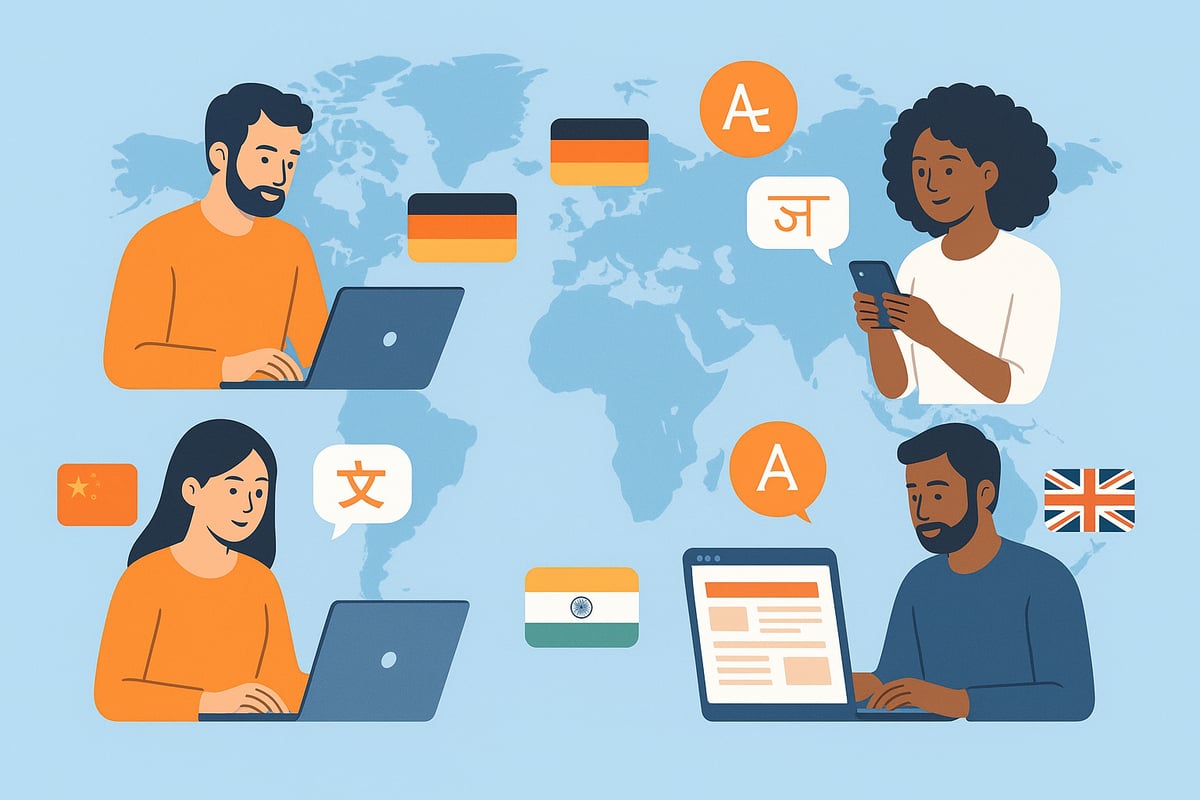
Expanding your brand’s reach through international digital marketing requires more than simple translation. Success depends on comprehensive website localisation and robust multilingual SEO strategies. These best practices ensure your message resonates globally, adapts to cultural expectations, and performs optimally in every market.
The Essentials of Website Localisation
Website localisation is fundamental for effective international digital marketing. It involves more than converting text. Brands must adapt design, navigation, and imagery to align with local tastes and expectations. Presenting local currencies, units of measure, and complying with region-specific legal disclaimers is critical for building trust.
Consider these essentials:
- Translate content accurately and refine it for cultural nuances.
- Adjust colour schemes and imagery to reflect local preferences.
- Update navigation menus and calls to action for clarity in the target language.
- Display pricing in local currencies and use familiar units of measure.
- Ensure all legal and privacy disclaimers meet local standards.
Mobile responsiveness and fast load times are non-negotiable. Many global users access sites via mobile, so optimising for speed and usability is vital. For example, Weglot’s machine translation combined with manual refinement has proven effective for brands needing both accuracy and efficiency. These elements together lay a strong foundation for international digital marketing success.
Multilingual SEO Tactics for 2026
Optimising your site for multilingual search is a cornerstone of international digital marketing. Start by using dedicated language URLs and implementing hreflang tags to signal content relevance to search engines in each region. Translate not only visible text, but also metadata, image alt text, and structured data.
Building international backlinks strengthens domain authority in local markets. AI-driven SEO tools now streamline keyword research, content optimisation, and ongoing performance tracking across languages. A good example is Polaar, whose rankings and visibility improved significantly after a thorough localisation strategy.
For practical multilingual SEO and localisation tips, explore tools that automate translation, manage hreflang tags, and monitor international search performance. By following these tactics, you enhance your reach, boost organic traffic, and ensure your international digital marketing investments deliver measurable results.
Overcoming Technical Challenges
Technical challenges can undermine even the best international digital marketing strategies. Supporting right-to-left languages, such as Arabic or Hebrew, requires careful layout adjustments. Non-Latin scripts demand compatible fonts, encoding, and testing to guarantee readability.
Accessibility is equally important. Ensure your website complies with local accessibility standards, including readable font sizes, colour contrast, and screen reader compatibility. Integrating with local analytics and marketing tools allows for precise measurement and campaign optimisation in each market.
Regular audits help identify and resolve issues before they impact user experience or search visibility. By proactively addressing technical barriers, you reduce friction for global users and maintain compliance, which is essential for sustainable international digital marketing growth.
Leveraging Global Platforms, Influencers, and Local Partnerships
Expanding your brand internationally requires more than just translating content. To succeed with international digital marketing, businesses must tap into the platforms, people, and partnerships that drive engagement in each target market. This approach ensures your message resonates locally and builds genuine connections with consumers worldwide.
Selecting the Right Digital Channels for Each Market
The digital world is fragmented, and each region favours its own platforms. For effective international digital marketing, choosing the right channels is essential. In China, WeChat dominates social communication, while TikTok and VKontakte are favourites in Southeast Asia and Russia. Western markets still prefer Facebook, Instagram, and LinkedIn.
To maximise reach, brands should adapt content formats to match each platform. Short videos excel on TikTok, while image-rich posts perform well on Instagram. E-commerce marketplaces, like Amazon or Mercado Libre, offer direct access to shoppers in North and South America. Local search engines, such as Baidu and Yandex, are critical for visibility in China and Russia.
For a deeper dive into social strategies that power international digital marketing, explore social media for global reach. Selecting the right mix of channels ensures your message is seen by the right audience, in the right place.
Influencer Marketing for Rapid Trust-Building
Influencers have become essential partners in international digital marketing. Local influencers bring instant credibility and access to engaged audiences. Their deep understanding of local culture and trends allows your brand to connect authentically.
Partnering with influencers who align with your brand’s values ensures your messaging feels organic. For example, an Australian skincare brand entering Japan might collaborate with a beauty vlogger known for honest product reviews. This approach builds trust quickly and can lead to higher conversions compared to traditional ads.
Case studies show that influencer-led campaigns often outperform standard media buys, especially in markets where consumers rely on peer recommendations.
Building Local Partnerships and Community Engagement
Long-term success in international digital marketing goes beyond digital ads. Building partnerships with local businesses, events, and organisations roots your brand within the community. Hosting pop-up stores, sponsoring webinars, or co-creating content with regional partners can boost credibility.
These collaborations demonstrate commitment to the local market, making consumers more likely to trust and support your brand. Establishing a physical or virtual presence, even temporarily, signals that you value the local audience and are not just an outsider seeking quick sales.
Brands that invest in community engagement often see stronger brand loyalty and word-of-mouth growth.
Adapting to Platform-Specific Trends and Features
International digital marketing requires constant adaptation. Each platform regularly introduces new features, such as live shopping, AR filters, or direct messaging tools. Staying ahead means monitoring these trends and tailoring your campaigns accordingly.
Localising customer support, using native languages, and responding quickly to feedback further strengthens your position. Leverage platform analytics to gain deep insights into audience preferences and engagement patterns in each market.
By embracing platform innovation and remaining agile, your international digital marketing efforts will stay relevant, effective, and prepared for rapid changes in the global digital landscape.
Common International Digital Marketing Mistakes to Avoid
Expanding into global markets brings immense opportunity, but even experienced brands can stumble. Avoiding frequent international digital marketing mistakes is crucial to achieving sustainable growth and maintaining brand reputation worldwide.
Overlooking Local Culture and Consumer Behaviour
A one size fits all approach rarely works in international digital marketing. Direct translation without cultural adaptation can lead to miscommunication or even offence. For example, a campaign using humour that works in Australia might fall flat in Japan or Germany.
- Ignoring local holidays or buying habits can also impact engagement.
- Using visuals or colours with unintended meanings may alienate audiences.
- Localising offers and tone ensures relevance and connection.
Brands that succeed take time to understand each market’s values and preferences, tailoring every message accordingly.
Ignoring Technical SEO and Local Compliance
Technical SEO is foundational for international digital marketing success. Failing to implement hreflang tags, localised URLs, or translated metadata can undermine visibility in search results. Compliance is equally vital, with privacy laws like GDPR and local accessibility rules imposing strict requirements.
- Overlooking cookie policies or data residency rules can lead to penalties.
- Not adapting your website to local standards risks exclusion from search engines.
- Learn more by reviewing Multilingual SEO Best Practices for 2025 for actionable localisation tips.
Staying ahead of regulations and technical nuances protects both your brand and your bottom line.
Underestimating Platform Fragmentation
Assuming Western platforms dominate everywhere is one of the most common international digital marketing mistakes. In China, WeChat and Baidu are essential, while in Russia, VKontakte and Yandex lead the market.
- Missing out on local platforms means missing your target audience.
- Tailoring campaigns for each region’s preferred channels is key.
- Adapting creative assets for different formats maximises reach.
Adopt a platform-first mindset and research digital habits in every market before launching campaigns.
Inadequate Performance Tracking and Adaptation
Without region-specific KPIs and analytics, international digital marketing campaigns risk underperforming. Tracking user behaviour by market reveals which strategies are working and which need adjustment.
- Not iterating on campaigns based on real-time data leads to wasted budget.
- Use local dashboards to monitor conversions, engagement, and ROI.
- Regular reviews help identify trends and optimise for better results.
Data-driven adaptation keeps your global strategy agile and effective.
Poor Mobile Optimisation
Many emerging markets are mobile-first, making mobile optimisation non-negotiable in international digital marketing. Slow load times, confusing navigation, or non-responsive designs can drive away potential customers.
- Test mobile UX in each target country to spot issues early.
- Prioritise fast loading, clear calls to action, and local payment options.
- Lost conversions from poor mobile experiences are avoidable with focused design.
By addressing these mistakes, brands can unlock the full potential of their international digital marketing efforts and build lasting global relationships.
Tools, Technologies, and Agency Support for International Success
Navigating international digital marketing in 2026 is increasingly complex, requiring a blend of advanced tools, expert support, and agile teams. Success hinges on the right mix of technology, strategic partnerships, and a culture of continuous adaptation.
Essential Tools for Global Campaign Management
For international digital marketing, leveraging the best tools is non-negotiable. Analytics platforms like Google Analytics and Search Console provide real-time insights into user behaviour across regions. SEO suites such as SEMrush, Ahrefs, and Moz Pro help uncover local keyword opportunities and track rankings globally.
Translation and localisation are streamlined with solutions like Weglot and AI-powered translators. For customer relationship management, HubSpot enables nurturing leads in multiple markets. To learn more about adapting campaigns for different markets, explore Digital advertising across borders.
- Analytics: User behaviour, conversions, and campaign tracking
- SEO: Keyword research, backlink analysis, and local ranking
- Translation: Multilingual content management
- CRM: Multi-market lead nurturing
The Role of Digital Marketing Agencies
Partnering with a specialised agency is a game-changer for international digital marketing. Agencies offer expertise in market entry, localisation, and regulatory compliance, ensuring campaigns are tailored to each region.
When selecting an agency, look for proven experience in your target region and industry. Agencies deliver tailored support, though this often comes at a higher cost, making them ideal for businesses aiming for rapid international expansion.
My Heart Studio: Your Australian Digital Growth Partner
My Heart Studio, based in Adelaide, is dedicated to helping Australian businesses thrive online and internationally. Their team crafts custom international digital marketing strategies, covering web design, multilingual SEO, paid campaigns, and strategic partnerships.

With a track record of 8-figure product sales and over $20M in tracked wins, My Heart Studio is well-suited for small to medium businesses, startups, and organisations seeking measurable results. Their approach combines technical expertise and a deep understanding of local and global markets.
Future-Ready Technologies for 2026
The future of international digital marketing is powered by AI, automation, and immersive tech. AI-driven content creation, personalisation, and translation boost efficiency and relevance. Automation tools streamline campaign management, while AR and VR create engaging brand experiences worldwide.
For deeper insights into how AI will shape the next wave of marketing, read about AI’s Role in 2026 Digital Marketing. Staying ahead with these technologies is crucial for maintaining a competitive edge.
Building an Agile, Data-Driven Global Marketing Team
A successful international digital marketing strategy depends on a team that values agility and data. Continuous learning is vital, as platforms and compliance rules evolve quickly. Training on new tools and fostering a culture of experimentation empowers teams to adapt swiftly to market changes.
Encourage knowledge sharing and local sensitivity to ensure campaigns resonate across cultures. Agile, data-driven teams outperform static competitors and are better equipped to drive long-term global growth.
As you start planning your international digital marketing strategy for 2026, it’s clear that adapting to cultural nuances, leveraging the right platforms, and staying ahead of regulatory changes are all essential for global success. If you’re ready to put these insights into action or want expert guidance tailored to your business, I invite you to connect with us at My Heart Studio. Let’s discuss how you can confidently expand your reach, engage new markets, and achieve measurable results in the ever evolving digital landscape.
Article written using RankPill.