
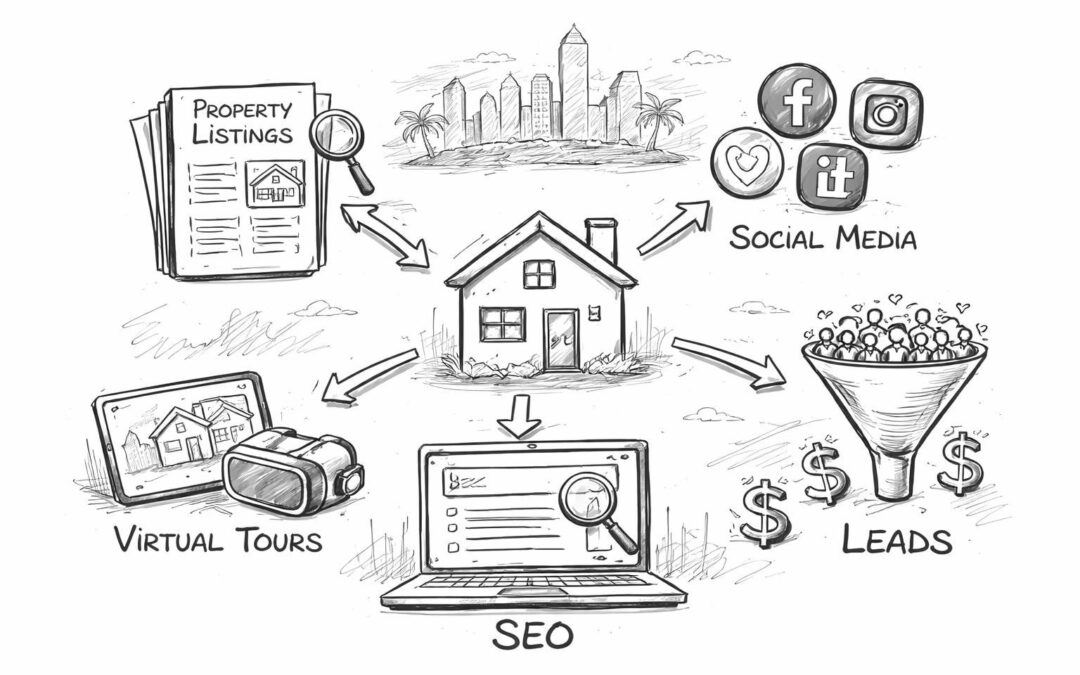
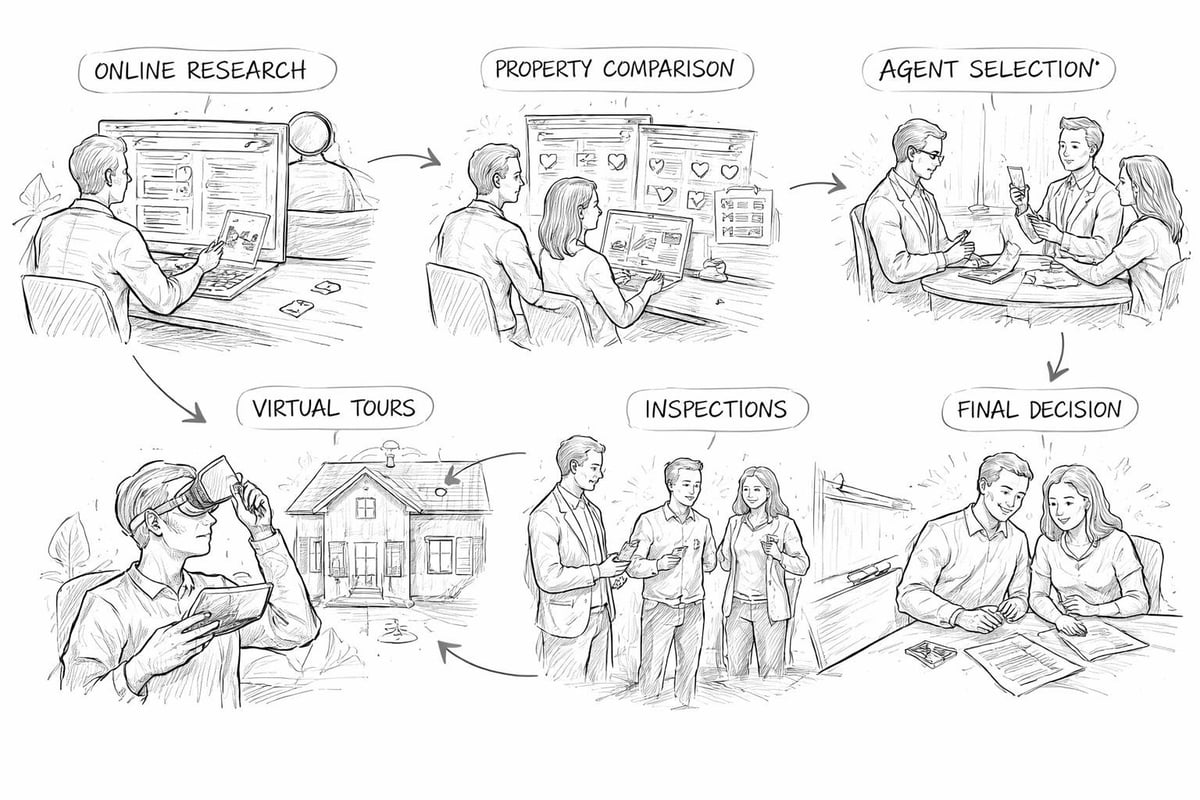
The Australian property market has undergone a dramatic transformation over the past decade, with digital channels now dominating how buyers discover, research, and ultimately purchase properties. For real estate professionals, understanding and implementing effective digital marketing in real estate has shifted from being a competitive advantage to an absolute necessity. Today's property buyers begin their journey online, spending countless hours browsing listings, researching neighbourhoods, and evaluating agents before ever making contact. This digital-first approach demands that real estate agents and agencies develop sophisticated online marketing strategies that capture attention, build trust, and convert prospects into clients.
The Digital Transformation of Property Marketing
The property sector has experienced one of the most significant digital shifts of any industry in recent years. Where traditional marketing once relied heavily on print advertising, open homes, and word-of-mouth referrals, modern real estate success hinges on digital visibility and engagement.
Property buyers now expect:
- Comprehensive online listings with high-quality imagery
- Virtual tours and video walkthroughs accessible on demand
- Instant communication through multiple digital channels
- Detailed neighbourhood information and market insights
- Mobile-optimised browsing experiences
Research indicates that over 90% of property buyers start their search online, making digital marketing for real estate absolutely critical for reaching potential clients. This fundamental shift in buyer behaviour has created both challenges and opportunities for agents who understand how to leverage digital channels effectively.
Search Engine Optimisation for Property Listings
Search engine optimisation forms the foundation of successful digital marketing in real estate, ensuring properties and agent profiles appear when potential buyers search for relevant terms. Unlike paid advertising, SEO builds long-term visibility and establishes authority within specific geographic markets.
Local SEO Strategies for Agents
Real estate is inherently local, making geographic targeting essential for any SEO strategy. Agents must optimise for suburb-specific, city-based, and property-type searches that reflect how Australians actually search for properties.
| SEO Element | Application for Real Estate | Priority Level |
|---|---|---|
| Google Business Profile | Complete listing with reviews, photos, service areas | Critical |
| Location-based keywords | "Real estate Adelaide CBD", "Homes for sale Glenelg" | Critical |
| Schema markup | Property listings, local business, reviews | High |
| Mobile optimisation | Fast-loading property pages, click-to-call buttons | Critical |
| Backlink building | Local partnerships, community involvement | Medium |
Implementing comprehensive SEO strategies requires consistent effort across multiple fronts. Property descriptions should incorporate natural language that matches search intent while providing genuine value to potential buyers. Each listing becomes an opportunity to rank for specific property types, locations, and features.
Content Marketing That Converts
Creating valuable content beyond property listings establishes agents as trusted advisors rather than simply transaction facilitators. Blog posts addressing common buyer questions, market update videos, and neighbourhood guides all contribute to improved search rankings while building credibility.
Effective content topics include:
- First home buyer guides specific to local markets
- Investment property analysis for specific suburbs
- Market trend reports with data-driven insights
- Renovation and styling advice for sellers
- Mortgage and finance education content
This approach to digital marketing in real estate positions agents as knowledgeable resources, capturing potential clients at various stages of their property journey. When integrated with proper PPC and SEO strategies, content marketing delivers compounding returns over time.
Social Media Marketing for Property Professionals
Social media platforms have become virtual shopfronts for real estate agents, offering unprecedented opportunities to showcase properties, share expertise, and build personal brands. The visual nature of property makes social media particularly effective for real estate marketing.
Platform-Specific Strategies
Different social platforms serve distinct purposes within a comprehensive digital marketing strategy. Understanding where your target audience spends time and how they engage with content determines resource allocation.
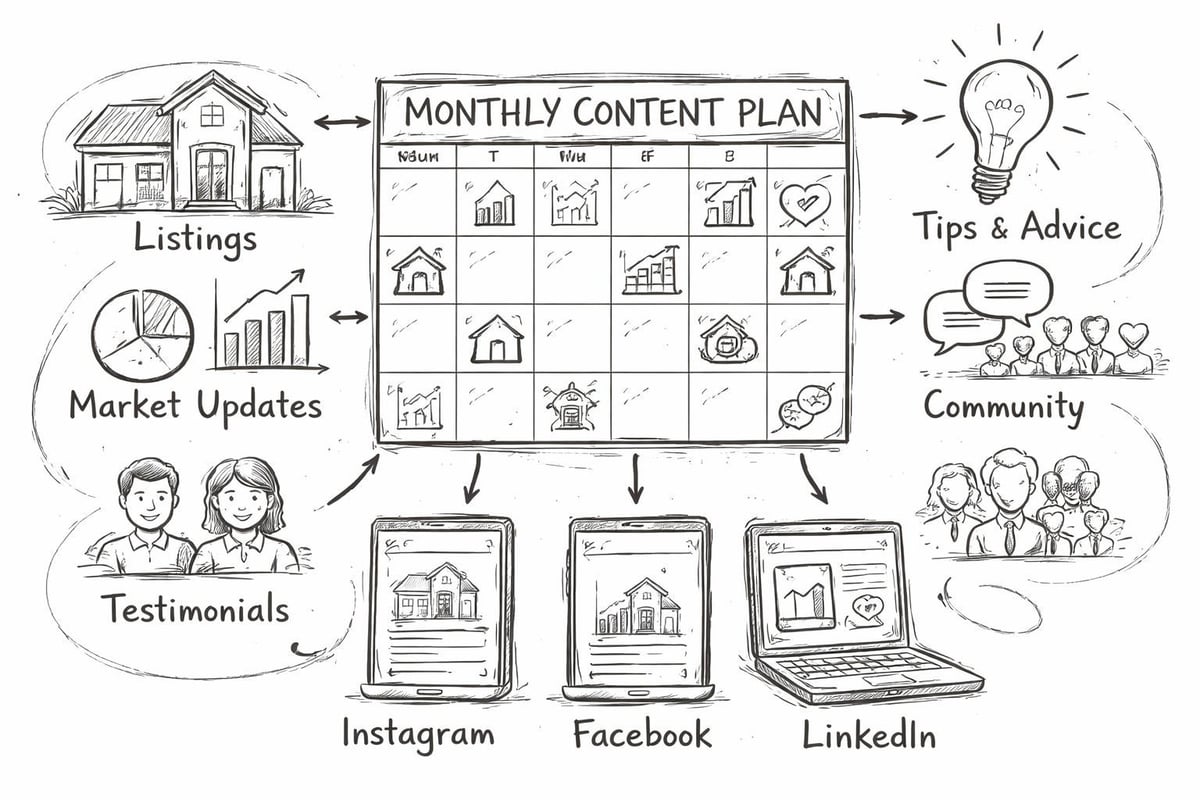
Instagram excels for visual storytelling, property highlights, and behind-the-scenes content. High-quality photography, Stories showcasing open homes, and Reels featuring quick property tours all perform exceptionally well. The platform's local discovery features help agents connect with buyers in specific areas.
Facebook remains powerful for community building and detailed property showcases. Facebook Groups focused on specific suburbs or buyer demographics create engaged communities. Social media as a core lead engine demonstrates significant ROI when used strategically, with targeted advertising reaching precise demographic and geographic segments.
LinkedIn positions agents as industry professionals, ideal for commercial real estate, investment properties, and networking with other professionals who can provide referrals.
Video Content That Engages
Video has emerged as the most engaging content format for digital marketing in real estate. Property walkthroughs, agent introductions, market updates, and client testimonials all benefit from video presentation.
- Create professional property tours highlighting key features
- Develop weekly market update videos establishing expertise
- Share client success stories building trust and social proof
- Produce neighbourhood spotlight videos showcasing local amenities
- Host live Q&A sessions addressing buyer and seller questions
The production quality should match your brand positioning, but authenticity often outperforms overly polished content. Buyers appreciate genuine insights and personality that help them connect with agents on a human level.
Paid Advertising and Lead Generation
While organic strategies build sustainable long-term results, paid advertising delivers immediate visibility and targeted lead generation. Digital marketing in real estate increasingly relies on sophisticated advertising campaigns across multiple platforms.
Google Ads for Real Estate
Search advertising captures high-intent prospects actively searching for properties or real estate services. Properly structured campaigns target specific property types, locations, and buyer demographics with precision.
Campaign structure best practices:
- Separate campaigns for buyers, sellers, and renters
- Ad groups organised by suburb or property type
- Location-based ad extensions showing office address
- Call extensions enabling immediate contact
- Sitelink extensions highlighting specialisations
Remarketing campaigns re-engage website visitors who haven't yet converted, keeping your properties and services top-of-mind as they continue their search. Dynamic remarketing displays specific properties viewers browsed, increasing relevance and conversion potential.
Social Media Advertising
Facebook and Instagram advertising offers remarkable targeting capabilities, reaching specific demographics, interests, and behaviours. Real estate digital marketing practices emphasise the importance of visual advertising on these platforms.
Carousel ads showcase multiple property images, Stories ads create immersive full-screen experiences, and lead generation ads capture contact information without requiring users to leave the platform. Custom audiences built from website visitors, email lists, and CRM data enable precise targeting of warm prospects.
| Ad Format | Best Use Case | Average CTR |
|---|---|---|
| Carousel | Multiple property features | 1.8-2.5% |
| Video | Property tours, agent intro | 2.2-3.1% |
| Single image | Premium listings highlight | 1.2-1.8% |
| Collection | Multiple properties in area | 1.5-2.2% |
Email Marketing and CRM Integration
Email remains one of the highest ROI channels for digital marketing in real estate, nurturing relationships with past clients, current prospects, and future sellers. Sophisticated CRM systems automate communication while maintaining personalisation at scale.
Segmentation and Personalisation
Effective email marketing segments audiences based on their position in the buyer or seller journey. First-time homebuyers require different messaging than experienced investors, and sellers need content distinct from buyers.
Automated email sequences should include:
- New listing alerts matching saved search criteria
- Market update reports for specific suburbs
- Property valuation reminders for potential sellers
- Anniversary messages to past clients
- Educational content relevant to recipient interests
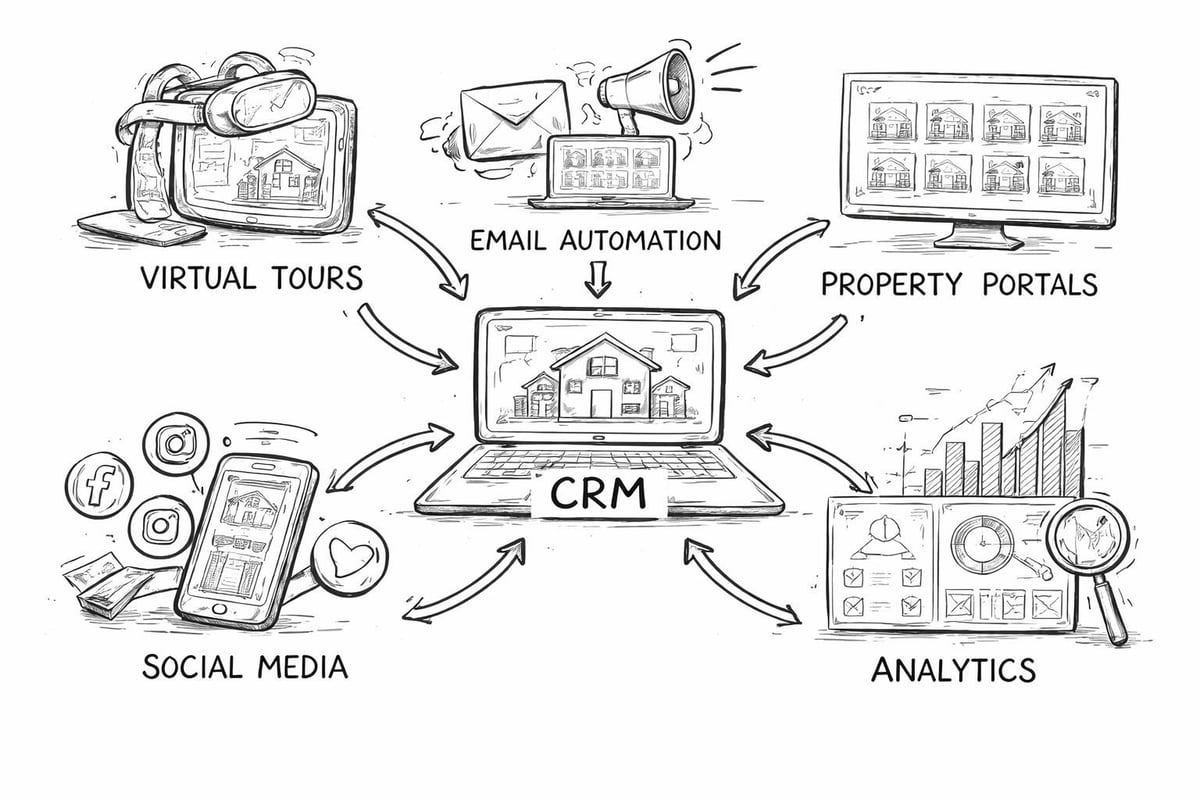
Integration between your website, CRM, and email platform ensures seamless data flow. When someone enquires about a property, they automatically enter nurture sequences appropriate to their interests and timeline.
Building Valuable Email Content
Newsletter content must balance promotional property listings with genuinely valuable information. The most successful real estate email campaigns maintain a 70/30 split between educational content and promotional messaging.
Valuable content includes current market statistics, local development news, financing changes affecting buyers, and seasonal property maintenance tips. This approach positions you as a trusted advisor rather than simply a promoter of listings.
Virtual Tours and Technology Integration
Technology has revolutionised property presentation, with virtual tours and 3D walkthroughs becoming standard expectations rather than premium features. Video marketing and virtual tours significantly boost buyer confidence and engagement.
Virtual Tour Implementation
Professional virtual tours allow potential buyers to explore properties remotely, saving time for both agents and serious prospects. These technologies proved invaluable during COVID-19 restrictions and continue delivering value by pre-qualifying buyers before physical inspections.
Virtual tour technologies include:
- 360-degree photography with interactive navigation
- Matterport 3D scans creating immersive walkthroughs
- Drone footage showcasing properties and surroundings
- Livestream open homes for remote participants
- Augmented reality staging for vacant properties
These tools enhance digital marketing in real estate by extending reach beyond geographic limitations. Interstate and international buyers can comprehensively evaluate properties without travel, expanding your potential buyer pool significantly.
Website Optimisation and User Experience
Your website serves as the central hub for all digital marketing activities, making its optimisation critical for conversion success. Property seekers visiting your site expect fast loading times, intuitive navigation, and comprehensive property information.
Essential Website Features
Modern real estate websites must deliver exceptional user experiences across all devices, with mobile traffic now exceeding desktop for most property searches. Professional web design ensures technical performance matches visual appeal.
Critical website elements include:
- Advanced property search with multiple filter options
- High-quality imagery showcasing properties effectively
- Integrated mapping showing property locations and amenities
- Lead capture forms strategically placed without being intrusive
- Agent profiles building trust and personal connection
- Mortgage calculators helping buyers understand affordability
- Suburb information positioning you as a local expert
Page speed directly impacts both user experience and search rankings. Compressed images, efficient code, and quality hosting ensure properties load quickly even on mobile connections.
Conversion Rate Optimisation
Driving traffic to your website represents only half the equation. Converting visitors into leads requires strategic placement of calls-to-action, compelling property descriptions, and trust-building elements.
Trust signals include client testimonials, professional certifications, awards and recognition, and clear contact information. Social proof demonstrates your track record while reducing perceived risk for potential clients considering engaging your services.
Analytics and Performance Measurement
Effective digital marketing in real estate requires continuous measurement and refinement. Analytics platforms reveal which strategies generate leads, what content resonates with audiences, and where budget should be allocated for maximum return.
Key Performance Indicators
Tracking the right metrics guides strategic decisions and identifies improvement opportunities. Vanity metrics like total website visitors matter less than engagement and conversion indicators.
| Metric Category | Specific KPIs | Target Benchmarks |
|---|---|---|
| Website | Pages per session, bounce rate, time on site | 3+ pages, <60% bounce, 2+ minutes |
| Lead Generation | Form completions, phone calls, email enquiries | 2-5% conversion rate |
| Email Marketing | Open rates, click rates, unsubscribe rates | 20-30% open, 2-5% click |
| Social Media | Engagement rate, reach, profile visits | 2-5% engagement |
| Paid Advertising | Cost per lead, conversion rate, ROAS | <$50 CPL, 3-7% conversion |
Digital marketing services that include comprehensive analytics reporting ensure transparency and accountability for marketing investments.
Attribution and ROI Tracking
Understanding which marketing channels contribute to closed sales enables intelligent budget allocation. Multi-touch attribution recognises that buyers typically interact with multiple touchpoints before converting.
A buyer might discover you through organic search, engage with social media content, attend an open home, and finally submit an enquiry through email remarketing. Proper attribution credits each touchpoint appropriately rather than assigning all value to the final interaction.
Building Your Digital Marketing Strategy
Implementing effective digital marketing in real estate requires strategic planning, consistent execution, and regular optimisation. Success rarely comes from isolated tactics but rather from integrated campaigns where each element reinforces others.
Strategic Planning Framework
Begin by clearly defining your target audience, geographic focus, and unique value proposition. Are you positioning as a luxury specialist, first-home-buyer advocate, or neighbourhood expert? This positioning guides all marketing decisions.
Development process:
- Audit current digital presence and performance
- Research competitor strategies and market positioning
- Define specific, measurable marketing objectives
- Allocate budget across channels based on expected ROI
- Create content calendar and campaign schedules
- Implement tracking and analytics infrastructure
- Launch campaigns with testing methodology
- Monitor performance and optimise continuously
Strategic digital marketing planning considers both quick-win opportunities and long-term brand building. Balancing immediate lead generation with sustainable organic growth creates resilient marketing systems.
Resource Allocation and Timing
Real estate markets experience seasonal fluctuations that should inform marketing intensity. Spring and autumn typically see increased property activity in most Australian markets, warranting increased advertising spend during these periods.
Budget allocation should favour proven channels while testing emerging opportunities. A typical distribution might allocate 50% to established performers, 30% to growing channels, and 20% to experimental tactics. This approach maintains stability while pursuing innovation.
Competitive Differentiation Through Digital Excellence
The widespread adoption of digital marketing in real estate has intensified competition for online visibility. Differentiation comes not from using digital channels but from using them more effectively, consistently, and strategically than competitors.
Brand Building in Digital Spaces
Personal branding distinguishes individual agents in crowded markets. Consistent visual identity, authentic personality, and specialised expertise all contribute to memorable positioning. Your digital presence should reflect a cohesive brand experience across all touchpoints.
Effective branding strategies extend beyond logos and colour schemes to encompass messaging, values, and the overall experience you deliver. Every social media post, email, and website interaction should reinforce your brand positioning.
Staying Current With Digital Trends
The digital marketing landscape evolves rapidly, with new platforms, technologies, and best practices emerging regularly. Proven digital marketing strategies for real estate emphasise the importance of adapting to changing buyer behaviours and platform algorithms.
Continuous education through industry publications, marketing conferences, and professional development ensures your strategies remain current. What worked effectively in 2024 may deliver diminishing returns in 2026 as buyer behaviours shift and platform algorithms change.
Implementation Support and Expertise
Successfully executing comprehensive digital marketing in real estate requires significant expertise, time, and resources. Many agents find that partnering with specialists delivers better results than attempting to manage everything internally.
Professional marketing agencies bring specialised skills in SEO, paid advertising, content creation, and analytics that most real estate professionals lack the time to develop. This expertise translates directly to improved campaign performance and higher quality leads.
The most successful real estate professionals focus their energy on their core competency of serving clients while delegating marketing execution to experts who understand the nuances of being found online in competitive markets.
Digital marketing has fundamentally transformed how real estate professionals connect with buyers and sellers, creating both unprecedented opportunities and intensified competition. Success in 2026's property market demands sophisticated, integrated digital strategies that combine organic visibility, paid advertising, engaging content, and exceptional user experiences across all touchpoints. Whether you're an independent agent or established agency looking to enhance your digital presence, My Heart Studio provides the expertise, strategic planning, and execution capabilities to help your real estate business thrive in the digital landscape. Connect with our Adelaide-based team to discover how tailored digital marketing solutions can elevate your property marketing and generate qualified leads consistently.