
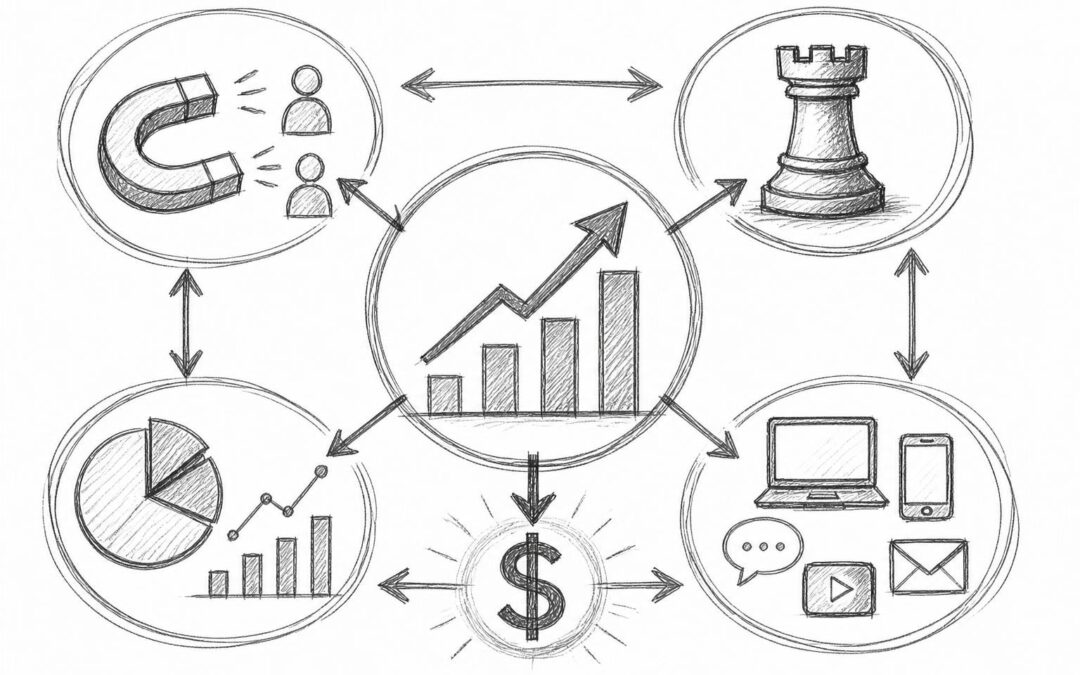
Businesses across Australia face unprecedented opportunities and challenges as they navigate the evolving landscape of digital commerce in 2026. Marketing for business growth has become more sophisticated than ever, requiring strategic planning, data-driven decision making, and a comprehensive understanding of customer behaviour across multiple touchpoints. Professional services, financial institutions, and service providers must adapt their approach to remain competitive whilst maintaining meaningful connections with their target audiences.
Understanding the Foundation of Growth-Oriented Marketing
Marketing for business growth extends far beyond promotional activities and advertising campaigns. It encompasses a holistic approach to understanding market dynamics, customer needs, and competitive positioning that drives sustainable expansion.
The Strategic Framework
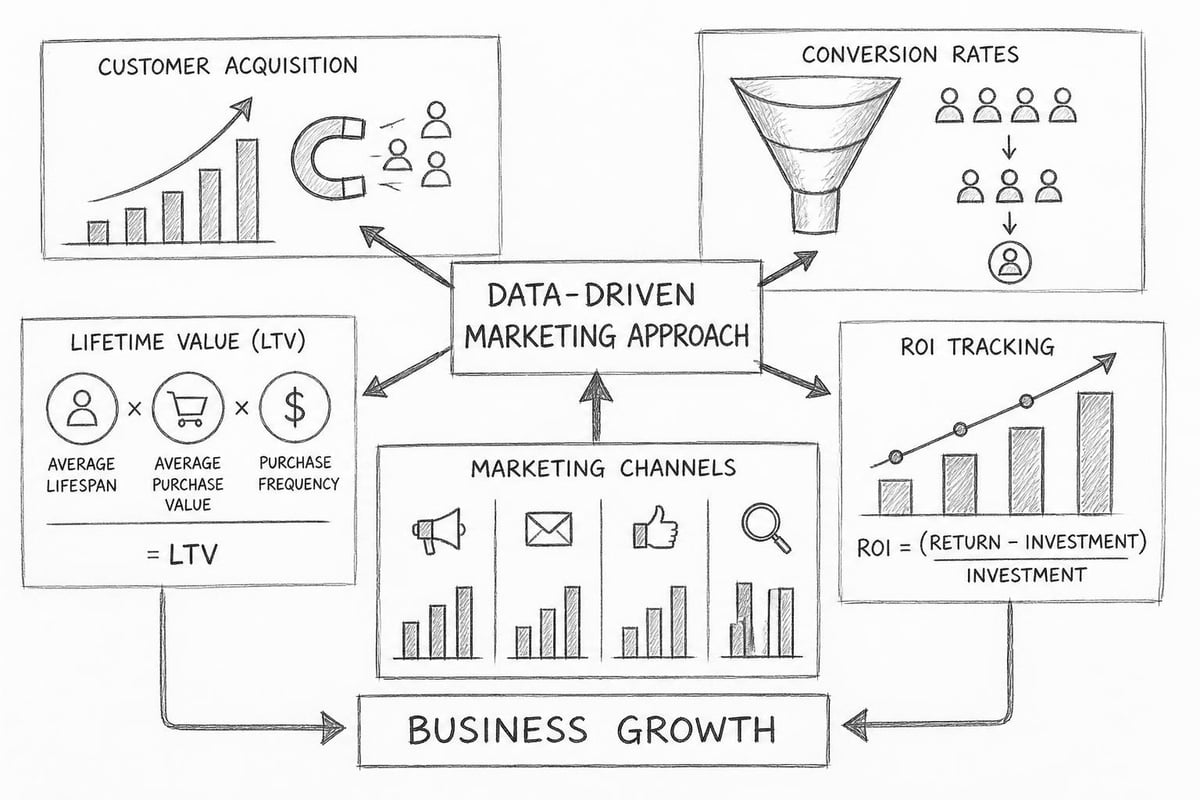
Successful growth marketing begins with establishing clear objectives and measurable outcomes. Businesses must define what growth means within their specific context, whether that involves expanding market share, increasing customer lifetime value, or entering new geographical territories. Effective marketing strategies for small businesses emphasise the importance of competitor analysis and understanding local market dynamics before implementing tactical initiatives.
Core elements of a growth marketing framework include:
- Customer acquisition cost analysis and optimisation
- Lifetime value calculations and improvement strategies
- Market segmentation and targeting precision
- Brand positioning and differentiation
- Channel performance measurement and attribution
The foundation requires businesses to invest time in understanding their ideal customer profiles, mapping customer journeys, and identifying friction points that prevent conversion or retention. This analytical groundwork informs every subsequent marketing decision and ensures resources are allocated efficiently.
Digital Transformation and Marketing Effectiveness
Digital transformation has fundamentally altered how businesses approach marketing for business growth in 2026. The integration of advanced analytics, automation tools, and artificial intelligence enables unprecedented precision in targeting and personalisation.
Leveraging Technology for Scalable Growth
Modern marketing technology stacks allow businesses to automate repetitive tasks whilst maintaining personalised customer experiences at scale. Digital marketing services now incorporate sophisticated tools that track customer behaviour across multiple touchpoints, providing insights that inform strategic decisions.
| Technology Category | Primary Function | Growth Impact |
|---|---|---|
| CRM Systems | Customer data management | Enhanced retention and upsell opportunities |
| Marketing Automation | Lead nurturing and email campaigns | Increased conversion efficiency |
| Analytics Platforms | Performance tracking and insights | Data-driven optimisation |
| Content Management | Website and content delivery | Improved user experience |
| Social Media Tools | Community engagement and monitoring | Brand awareness and loyalty |
Research into optimizing marketing effectiveness under budget constraints demonstrates that businesses achieving the highest returns focus on integrated approaches rather than siloed channel strategies. The data reveals that coordinated campaigns across multiple touchpoints generate significantly better results than single-channel initiatives.
Strategic Website Development
A well-designed website serves as the cornerstone of digital marketing efforts. Professional web design goes beyond aesthetics to create conversion-optimised experiences that guide visitors through carefully crafted journeys. Websites must load quickly, provide intuitive navigation, and deliver content that addresses specific customer needs at various stages of the buying cycle.
Conversion rate optimisation involves continuous testing and refinement. Small improvements to headline copy, call-to-action placement, or form design can yield substantial increases in lead generation and sales. Businesses that treat their websites as dynamic marketing assets rather than static brochures consistently outperform competitors in customer acquisition efficiency.
Content Strategy and Thought Leadership
Marketing for business growth increasingly relies on establishing authority and trust through valuable content creation. Businesses that consistently publish insightful, helpful content position themselves as industry leaders and attract qualified prospects organically.
Building Content Ecosystems
Effective content strategies extend beyond blog posts to encompass multiple formats and distribution channels:
- Educational resources that address common customer challenges and questions
- Case studies and testimonials demonstrating proven results and client success stories
- Video content explaining complex concepts or showcasing services in action
- Interactive tools and calculators providing immediate value to prospects
- Industry reports and original research establishing thought leadership credentials
The key lies in creating content that serves genuine customer needs rather than simply promoting services. When businesses focus on solving problems and providing actionable insights, they naturally attract engaged audiences who are more receptive to commercial messaging when the timing is appropriate.
Data-Driven Decision Making and Budget Allocation
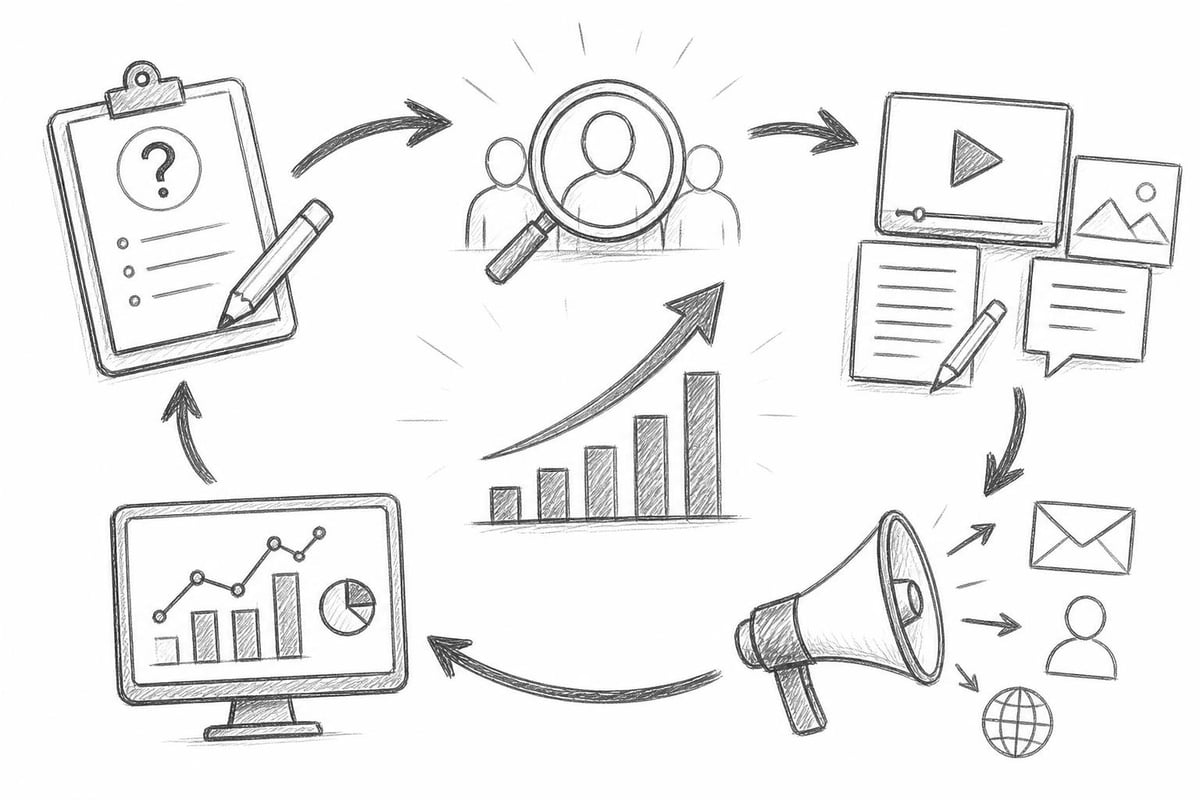
Understanding where to invest marketing resources represents one of the most critical aspects of marketing for business growth. Strategic recommendations for business growth emphasise the importance of strengthening foundational elements before pursuing aggressive expansion.
Performance Metrics That Matter
Businesses must track metrics that correlate directly with growth objectives rather than vanity metrics that look impressive but don’t drive results.
Essential growth metrics include:
- Customer acquisition cost by channel
- Customer lifetime value by segment
- Return on advertising spend
- Lead-to-customer conversion rates
- Average transaction value trends
- Customer retention and churn rates
- Net promoter scores
Research on marketing budget allocation frameworks reveals that businesses with dynamic allocation strategies that respond to performance data achieve better outcomes than those with static annual budgets. The ability to shift resources toward high-performing channels whilst reducing investment in underperforming areas creates competitive advantages.
Testing and Optimisation Protocols
Systematic testing separates high-growth businesses from those that stagnate. A/B testing, multivariate experiments, and controlled rollouts allow marketers to validate assumptions before committing significant resources. This scientific approach to marketing reduces risk whilst accelerating learning cycles.
| Test Type | Application | Typical Duration | Decision Criteria |
|---|---|---|---|
| A/B Tests | Landing pages, email subject lines | 1-2 weeks | Statistical significance (95%+ confidence) |
| Multivariate | Complex page elements | 2-4 weeks | Sufficient sample size and clear winner |
| Sequential | Campaign messaging | Ongoing | Performance trends over time |
| Holdout Groups | Channel effectiveness | 1-3 months | Incremental revenue attribution |
Search Engine Optimisation and Organic Visibility
Organic search remains one of the most cost-effective channels for sustainable marketing for business growth. Businesses that invest in comprehensive SEO strategies build long-term assets that generate qualified traffic without ongoing advertising expenditure.
Technical and Content SEO Integration
Modern SEO requires both technical excellence and high-quality content creation. Search engines reward websites that provide exceptional user experiences alongside comprehensive, authoritative information. Technical factors such as site speed, mobile responsiveness, structured data markup, and secure connections form the foundation upon which content strategies are built.
Local SEO becomes particularly important for service-based businesses targeting specific geographical regions. Optimising Google Business Profiles, building local citations, and earning reviews from satisfied customers significantly improve visibility in local search results where commercial intent is highest.
Businesses should focus on earning authoritative backlinks through genuine relationships, valuable content creation, and strategic partnerships rather than artificial link-building schemes that risk penalties.
Paid Advertising and Acceleration Strategies
Whilst organic strategies build sustainable foundations, paid advertising accelerates growth by immediately placing businesses in front of qualified prospects. Pay-per-click advertising strategies enable precise targeting based on demographics, interests, search intent, and behaviour patterns.
Strategic Channel Selection
Different advertising platforms serve distinct purposes within comprehensive marketing for business growth strategies:
- Search advertising captures high-intent prospects actively seeking solutions
- Social media advertising builds awareness and nurtures consideration
- Display advertising maintains brand visibility and supports remarketing
- Video advertising communicates complex messages and builds emotional connections
- Native advertising integrates promotional content into relevant editorial environments
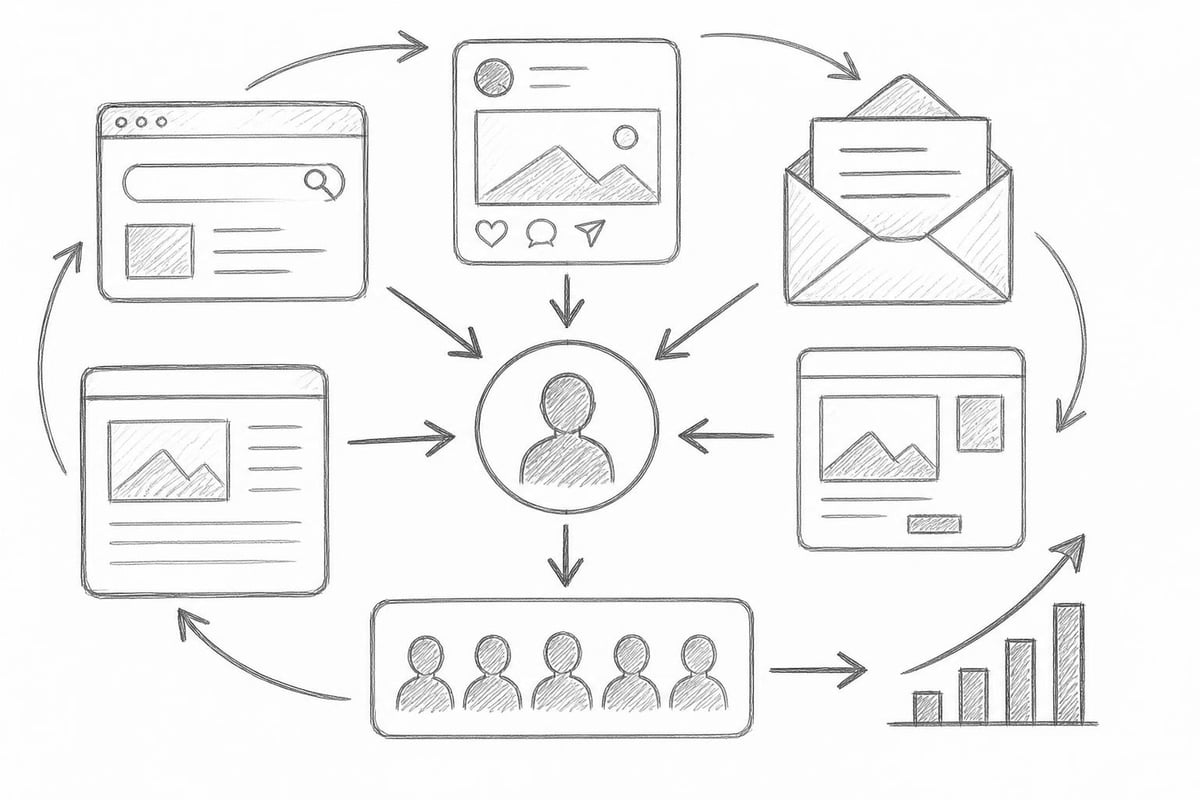
The most effective approach involves coordinated campaigns across multiple channels that work synergistically. Prospects might first encounter a brand through social media advertising, research through organic search, and convert after seeing remarketing messages that address specific objections or concerns.
Customer Retention and Lifetime Value Optimisation
Acquiring new customers costs significantly more than retaining existing ones. Sustainable business growth strategies emphasise the importance of customer retention programmes that increase lifetime value through repeat purchases and referrals.
Retention Marketing Tactics
- Personalised email nurture sequences that provide ongoing value beyond initial transactions
- Loyalty programmes rewarding repeat business and encouraging referrals
- Exclusive content and early access making customers feel valued and appreciated
- Proactive customer support addressing issues before they escalate
- Regular communication maintaining relationships during non-purchase periods
Businesses should segment their customer base and tailor retention strategies based on purchase history, engagement levels, and lifetime value potential. High-value customers warrant personalised attention and bespoke offerings that strengthen relationships and prevent attrition to competitors.
Emerging Technologies and Future-Ready Marketing
The marketing landscape continues evolving rapidly as new technologies emerge. Applications of large language models in marketing management demonstrate how artificial intelligence can enhance personalisation, content creation, and customer service at unprecedented scale.
AI and Automation Integration
Smart businesses are already integrating AI-powered tools that:
- Generate personalised content variations for different audience segments
- Predict customer churn and trigger retention interventions
- Optimise bid strategies in real-time across advertising platforms
- Analyse customer sentiment from reviews and social media mentions
- Provide instant customer support through sophisticated chatbots
The key lies in using automation to enhance rather than replace human creativity and strategic thinking. Technology handles repetitive tasks and data analysis, freeing marketers to focus on strategy, creative development, and relationship building.
Privacy and Trust Considerations
As marketing becomes increasingly data-driven, businesses must balance personalisation with privacy concerns. Transparent data practices, clear opt-in mechanisms, and respect for customer preferences build trust that underpins long-term relationships. Compliance with privacy regulations should be viewed as a minimum standard rather than a limitation.
Measurement, Reporting and Continuous Improvement
Effective marketing for business growth requires robust measurement frameworks that connect marketing activities to business outcomes. Regular reporting keeps stakeholders informed whilst identifying opportunities for optimisation.
Dashboard Design and KPI Selection
Marketing dashboards should balance comprehensiveness with clarity. Too many metrics create confusion, whilst too few obscure important trends. Effective dashboards segment information by audience, with executive summaries highlighting strategic insights and detailed reports enabling tactical decision-making.
Monthly reporting should include:
- Revenue attributed to marketing activities by channel and campaign
- Pipeline development and progression through sales stages
- Customer acquisition costs compared to historical benchmarks
- Lifetime value trends by cohort and segment
- Market share indicators and competitive positioning
- Brand awareness and sentiment metrics
- Website traffic, engagement, and conversion trends
The reporting process should facilitate discussions about strategic adjustments rather than simply documenting past performance. Forward-looking insights that inform resource allocation decisions create more value than backward-looking historical summaries.
Cross-Functional Collaboration and Organisational Alignment
Marketing for business growth cannot occur in isolation. Effective marketing requires alignment across sales, customer service, product development, and executive leadership. When these functions work collaboratively toward shared growth objectives, businesses achieve breakthrough results.
Breaking Down Departmental Silos
Establishing regular communication channels between marketing and other departments ensures consistent messaging and seamless customer experiences. Sales teams provide valuable insights about customer objections and competitive dynamics that inform marketing messaging. Customer service teams identify common issues that content can address proactively.
Product development benefits from marketing’s market research and customer feedback, ensuring new offerings meet genuine market needs. Executive leadership provides strategic direction and resource allocation whilst marketing demonstrates measurable contributions to revenue growth and market expansion.
Industry-Specific Considerations
Different industries require tailored approaches to marketing for business growth. Professional services firms emphasise thought leadership and relationship development, whilst trades businesses focus on local visibility and reputation management. Financial services navigate strict regulatory requirements whilst building trust, and healthcare providers balance compliance with patient engagement.
Understanding industry-specific dynamics, customer decision-making processes, and competitive landscapes allows businesses to develop marketing strategies that resonate with their particular audiences. Generic approaches rarely achieve optimal results compared to customised strategies that address unique challenges and opportunities within specific sectors.
Strategic marketing for business growth combines data-driven decision making, customer-centric content, and integrated channel strategies that drive sustainable expansion. By focusing on measurable outcomes, continuous optimisation, and genuine value creation, businesses position themselves for long-term success in competitive markets. My Heart Studio partners with professional services, trades, financial services, retirement villages, aged care facilities, and NDIS providers across Australia to develop and implement comprehensive digital marketing strategies that drive measurable growth. Our team brings deep expertise in web design, SEO, and strategic planning to help businesses achieve their growth objectives through data-driven marketing excellence.