
The digital landscape continues to evolve at an unprecedented pace, creating a growing demand for professionals who can navigate the complexities of online marketing. A web marketing specialist stands at the intersection of technology, creativity, and strategic thinking, helping businesses build their online presence and achieve measurable results. For Australian businesses looking to expand their digital footprint, understanding this role is essential to making informed hiring decisions and developing effective marketing strategies that resonate with local and national audiences.
Understanding the Core Role of a Web Marketing Specialist
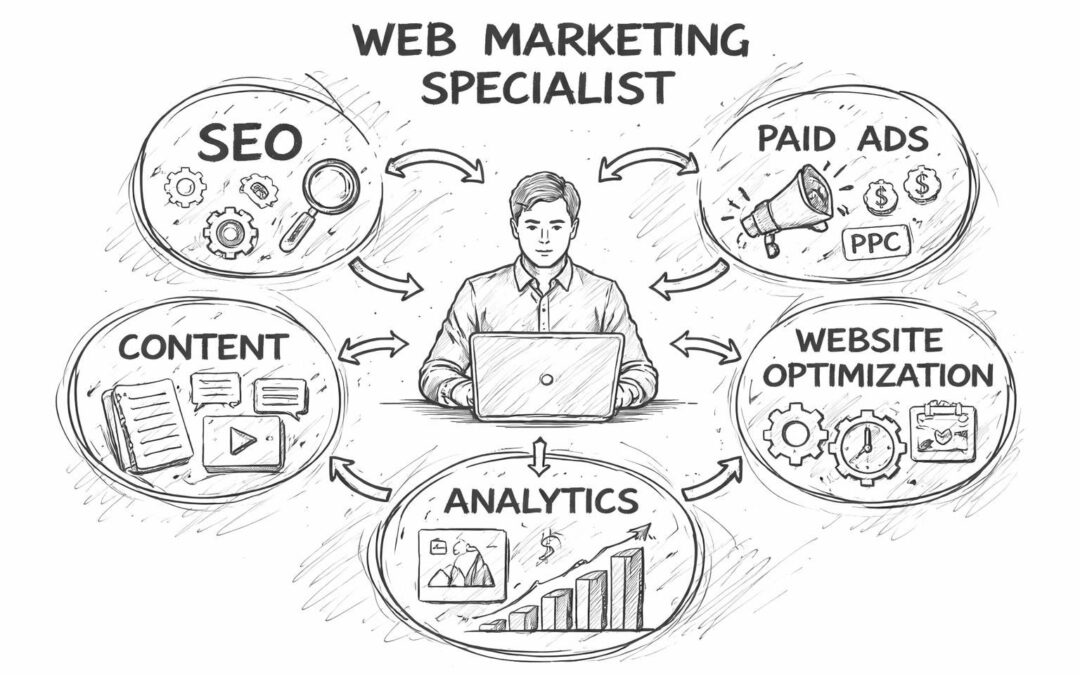
A web marketing specialist is a multifaceted professional responsible for developing, implementing, and managing marketing campaigns that promote a company's products, services, or brand across digital channels. This role requires a unique blend of technical knowledge, creative thinking, and analytical skills to drive traffic, generate leads, and convert prospects into customers.
The position has evolved significantly from basic website management to encompass a comprehensive understanding of digital ecosystems. Today's professionals must master search engine optimisation, pay-per-click advertising, social media marketing, email campaigns, and content strategy while continuously adapting to algorithm changes and emerging technologies.
Strategic Planning and Campaign Development
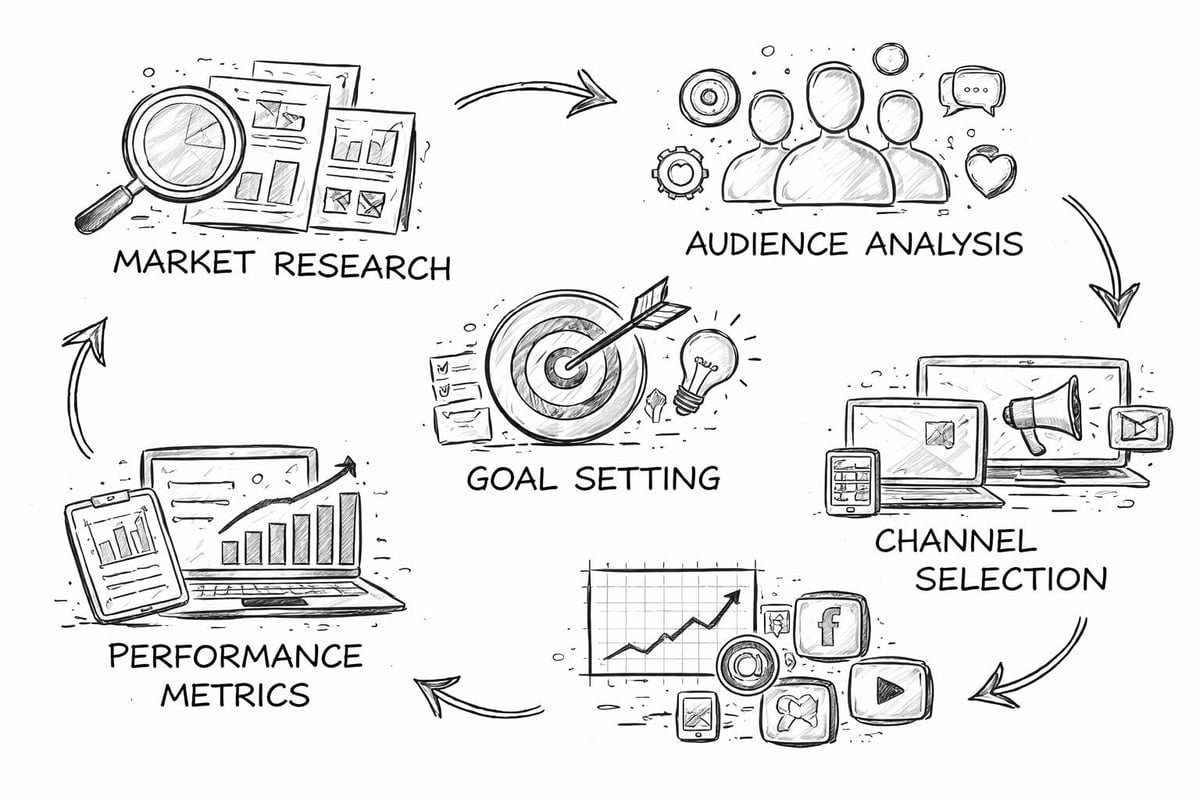
Web marketing specialists begin their work by understanding business objectives and target audiences. They conduct market research, analyse competitor strategies, and identify opportunities within the digital space.
Key planning responsibilities include:
- Developing comprehensive digital marketing strategies aligned with business goals
- Creating detailed campaign timelines and budget allocations
- Establishing key performance indicators and success metrics
- Coordinating with cross-functional teams to ensure consistent messaging
- Identifying emerging trends and recommending innovative approaches
This strategic foundation ensures that all marketing efforts contribute meaningfully to lead generation and business growth, rather than operating as disconnected activities.
Essential Skills and Competencies
The key skills required for a web marketing specialist extend far beyond basic marketing knowledge. Professionals in this field must demonstrate proficiency across multiple disciplines while remaining adaptable to industry changes.
Technical Proficiency
Modern web marketing demands solid technical capabilities. Specialists must navigate content management systems, marketing automation platforms, and analytics tools with confidence.
| Technical Skill | Application | Business Impact |
|---|---|---|
| Google Analytics | Traffic analysis and user behaviour tracking | Data-driven decision making |
| SEO Tools | Keyword research and ranking monitoring | Improved organic visibility |
| CMS Platforms | Content publishing and website updates | Efficient content management |
| Email Marketing Software | Campaign creation and automation | Enhanced customer engagement |
| Social Media Management Tools | Scheduling and performance tracking | Streamlined social presence |
These technical competencies enable specialists to implement campaigns efficiently and extract meaningful insights from complex data sets.
Analytical and Data Interpretation Skills
Understanding numbers and translating them into actionable strategies separates good marketers from exceptional ones. Web marketing specialists spend considerable time analysing metrics, identifying patterns, and making recommendations based on evidence rather than intuition.
They monitor website traffic, conversion rates, bounce rates, engagement metrics, and customer journey data. This analysis informs everything from content topics to advertising spend allocation, ensuring resources are invested where they'll generate the highest returns.
Creative and Communication Abilities
While technical skills provide the foundation, creativity drives engagement. Specialists must craft compelling messages, develop persuasive copy, and conceptualise campaigns that capture attention in crowded digital spaces.
Strong written and verbal communication skills enable them to collaborate effectively with designers, developers, executives, and external stakeholders. They translate complex marketing concepts into understandable terms for non-technical team members while articulating business needs to technical specialists.
Day-to-Day Responsibilities and Tasks
The typical responsibilities of a web marketing specialist vary depending on organisation size and industry, but certain core functions remain consistent across roles.
Search Engine Optimisation Management
SEO forms the backbone of sustainable online visibility. Specialists conduct keyword research, optimise website content, improve site architecture, and build quality backlinks to improve search rankings.
They stay current with algorithm updates from Google and other search engines, adjusting strategies to maintain and improve organic performance. This ongoing work ensures businesses remain discoverable when potential customers search for relevant products or services.
Paid Advertising Campaign Management
Managing pay-per-click campaigns across platforms like Google Ads, Facebook Ads, and LinkedIn requires constant attention and optimisation. Specialists create ad copy, design targeting parameters, set budgets, and monitor performance metrics.
Successful campaign management involves:
- Researching and selecting appropriate keywords or audience segments
- Crafting compelling ad copy and selecting engaging visuals
- Setting up conversion tracking and attribution models
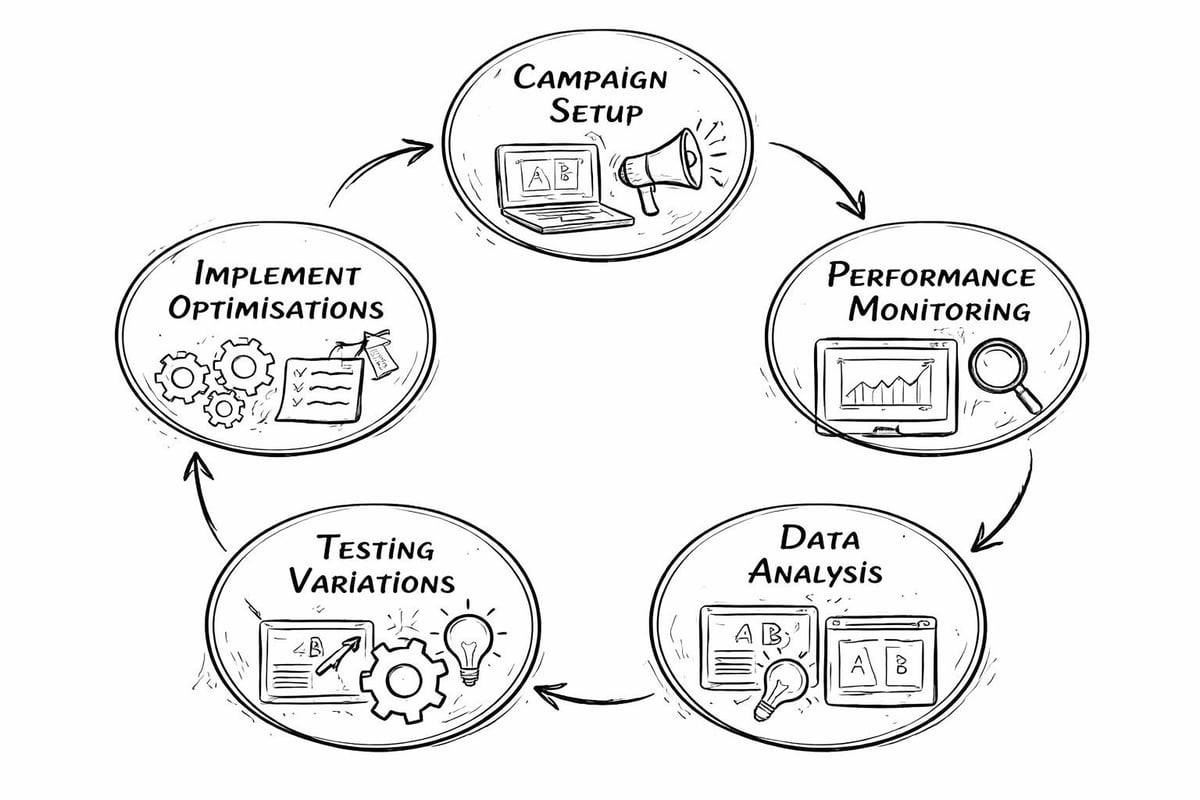
- Monitoring daily performance and making bid adjustments
- Conducting A/B tests to improve click-through and conversion rates
- Generating reports and presenting results to stakeholders
This iterative process ensures advertising budgets deliver maximum return on investment while reaching the right audiences at optimal times.
Content Strategy and Website Management
Web marketing specialists often oversee content calendars, ensuring consistent publishing schedules across blogs, social media, and email channels. They identify content gaps, research trending topics, and coordinate with writers and designers to produce valuable resources.
Website management responsibilities include updating product pages, publishing blog posts, optimising page load speeds, ensuring mobile responsiveness, and maintaining proper internal linking structures. These tasks directly impact user experience and search engine rankings.
Career Pathways and Professional Development
The role of a web marketing specialist serves as an excellent foundation for various career trajectories within digital marketing. Professionals entering this field can progress toward specialisation or leadership positions depending on their interests and strengths.
Entry-Level Progression
Most specialists begin with foundational marketing roles, gradually assuming more responsibility as they demonstrate competency. Entry positions might focus on specific channels or tasks, such as social media coordination or email marketing assistance.
As professionals develop expertise, they transition into full web marketing specialist positions where they manage multiple channels and take ownership of campaign performance. This progression typically occurs over two to four years, depending on individual aptitude and learning commitment.
Advanced Career Options
Experienced specialists often move toward senior-level positions or specialised roles that align with their strongest skills and interests.
Specialisation paths include:
- SEO Manager focusing exclusively on organic search strategies
- PPC Specialist managing large advertising budgets across multiple platforms
- Content Marketing Manager overseeing content strategy and production teams
- Marketing Automation Specialist implementing sophisticated customer journey workflows
- Conversion Rate Optimisation Expert focused on improving website performance
Leadership progression might lead to:
- Digital Marketing Manager overseeing entire digital teams
- Head of Growth responsible for all customer acquisition channels
- Marketing Director setting strategic direction for organisations
- Chief Marketing Officer shaping company-wide marketing vision
Continuous Learning Requirements
Digital marketing evolves rapidly, making ongoing education essential for career success. Specialists must dedicate time to learning new platforms, understanding algorithm changes, and mastering emerging technologies.
Professional development activities include attending industry conferences, completing certification programs, participating in webinars, reading industry publications, and experimenting with new tools and strategies. Many successful professionals allocate several hours weekly to staying current with industry developments.
Industry-Specific Considerations for Australian Businesses
Australian businesses face unique challenges and opportunities within the digital marketing landscape. Web marketing specialists working in this market must understand local consumer behaviour, regional preferences, and competitive dynamics.
Local Search Optimisation
For businesses serving specific Australian cities or regions, local SEO becomes paramount. Specialists optimise Google Business Profiles, manage local citations, and create location-specific content to capture nearby customers searching for products or services.
This approach proves particularly valuable for businesses in competitive markets like Adelaide, Melbourne, and Sydney, where local visibility can determine success or failure. Understanding suburb-level search patterns and consumer preferences enables more effective targeting.
Cultural Relevance and Messaging
Australian audiences respond to distinct communication styles and value propositions. Web marketing specialists must craft messages that resonate with local sensibilities while avoiding approaches that might work in other markets but fall flat domestically.
Seasonal considerations differ significantly from Northern Hemisphere markets, requiring adjusted campaign timing for holidays, weather patterns, and cultural events. Specialists working with B2B clients must also navigate Australian business culture and decision-making processes.
Measuring Success and Demonstrating Value
Effective web marketing specialists don't just execute campaigns; they prove their impact through comprehensive reporting and analysis. This accountability ensures continued investment in digital marketing and informs strategic decision-making.
Key Performance Indicators
Different objectives require different metrics, but certain KPIs consistently matter across most campaigns.
| Objective | Primary Metrics | Secondary Metrics |
|---|---|---|
| Brand Awareness | Impressions, reach, traffic volume | Social media followers, brand searches |
| Lead Generation | Form submissions, qualified leads | Cost per lead, lead quality scores |
| E-commerce Sales | Revenue, transaction volume | Average order value, repeat purchases |
| Customer Engagement | Time on site, pages per session | Email open rates, social engagement |
| Content Performance | Page views, shares | Comments, backlinks earned |
Specialists must select appropriate metrics for each campaign, avoiding vanity metrics that look impressive but don't correlate with business outcomes.
Reporting and Communication
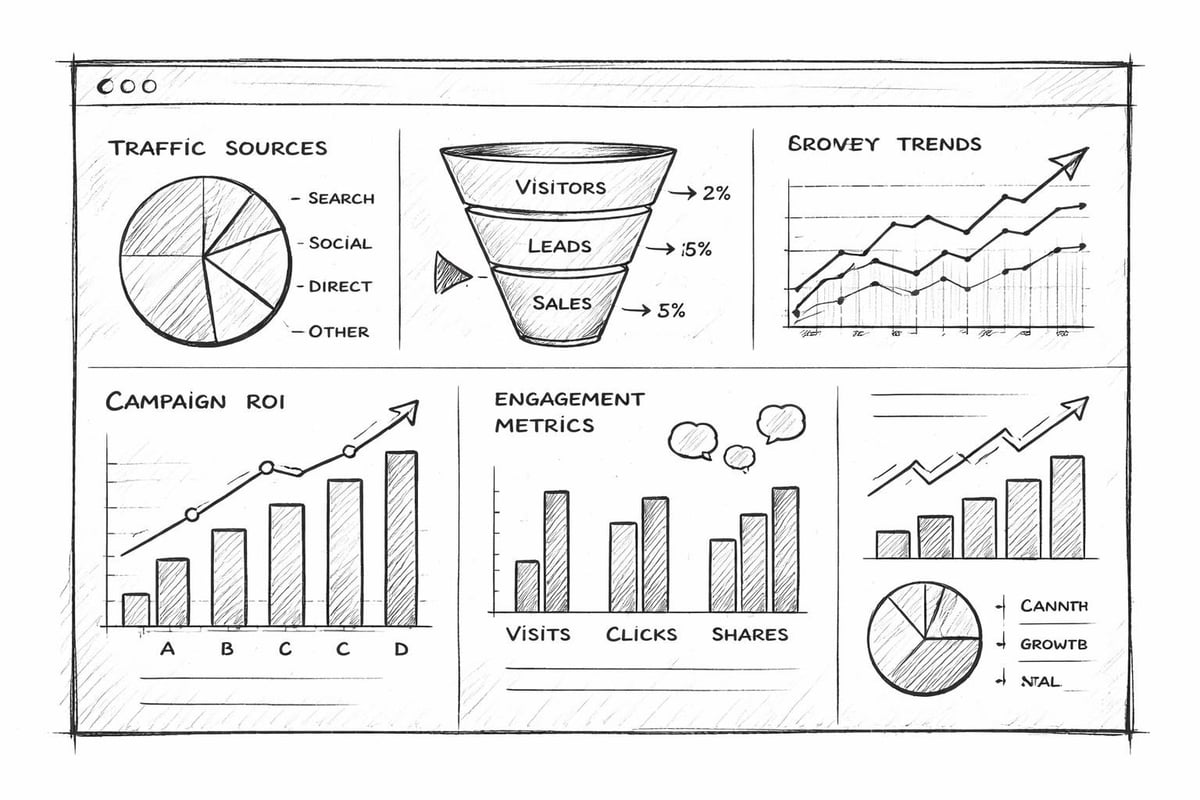
Regular reporting keeps stakeholders informed and builds confidence in marketing investments. Effective reports translate complex data into clear narratives that highlight successes, explain challenges, and recommend next steps.
Monthly reporting typically includes:
- Executive summary with key highlights and lowlights
- Traffic sources and volume trends
- Conversion performance across channels
- Campaign-specific results and learnings
- Competitive insights and market observations
- Recommendations for the coming period
This transparent communication ensures alignment between marketing activities and business priorities while demonstrating the tangible value specialists provide.
Tools and Technology Stack
Modern web marketing specialists rely on diverse software platforms to execute their responsibilities efficiently. Building proficiency with industry-standard tools accelerates career development and improves campaign outcomes.
Analytics and Measurement Platforms
Google Analytics remains the foundation for website performance tracking, but specialists often supplement it with heat mapping tools, session recording software, and advanced attribution platforms. These technologies reveal how users interact with websites, where they encounter friction, and which touchpoints contribute most to conversions.
Understanding data privacy regulations and implementing proper tracking configurations ensures accurate measurement while maintaining compliance with Australian privacy laws.
Marketing Automation and CRM Systems
Platforms like HubSpot, Marketo, or Pardot enable sophisticated lead nurturing workflows that guide prospects through sales funnels. Specialists configure these systems, segment audiences, design email sequences, and analyse engagement patterns.
Integration between marketing automation and customer relationship management systems ensures seamless handoffs between marketing and sales teams, particularly important for organisations focused on sustainable business growth.
Content Management and Design Tools
Proficiency with WordPress, Webflow, or other content management systems allows specialists to publish content quickly without constant developer involvement. Basic design skills using Canva, Adobe Creative Suite, or similar tools enable rapid creation of social media graphics and promotional materials.
While specialists needn't be expert designers or developers, functional capability with these tools significantly increases their effectiveness and reduces dependence on other departments.
Collaboration and Cross-Functional Work
Web marketing specialists rarely work in isolation. Success requires effective collaboration with multiple departments and external partners.
Working with Creative Teams
Designers, copywriters, and videographers bring campaigns to life. Specialists brief creative teams on campaign objectives, target audiences, and key messages, then provide feedback to ensure deliverables meet strategic requirements.
This relationship works best when specialists provide clear direction while respecting creative expertise, creating space for innovation within strategic boundaries.
Coordinating with Sales and Product Teams
Understanding product features, competitive advantages, and sales processes enables specialists to create more effective campaigns. Regular communication with sales teams reveals customer objections, common questions, and market trends that inform marketing strategies.
Product launches require particularly close coordination, ensuring marketing messages align with product capabilities and launch timelines.
Managing External Agencies and Vendors
Many organisations partner with specialised agencies for specific capabilities like advanced SEO work, creative production, or paid media management. Web marketing specialists often manage these relationships, setting expectations, reviewing deliverables, and ensuring external partners contribute effectively to overall objectives.
Building a Career as a Web Marketing Specialist
Aspiring web marketing specialists should approach career development strategically, building skills progressively while demonstrating measurable results.
Educational Foundation
While formal degrees in marketing provide valuable context, practical skills often matter more than credentials. Many successful specialists come from diverse educational backgrounds, having developed expertise through self-directed learning, certification programs, and hands-on experience.
Relevant certifications include Google Analytics Individual Qualification, Google Ads certifications, HubSpot Content Marketing certification, and Facebook Blueprint certifications. These credentials demonstrate proficiency with specific platforms while providing structured learning paths.
Gaining Practical Experience
Nothing replaces hands-on experience managing real campaigns with actual budgets and measurable outcomes. Entry-level positions, internships, freelance projects, or even managing marketing for small businesses or non-profits provide opportunities to develop skills and build portfolios.
Documenting results through case studies and maintaining a portfolio of successful campaigns helps demonstrate capability to potential employers or clients.
Networking and Professional Community
Engaging with other marketing professionals through industry events, online communities, and professional associations accelerates learning and creates career opportunities. The Australian marketing community includes numerous groups, both in-person and virtual, where specialists share insights and support each other's development.
LinkedIn groups, industry conferences, and local marketing meetups provide valuable connections and learning opportunities that complement formal education and individual practice.
Mastering the role of a web marketing specialist requires dedication to continuous learning, analytical thinking, and creative problem-solving. These professionals drive meaningful business growth by connecting strategic thinking with tactical execution across digital channels. Whether you're looking to develop these capabilities internally or partner with experienced professionals, My Heart Studio brings comprehensive digital marketing expertise to Australian businesses ready to elevate their online presence and achieve measurable results.