
In 2026, the pace of digital change will shape the future of every business. Adapting to new business digital marketing realities is no longer optional, it is essential for growth and survival.
This guide gives you practical, data-driven strategies to help your business thrive. You will discover the latest digital trends, learn how to build a winning strategy, and master channel optimisation for maximum impact.
Explore how AI, automation, and analytics can transform your results. Get step-by-step advice to measure success and future-proof your business digital marketing approach for the challenges ahead.
The 2026 Digital Marketing Landscape: Trends & Shifts
As we approach 2026, business digital marketing is entering a transformative era. Digital channels have become the backbone of customer engagement, but the landscape is evolving faster than ever. Businesses now face both unprecedented opportunities and challenges as technology, consumer behaviour, and regulation rapidly shift.
Key Trends Shaping 2026
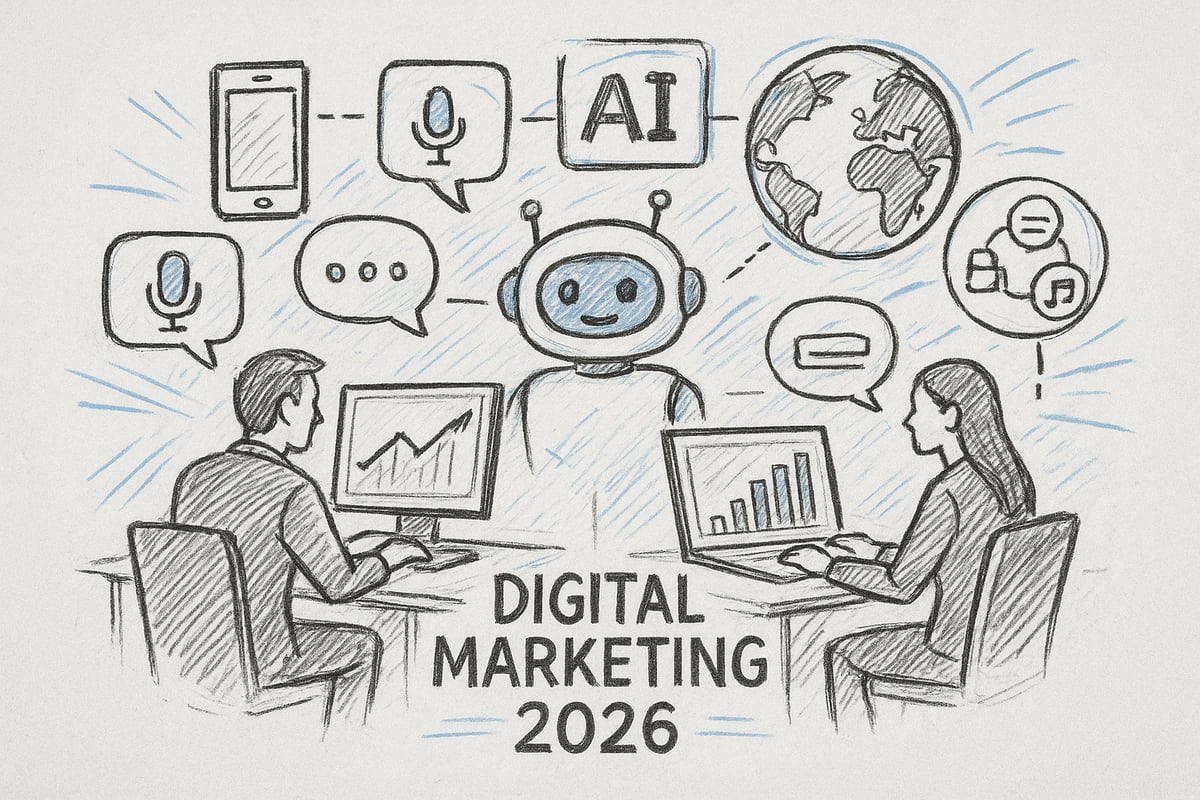
AI-powered personalisation is redefining business digital marketing. Marketers can now deliver tailored experiences using machine learning and predictive analytics. Data privacy remains at the forefront, with consumers demanding transparency and control over their information. The rise of omnichannel experiences means companies must provide seamless interactions across web, mobile, social, and in-store environments. Voice and visual search are also gaining traction, changing how customers discover brands.
Data-Driven Insights and Industry Growth
Recent statistics show the importance of these trends. In 2022, 80% of marketers found content marketing highly effective, while the global business digital marketing industry is expected to reach $107 billion by 2026. This rapid growth is fuelled by smarter automation tools and the widespread adoption of generative AI. For those seeking practical ways to keep pace, Digital marketing strategies for 2026 offers curated insights tailored for modern businesses.
AI and Automation Take Centre Stage
Generative AI and automation are now central to business digital marketing. From content creation to campaign management, AI tools enable faster, more accurate decision-making. Brands are leveraging AI chatbots and predictive analytics to engage customers in real time, improving both satisfaction and conversion rates. Automation also streamlines repetitive tasks, freeing up teams to focus on strategy and creativity.
B2B vs B2C: Evolving Approaches
The distinction between B2B and B2C business digital marketing is becoming more pronounced. B2B marketers focus on building long-term relationships and nurturing leads, while B2C brands prioritise rapid conversions and high-frequency engagement. Both sectors, however, are investing heavily in personalisation, omnichannel strategies, and data-driven decision-making to stay competitive.
Mobile-First and Regulatory Pressures
Mobile-first strategies have become essential as consumers expect flawless experiences across devices. Cross-device journeys are the norm, making it critical for business digital marketing to adapt content and campaigns for smartphones, tablets, and desktops. At the same time, regulatory frameworks like GDPR, CCPA, and new local data laws are tightening. Businesses must balance innovation with compliance, ensuring customer trust and data security.
Real-World Example: AI in Action
Leading brands are already using advanced tools to drive results in business digital marketing. For instance, companies deploy AI chatbots to handle customer queries instantly and use predictive analytics to anticipate needs. This approach not only boosts efficiency but also delivers a more relevant and engaging experience, setting the benchmark for digital marketing success in 2026.
Building a Winning Digital Marketing Strategy for 2026
A strong business digital marketing strategy is essential for growth in 2026. The right approach can help you outpace competitors, reach ideal customers, and adapt quickly to market changes.
Below is a step-by-step framework for building a robust business digital marketing plan, tailored for the evolving digital landscape:
10 Steps to a Future-Ready Business Digital Marketing Strategy
-
Define Clear Objectives
Set specific business digital marketing goals aligned with your overall revenue, brand awareness, and customer retention targets. Clear objectives provide direction and make it easier to measure success.
-
Conduct In-Depth Audience Research
Understand your audience by segmenting them based on demographics, behaviours, and preferences. Develop personas to guide your business digital marketing campaigns, ensuring your messaging stays relevant.
-
Audit Existing Digital Assets
Review your website, content, social profiles, and email systems. Identify gaps or outdated elements that could impact your business digital marketing performance. For actionable insights, consider Building your digital presence to strengthen visibility and trust.
-
Choose the Right Marketing Mix
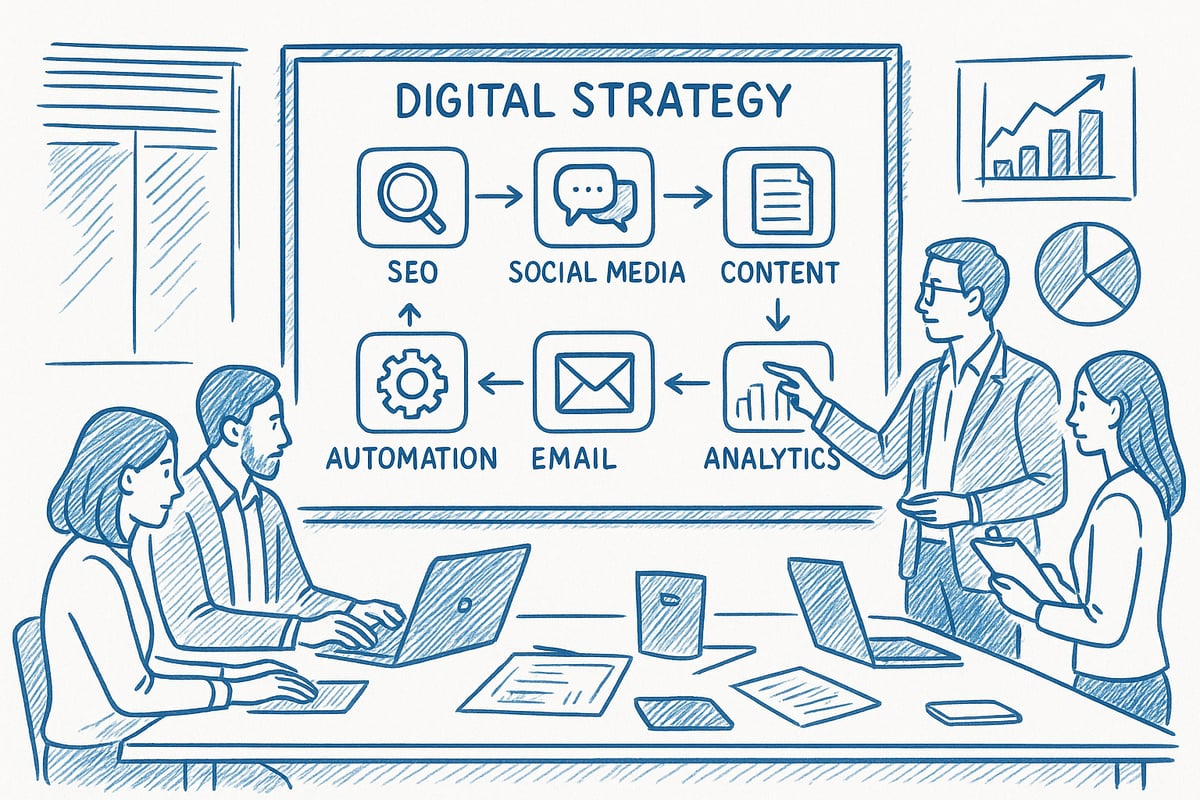
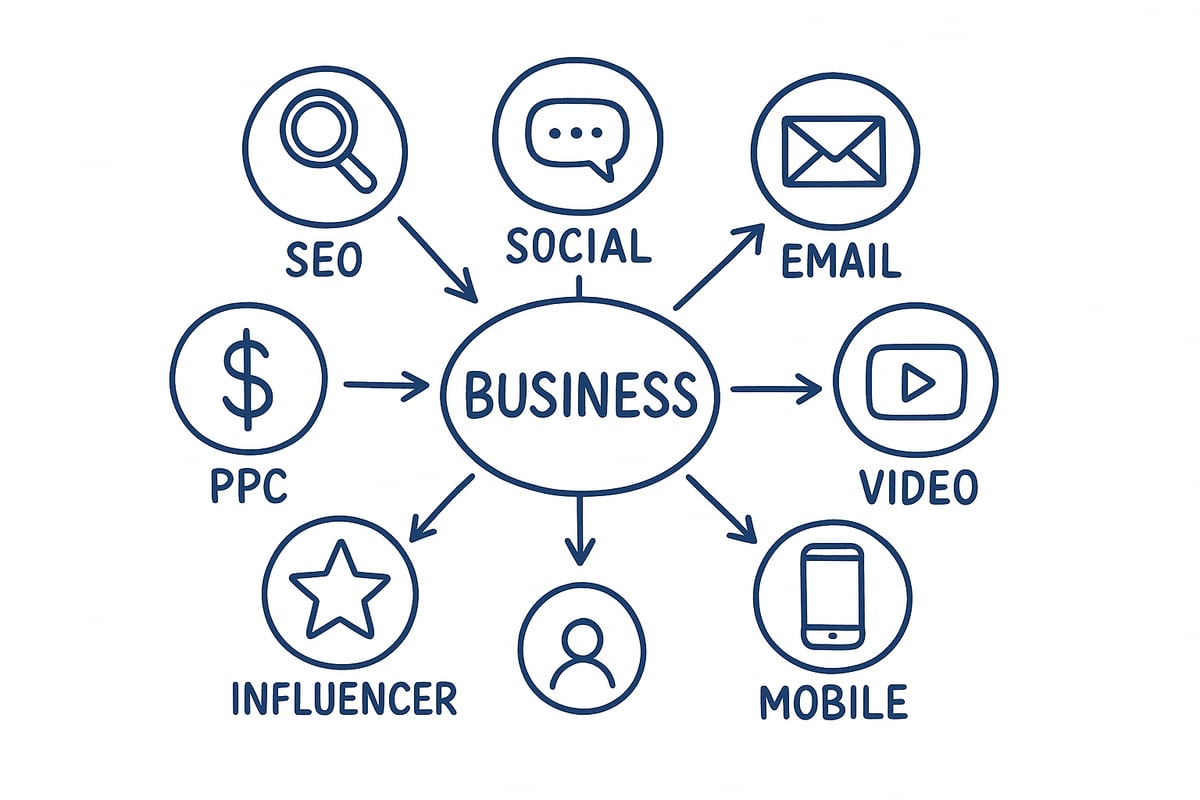
Select digital channels that best serve your business digital marketing objectives. Combine SEO, SEM, content marketing, social media, email, video, and automation for a balanced approach.
-
Develop a Content Plan
Map content to each stage of the buyer journey. Use formats like blogs, videos, and podcasts to engage users and support your business digital marketing strategy.
-
Integrate Automation and AI
Leverage automation tools and AI-driven systems to personalise experiences and streamline workflows. Efficient automation supports smarter business digital marketing with better targeting and reduced manual effort.
-
Set KPIs and Measurement Frameworks
Establish clear KPIs for each channel, such as conversion rates, engagement, or lead quality. Use analytics to monitor business digital marketing progress and adjust tactics as needed.
-
Allocate Budgets Effectively
Distribute resources across paid, owned, and earned media. Prioritise channels that deliver the highest ROI for your business digital marketing investment.
-
Build an Agile Team or Partner with Experts
Create a skilled in-house team or collaborate with agencies for specialised expertise. Agility is crucial for adapting your business digital marketing to new technologies and trends.
-
Plan for Ongoing Optimisation
Regularly review performance data and market trends. Test new ideas, optimise campaigns, and stay ready to pivot your business digital marketing approach as the landscape evolves.
Quick Reference Table: Strategy Essentials
| Step | Key Focus | Outcome |
|---|---|---|
| Objectives | Revenue, awareness, retention | Clear direction |
| Audience | Segmentation, personas | Relevant messaging |
| Assets Audit | Website, content, social, email | Identify improvement areas |
| Marketing Mix | SEO, SEM, content, social, video | Multi-channel engagement |
| Content Plan | Blogs, video, podcasts | Buyer journey alignment |
| Automation & AI | Personalisation, workflows | Efficiency, precision |
| KPIs | Conversions, engagement, leads | Measurable results |
| Budget | Paid, owned, earned media | ROI-focused allocation |
| Team/Partners | Skills, agencies | Agility, expertise |
| Optimisation | Testing, analytics | Continuous improvement |
Example in Action
A retail brand wanted to grow sales in a competitive sector. By aligning their business digital marketing campaigns with clear objectives and audience insights, they crafted content that resonated with buyers. Integrating automation allowed them to personalise offers across channels. Regular reviews and budget adjustments ensured campaigns remained effective. The result: higher conversion rates and improved customer retention.
Adopting this step-by-step approach can help your business digital marketing efforts deliver measurable success, no matter your industry or size.
Core Digital Marketing Channels & Tactics for 2026
To succeed with business digital marketing in 2026, companies must adopt an integrated, multi-channel approach. The digital landscape is more fragmented than ever, making it crucial to combine various channels for maximum reach and engagement.
Businesses need to understand the difference between owned, paid, and earned media. Choosing the right mix is essential for executing effective business digital marketing strategies and driving sustainable growth.
| Media Type | Description | Examples |
|---|---|---|
| Owned | Channels you control | Website, blog, email list |
| Paid | Paid placement or ads | Google Ads, social ads, PPC |
| Earned | Organic exposure | PR, influencer mentions, shares |
Selecting channels depends on your business model, audience, and objectives. An integrated strategy ensures you reach potential customers at every stage of their journey.
Content Marketing & SEO
Content marketing remains a cornerstone of business digital marketing. In 2026, producing high-value, audience-focused content is essential for building trust and authority. This includes blogs, comprehensive guides, videos, and podcasts designed around the needs and interests of your audience.
SEO continues to evolve, with a strong focus on both on-page and off-page elements. On-page SEO covers keyword research, site structure, and metadata, while off-page SEO includes link building and reputation management. Technical SEO—ensuring fast site speed and mobile responsiveness—is critical for ranking well.
For expert guidance on optimising your content and SEO tactics, explore these content marketing and SEO tips. Using advanced tools for keyword research and performance tracking helps refine your business digital marketing approach and boost visibility.
Regularly updating content and monitoring analytics allows you to respond to shifting algorithms and consumer behaviour. The result is improved organic reach and sustained traffic growth.
Social Media & Influencer Marketing
Social platforms are essential for business digital marketing, offering direct access to diverse audiences. The key is selecting platforms aligned with your audience—Facebook, Instagram, TikTok, LinkedIn, and YouTube all offer unique strengths.
Building engagement means sharing authentic content, managing your community, and responding quickly to comments or feedback. Influencer marketing remains powerful, especially on platforms like TikTok, where influencer content achieves high engagement rates. Collaborating with relevant influencers extends your brand’s reach and establishes trust.
For B2B brands, LinkedIn and thought leadership content are effective. B2C businesses often benefit from visually engaging content and influencer partnerships. Staying up to date with platform trends and algorithm changes ensures your business digital marketing efforts remain effective and agile.
Paid Media: SEM, PPC, and Native Advertising
Paid media is a vital part of business digital marketing, enabling rapid visibility and targeted reach. Search engine marketing (SEM) through Google or Microsoft Ads lets you appear where users are searching for solutions. Pay-per-click (PPC) campaigns require careful management—focus on ad relevance, Quality Score, and optimised landing pages for the best results.
Native advertising integrates your message seamlessly within platform content, increasing engagement without disrupting the user experience. Combining SEM with other channels can drive up to 68% of online experiences, supporting traffic and conversions.
Allocate your budget strategically across paid media, monitoring performance and adjusting bids as needed. Continual testing and data-driven optimisation are central to maximising your return on investment in business digital marketing.
Email, Automation & Mobile Marketing
Email remains a highly effective channel in business digital marketing. Segmentation and personalisation are critical, as is compliance with regulations like the Spam Act 2003. Automated workflows powered by AI can nurture leads and trigger communications based on user behaviour.
Mobile marketing is increasingly important—designing mobile-first websites, using SMS, and sending push notifications all help keep your audience engaged wherever they are. Automation tools streamline campaign management, allowing you to scale personalised communication without sacrificing quality.
Tracking campaign analytics and user engagement helps refine your approach over time. Ultimately, integrating email, automation, and mobile into your business digital marketing plan ensures you meet customers’ expectations for timely, relevant, and seamless experiences.
Measurement, Optimisation & ROI: Ensuring Success in 2026
Effective measurement and optimisation are the backbone of business digital marketing success in 2026. With the digital landscape evolving rapidly, companies must track performance across every channel to ensure their strategies deliver measurable results.
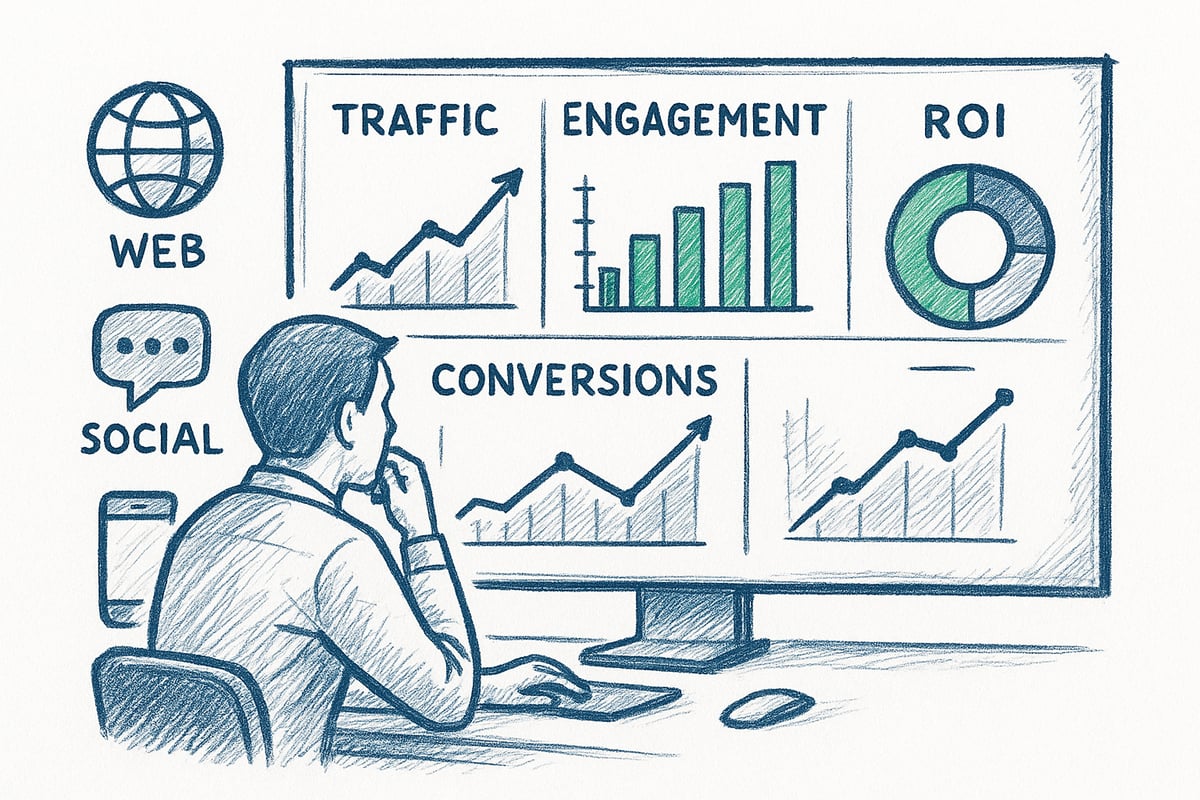
Key Metrics for Business Digital Marketing Success
To measure success in business digital marketing, focus on metrics that reflect both performance and customer value. These typically include:
- Web traffic and unique visitors
- Engagement rates (likes, shares, comments)
- Conversion rates and sales
- Customer lifetime value (CLV)
- Cost per acquisition (CPA)
- Return on investment (ROI)
Tracking these figures helps businesses pinpoint which efforts drive growth and which need improvement. Regular analysis ensures resources are invested in the most effective areas of business digital marketing.
Measurement Tools and Techniques
Modern analytics platforms make it easier than ever to monitor business digital marketing outcomes. Google Analytics, social media dashboards, and campaign management tools provide real-time insights into audience behaviour and campaign performance.
A/B testing is essential for refining landing pages, emails, and ads. By comparing different versions, marketers can identify what resonates best with their audience. Attribution modelling clarifies which channels contribute most to conversions, allowing smarter budget allocation.
Here's a comparative table of core metrics and recommended tools:
| Metric | Tool(s) | Purpose |
|---|---|---|
| Web Traffic | Google Analytics, Adobe Analytics | Track visitors and sources |
| Engagement | Facebook Insights, Sprout Social | Monitor social interactions |
| Conversion Rate | HubSpot, Google Ads | Measure lead or sale generation |
| Customer Lifetime Value | CRM (Salesforce, Zoho) | Understand long-term customer impact |
| ROI | Custom Dashboards, Google Data Studio | Evaluate overall marketing effectiveness |
Optimisation Strategies for Maximum ROI
Continuous optimisation is vital for business digital marketing. Use regular review cycles to spot trends, eliminate underperforming tactics, and double down on what works. Automated reporting can save time, while dashboards make it easy to visualise progress.
AI and automation are transforming how marketers optimise campaigns. According to Digital Marketing Statistics 2026, businesses using AI for campaign management have seen significant improvements in ROI and efficiency.
A/B testing, automated bid management, and predictive analytics can all drive better outcomes. The most successful teams use a mix of technology and human insight to adapt quickly in a competitive environment.
Data Privacy and Compliance
Staying compliant with data privacy laws is non-negotiable in business digital marketing. Adapting to GDPR, CCPA, and Australia’s own regulations protects both your customers and your brand.
Prioritise first-party data collection and secure handling. Always obtain consent, be transparent about data use, and keep up to date with changing legislation. This builds trust and supports long-term success.
Example: Improving ROI via Measurement and Optimisation
Consider a business digital marketing team that runs monthly campaign reviews. By analysing traffic sources, testing new landing page designs, and reallocating budget to top-performing channels, they steadily increase conversions and ROI. Their commitment to measurement and continuous improvement keeps them ahead of competitors.
In summary, a robust measurement and optimisation framework is essential for business digital marketing in 2026. With the right tools, clear metrics, and a focus on compliance, businesses can confidently drive growth and adapt to new challenges.
Future-Proofing Your Digital Marketing: Next Steps for 2026 and Beyond
The pace of change in business digital marketing demands more than a reactive approach. To remain competitive in 2026 and beyond, businesses must actively future-proof their digital marketing strategies by adopting emerging technologies, strengthening data practices, and nurturing lasting customer relationships. The actions you take today will determine your ability to thrive in tomorrow's digital landscape.
Embracing Emerging Technologies
Staying ahead in business digital marketing requires a willingness to explore and implement new technologies. Artificial intelligence, augmented and virtual reality, chatbots, and voice assistants are rapidly transforming how brands engage with audiences. By 2026, adoption rates for AI solutions are expected to surge, enabling smarter automation, predictive analytics, and hyper-personalised campaigns. According to the State of AI in Marketing 2026, marketing teams are already operationalising AI to enhance customer experiences and streamline complex workflows. Businesses that act early will position themselves as innovators in their industries.
Prioritising Data and Privacy
As third-party cookies disappear and privacy regulations tighten, first-party data will become the cornerstone of business digital marketing success. Collecting and managing data directly from your audience ensures compliance with evolving laws and allows for more precise targeting. Staying informed about GDPR, CCPA, and Australian regulations is essential. Investing in transparent data practices not only builds trust but also gives you a competitive edge as consumers grow more privacy-conscious. Ethical use of AI in data management is critical, as highlighted in the AI Marketing in Digital Era, where businesses must balance innovation with responsibility.
Building Digital Resilience
A future-proof business digital marketing approach relies on a robust digital infrastructure. This includes fast, secure, and mobile-optimised websites, reliable cloud platforms, and scalable automation tools. Regular security audits and system updates are vital to protect customer data and maintain business continuity. Scalable solutions allow for rapid adaptation to market changes or surges in demand, ensuring your digital presence remains strong regardless of external pressures.
Fostering Customer Loyalty
Long-term growth in business digital marketing hinges on building genuine connections with your audience. Personalisation, powered by AI and advanced analytics, enables brands to deliver timely, relevant content that resonates with each customer. For example, businesses leveraging AI-driven personalisation are seeing significant increases in customer retention and satisfaction. Value-driven content, proactive support, and consistent engagement across digital touchpoints all contribute to lasting loyalty and advocacy.
Partnering for Success
No single team can master every aspect of business digital marketing. Collaborating with digital agencies or technology partners brings specialised expertise and fresh perspectives. These partnerships can accelerate digital transformation, provide access to the latest tools, and support ongoing upskilling for your staff. Investing in continuous learning ensures your team remains agile, adaptable, and ready to capitalise on new trends or platforms as they emerge.
Your Action Plan for 2026 and Beyond
To future-proof your business digital marketing, start with a clear strategy review. Invest in emerging technologies and robust first-party data practices. Prioritise customer experience, security, and compliance at every step. Seek out knowledge-sharing opportunities and build partnerships that complement your strengths. By embedding agility and innovation into your culture, you will be well-positioned to navigate the challenges and seize the opportunities of 2026 and beyond.
As you look to put these 2026 digital marketing strategies into action, remember that success comes from clear goals, the right mix of channels, and continuous optimisation. If you want to make sure your business is set up for growth and ready to tackle the latest trends—like AI, personalisation, and agile digital tactics—we’re here to help every step of the way. Let’s take the guesswork out of your next move and focus on results you can measure. When you’re ready to get started, simply Book a Free Strategy Call and let’s map out your path to digital success.