
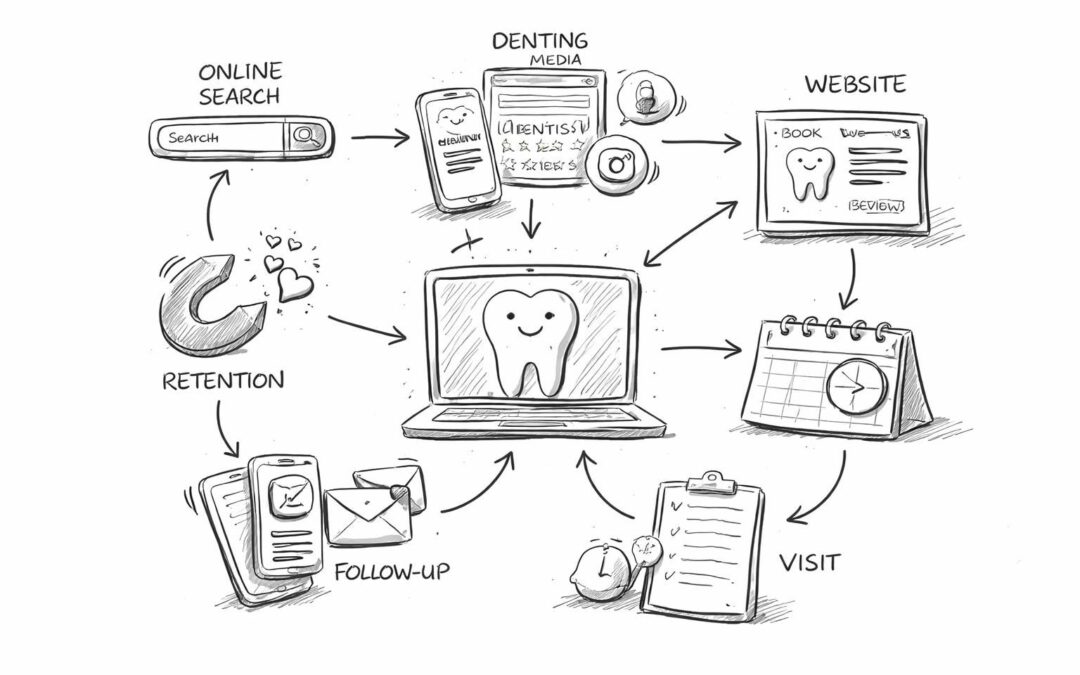
The dental industry in Australia has experienced a significant transformation in how practices attract and retain patients. Traditional word-of-mouth referrals and Yellow Pages advertisements have given way to sophisticated online strategies that help dental practices connect with patients precisely when they’re searching for oral health services. Digital marketing for dentists has become essential for building a thriving practice in today’s competitive landscape, where potential patients conduct extensive online research before booking their first appointment. Understanding the right channels, tactics, and measurement strategies can make the difference between an empty appointment book and a waiting list of eager patients.
Understanding the Digital Landscape for Dental Practices
The healthcare sector, particularly dentistry, operates within unique constraints that require specialised marketing approaches. Patients seeking dental services typically exhibit high-intent behaviour when conducting online searches, meaning they’re actively looking to solve a specific problem rather than casually browsing. This characteristic makes digital marketing for dentists particularly effective when executed properly.
Modern dental practices must establish a comprehensive online presence that addresses multiple stages of the patient journey. From awareness through consideration to decision-making, each touchpoint requires careful attention and strategic planning.
The Patient Journey in 2026
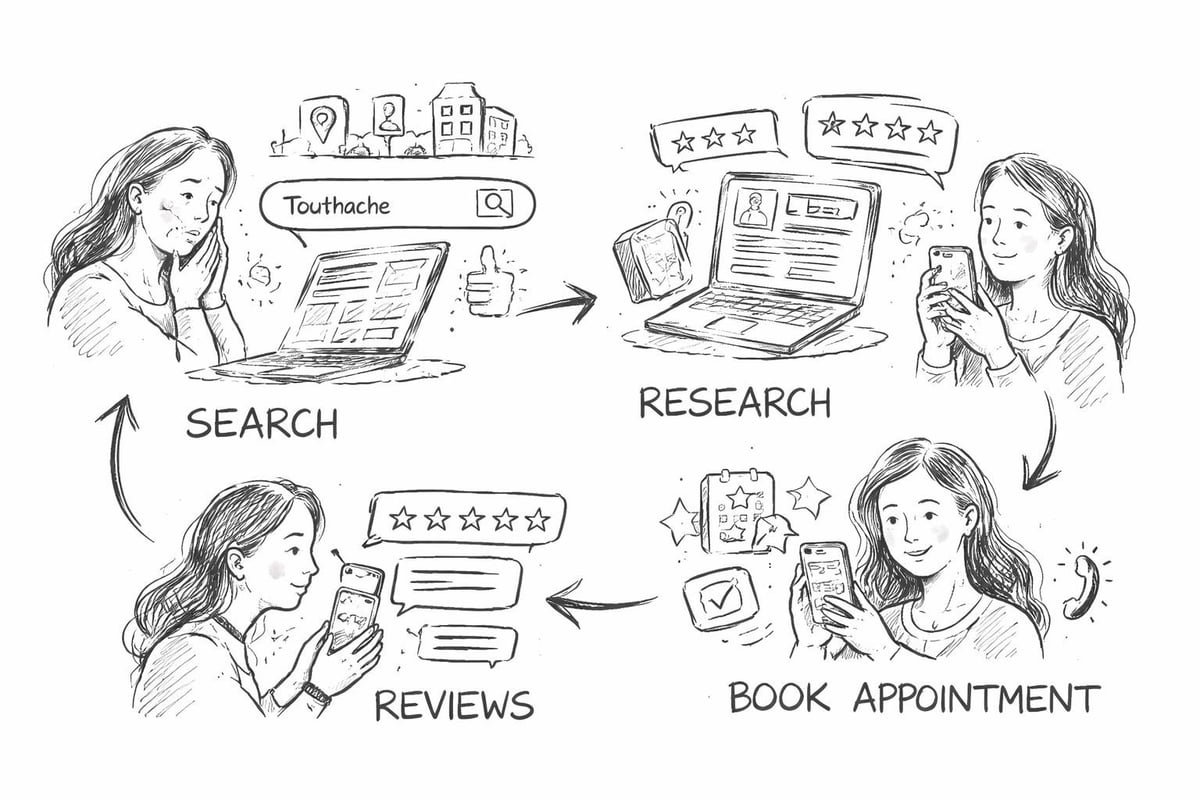
Today’s dental patients follow predictable digital pathways before choosing a practice:
- Initial research through search engines when experiencing dental issues or seeking routine care
- Review analysis across multiple platforms to assess practice reputation and patient satisfaction
- Website evaluation to determine professionalism, services offered, and practice personality
- Social proof verification through before-and-after galleries and patient testimonials
- Convenience assessment including online booking availability and location accessibility
This multi-touchpoint journey requires dental practices to maintain consistent, professional representation across all digital channels. Working with specialists who understand digital marketing ensures each element works cohesively toward patient acquisition goals.
Search Engine Optimisation for Dental Practices
SEO represents the foundation of successful digital marketing for dentists. When potential patients search for terms like “emergency dentist Adelaide” or “teeth whitening near me,” your practice needs to appear prominently in search results. This visibility directly correlates with new patient inquiries and appointment bookings.
Local SEO Fundamentals
Dental practices serve geographically defined areas, making local SEO particularly valuable. Your Google Business Profile functions as your digital storefront, often appearing before your website in search results.
| Local SEO Element | Implementation Priority | Impact Level |
|---|---|---|
| Google Business Profile | Critical | Very High |
| Location-specific keywords | High | High |
| Local citations | Medium | Medium |
| Location pages | Medium | Medium-High |
| Reviews management | Critical | Very High |
Optimising your Google Business Profile requires consistent attention to accuracy, completeness, and engagement. Upload high-quality photos of your practice, regularly post updates, and respond promptly to all reviews, both positive and negative.
On-Page SEO Strategies
Your dental website must communicate clearly with both human visitors and search engine algorithms. Structure your content around services you provide and problems you solve.
Each service page should address specific patient concerns:
- Comprehensive service descriptions that explain procedures in patient-friendly language
- Frequently asked questions addressing common anxieties and practical considerations
- Clear calls-to-action guiding visitors toward appointment booking
- Schema markup helping search engines understand your content structure
- Mobile optimisation ensuring seamless experiences across all devices
The importance of mobile optimisation cannot be overstated. According to research on mobile usage patterns, the majority of searches now occur on mobile devices, making responsive design absolutely essential for dental practices.
Content Marketing That Educates and Converts
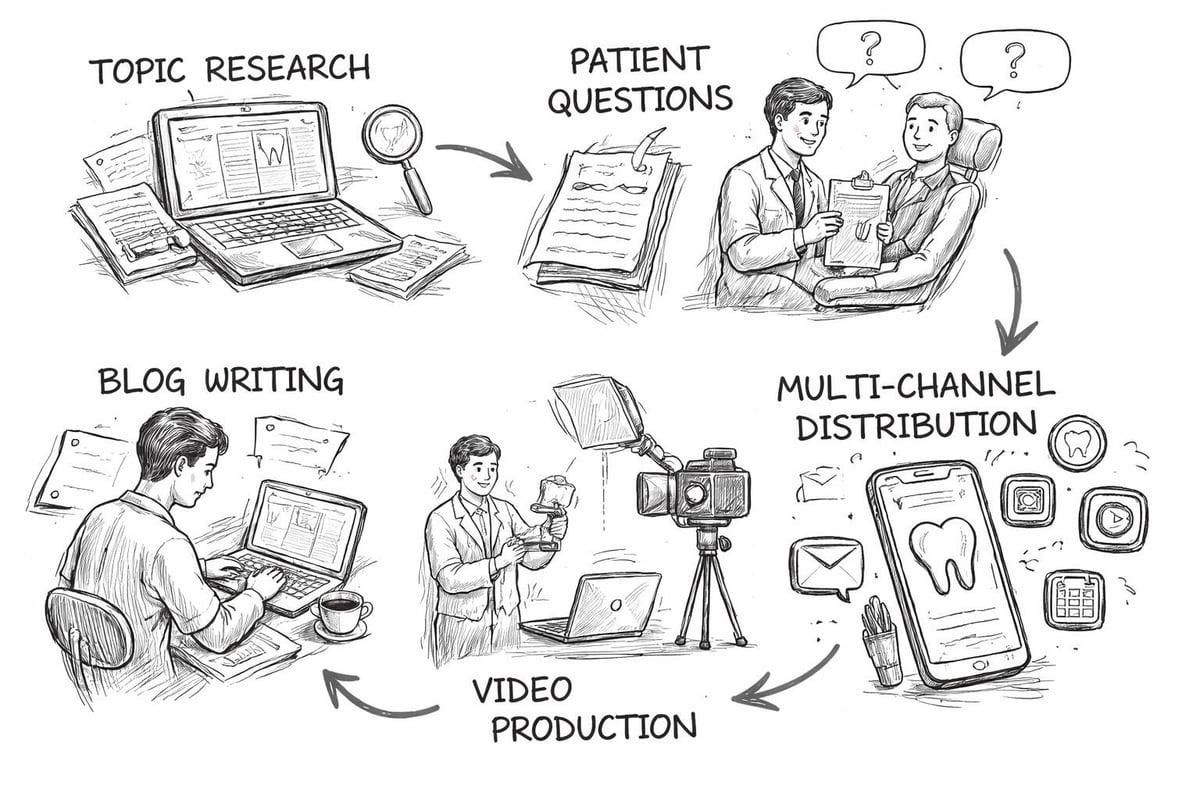
Content marketing establishes your practice as a trusted authority while addressing patient concerns before they even contact your office. This approach builds confidence and positions your dentists as knowledgeable professionals genuinely invested in patient wellbeing.
Blog Topics That Attract Patients
Strategic blog content should target questions patients actually ask. Research keyword opportunities around common dental concerns and procedures your practice performs exceptionally well.
High-value content categories include:
- Preventive care education reducing long-term dental problems
- Procedure explanations demystifying complex treatments
- Oral health tips for specific demographics (children, seniors, athletes)
- Technology showcases highlighting advanced equipment and techniques
- Emergency guidance helping patients assess urgency levels
Regular publishing schedules signal to search engines that your website remains active and relevant. Aim for at least two comprehensive blog posts monthly, each targeting specific patient questions or concerns.
Video Content Opportunities
Video content humanises your practice and builds trust before patients visit. Virtual tours reduce anxiety for nervous patients, while procedure explanations clarify what to expect during appointments.
Consider creating:
- Practice tours introducing team members and showcasing facilities
- Dentist introductions highlighting qualifications and treatment philosophies
- Procedure walkthroughs explaining step-by-step processes
- Patient testimonials sharing real experiences and outcomes
- Oral hygiene demonstrations teaching proper brushing and flossing techniques
Social Media Strategy for Dental Practices
Social media platforms offer unique opportunities for dental practices to showcase personality, build community, and maintain top-of-mind awareness with existing and potential patients. Digital marketing for dentists succeeds when it balances professional credibility with approachable communication.
Platform Selection and Focus
Not all social media platforms deliver equal value for dental practices. Strategic focus on the right channels maximises return on effort invested.
| Platform | Best Use Case | Content Type | Posting Frequency |
|---|---|---|---|
| Community building, event promotion | Mix of educational and practice updates | 3-4 times weekly | |
| Visual showcase, before/after results | High-quality images, stories | Daily stories, 4-5 posts weekly | |
| Professional networking, team recruitment | Industry insights, practice news | 1-2 times weekly | |
| YouTube | Educational content, procedure explanations | Long-form video content | 2-4 times monthly |
A social media marketing agency with healthcare experience can develop platform-specific strategies that respect patient privacy while showcasing your practice’s capabilities.
Content Guidelines for Healthcare Compliance
Dental practices must navigate privacy regulations when sharing patient information or treatment outcomes. Always obtain written consent before posting patient photos or testimonials, and ensure all content complies with Australian healthcare advertising standards.
Safe content approaches include educational posts, team spotlights, practice news, and general oral health tips that don’t reference specific patients or make unsubstantiated claims.
Paid Advertising for Immediate Results
While organic strategies build long-term visibility, paid advertising delivers immediate patient inquiries when campaigns are properly structured. Google Ads and social media advertising allow precise targeting of potential patients actively seeking dental services.
Google Ads for Dentists
Search advertising places your practice at the top of Google results for high-intent keywords. When someone searches “emergency dentist open now,” your ad can appear immediately, capturing patients in urgent need.
Effective campaign structure includes:
- Service-specific ad groups targeting distinct procedures
- Location targeting focusing on your service radius
- Negative keywords preventing wasteful clicks
- Ad extensions highlighting unique practice features
- Conversion tracking measuring appointment bookings
Budget allocation should prioritise high-value services and emergency searches where patient intent is strongest. A digital marketing specialist can optimise bidding strategies to maximise appointment bookings while controlling costs.
Social Media Advertising
Facebook and Instagram ads excel at building awareness and targeting demographics most likely to need dental services. Lookalike audiences based on existing patients help identify similar prospects in your area.
Retargeting campaigns reconnect with website visitors who didn’t book appointments during their initial visit, keeping your practice top-of-mind as they continue their decision-making process.
Reputation Management and Review Generation
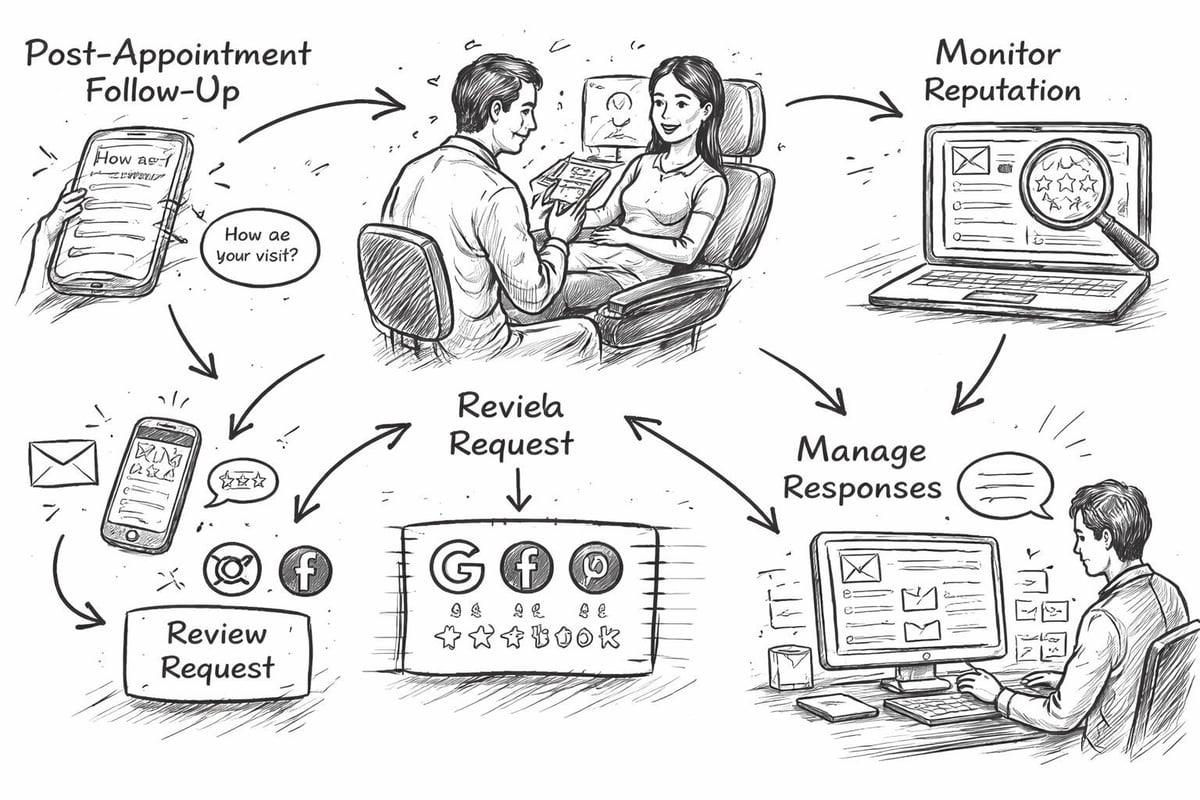
Online reviews dramatically influence patient decisions, with most people reading multiple reviews before selecting a healthcare provider. Digital marketing for dentists must include systematic approaches to generating positive reviews and managing online reputation.
Review Generation Systems
Automated yet personalised review requests sent after successful appointments consistently generate positive feedback. Timing matters tremendously, requesting reviews shortly after treatment while the positive experience remains fresh.
Effective review generation includes:
- Email or SMS requests 24-48 hours post-appointment
- Direct links to preferred review platforms
- Multiple platform options (Google, Facebook, industry-specific)
- Simple, frictionless submission processes
- Grateful acknowledgment of submitted reviews
Never incentivise reviews with discounts or payments, as this violates platform policies and potentially misleads prospective patients.
Responding to Negative Feedback
Negative reviews require prompt, professional responses that demonstrate accountability while respecting patient privacy. Address concerns without confirming patient relationships or discussing specific treatments.
Generic templates feel insincere. Craft thoughtful responses acknowledging the feedback, expressing genuine concern, and inviting offline resolution through direct practice contact.
Website Design and User Experience
Your website functions as your digital reception area, creating first impressions that significantly influence appointment booking decisions. Professional design, intuitive navigation, and clear calls-to-action convert visitors into patients.
Essential Website Elements
Modern dental websites must balance aesthetics with functionality. Clean, professional design builds trust, while strategically placed conversion elements guide visitors toward booking.
Critical website components include:
- Prominent phone numbers and online booking options on every page
- Clear service descriptions organised by category
- Team biographies establishing credentials and approachability
- Patient testimonials and before-after galleries (with consent)
- New patient information and forms
- Insurance and payment information
- Practice policies and what to expect during visits
Site speed dramatically affects both user experience and search rankings. Compress images, minimise code, and leverage modern hosting infrastructure to ensure pages load quickly across all devices and connection speeds.
Conversion Rate Optimisation
Traffic without conversions wastes marketing investment. Analyse user behaviour through heat mapping and session recordings to identify friction points preventing appointment bookings.
Test different call-to-action placements, button colours, form lengths, and content arrangements to progressively improve conversion rates. Small improvements compound over time, significantly increasing patient acquisition from existing traffic levels.
Email Marketing for Patient Retention
Acquiring new patients costs significantly more than retaining existing ones. Email marketing nurtures relationships with current patients, encouraging regular visits while building loyalty that generates referrals.
Campaign Types for Dental Practices
| Campaign Type | Purpose | Frequency |
|---|---|---|
| Appointment reminders | Reduce no-shows | As scheduled |
| Recall notifications | Encourage six-month check-ups | Semi-annually |
| Educational newsletters | Maintain engagement | Monthly |
| Birthday greetings | Build personal connections | Annually |
| Special promotions | Encourage treatment acceptance | Quarterly |
Segmentation improves email relevance and engagement. Separate patients by treatment history, visit frequency, and demographics to deliver personalised content addressing specific needs and interests.
Compliance and Privacy
Email marketing must comply with Australian spam legislation and privacy requirements. Maintain clear opt-in processes, honour unsubscribe requests immediately, and protect patient data with appropriate security measures.
Include practice contact information and physical address in every email. Transparency builds trust while meeting legal requirements.
Analytics and Performance Measurement
Effective digital marketing for dentists requires ongoing measurement and optimisation. Track key performance indicators that directly correlate with practice growth and patient acquisition.
Essential Metrics to Monitor
Website Analytics:
- Organic search traffic trends
- Top-performing content and landing pages
- Conversion rates by traffic source
- Bounce rates indicating content relevance
- Page load speeds affecting user experience
Campaign Performance:
- Cost per lead across advertising channels
- Conversion rates from leads to appointments
- Return on ad spend for paid campaigns
- Email open and click-through rates
- Social media engagement and reach
Establish baseline metrics before implementing new strategies, allowing accurate measurement of improvement over time. Monthly reporting identifies trends and informs strategic adjustments.
Tools for Dental Practice Marketing
Google Analytics provides comprehensive website performance data at no cost. Google Search Console reveals search visibility and technical issues affecting rankings. Social media platforms offer native analytics tracking engagement and audience growth.
Customer relationship management systems designed for dental practices integrate appointment data with marketing metrics, providing complete visibility into patient acquisition costs and lifetime value. This integration enables data-driven decision-making that maximises marketing return on investment.
Integration with Practice Management
Digital marketing delivers optimal results when integrated with practice operations and patient experience. The relationship between a digital marketing expert and practice management ensures marketing messages align with actual patient experiences.
Aligning Marketing with Service Delivery
Marketing promises must match practice capabilities. Advertising evening appointments requires actually offering convenient scheduling. Promoting cosmetic expertise demands qualified dentists and appropriate technology.
Regular communication between marketing teams and practice managers ensures campaigns accurately represent current services, availability, and special offers. This alignment prevents patient disappointment and maintains practice reputation.
Training Staff on Digital Initiatives
Reception staff answering phones and greeting patients should understand current marketing campaigns. When patients mention seeing an advertisement or finding the practice online, team members should acknowledge and reinforce those messages.
Brief training sessions covering active campaigns, featured services, and promotional offers ensure consistent patient experiences across all touchpoints. This coordination strengthens brand perception and validates marketing investments.
Emerging Trends in Dental Marketing
Digital marketing for dentists continues evolving as technology advances and patient behaviours shift. Forward-thinking practices adapt strategies to capitalise on emerging opportunities.
Voice Search Optimisation
Smart speakers and voice assistants increasingly mediate search queries. Optimise for conversational, question-based keywords matching how people naturally speak rather than type.
Structure content to directly answer common questions, increasing chances of appearing in featured snippets and voice search results. “What’s the best treatment for sensitive teeth?” differs from typed searches but represents growing query volume.
Artificial Intelligence and Chatbots
AI-powered chatbots provide instant responses to common questions outside business hours, capturing leads that might otherwise seek competitors. These tools qualify prospects, answer frequently asked questions, and schedule appointments without human intervention.
Implementation requires careful balance between automation efficiency and personal touch. Ensure easy escalation to human team members when chatbots encounter questions beyond their programming.
Personalisation and Patient Experience
Advanced marketing platforms enable increasingly personalised patient communications based on treatment history, preferences, and behaviour. Birthday greetings, procedure anniversary check-ins, and tailored educational content strengthen relationships and demonstrate genuine care.
Balancing personalisation with privacy requires transparent data practices and secure systems. Patients appreciate relevant communications but demand respectful handling of personal information.
Competitive Analysis and Differentiation
Understanding competitor strategies reveals opportunities for differentiation and market gaps your practice can fill. Regular competitive analysis informs strategic positioning and messaging refinement.
Analyse competitor presence across:
- Search engine rankings for target keywords
- Review volume and ratings across platforms
- Social media engagement and follower growth
- Website design and user experience
- Service offerings and specialisations
- Pricing transparency and payment options
Identify areas where competitors excel and develop strategies to match or exceed their performance. More importantly, discover underserved patient needs or geographic areas presenting growth opportunities.
Unique Value Proposition Development
Generic dental marketing messages blend together, failing to differentiate your practice. Develop clear unique value propositions highlighting what makes your practice distinctly better for specific patient segments.
Perhaps your practice specialises in anxious patients with sedation options and exceptionally gentle techniques. Maybe you offer cutting-edge technology reducing treatment time and discomfort. Or your extended hours accommodate busy professionals unable to visit during traditional schedules.
Articulate these differentiators consistently across all marketing channels, helping ideal patients recognise your practice as uniquely suited to their needs.
Strategic digital marketing transforms dental practices from struggling to attract patients into thriving businesses with consistent new patient flow and strong retention rates. By implementing comprehensive strategies across search optimisation, content creation, social media, paid advertising, and reputation management, dental practices build sustainable competitive advantages in increasingly digital healthcare markets. My Heart Studio brings specialised experience serving professional services including healthcare providers, combining technical digital marketing expertise with deep understanding of patient acquisition dynamics to deliver measurable growth for dental practices across Australia.