

Selecting the right pay per click advertising agency can transform your business growth trajectory, but the decision requires careful consideration of expertise, methodology, and alignment with your specific goals. Australian businesses across professional services, trades, financial services, aged care, and NDIS sectors face unique challenges when navigating the PPC landscape. With advertising costs increasing and competition intensifying across platforms like Google Ads and Microsoft Advertising, partnering with specialists who understand both the technical and strategic elements becomes essential for achieving sustainable returns on your advertising investment.
Understanding the Core Functions of a PPC Agency
A pay per click advertising agency manages every aspect of paid search campaigns, from initial strategy development through ongoing optimisation and reporting. These specialists combine technical platform knowledge with strategic marketing expertise to deliver measurable results.
Core responsibilities include:
- Campaign architecture and structure design
- Keyword research and competitive analysis
- Ad copywriting and creative development
- Bid management and budget allocation
- Landing page optimisation recommendations
- Conversion tracking implementation
- Performance analysis and reporting
Strategic Planning and Account Setup
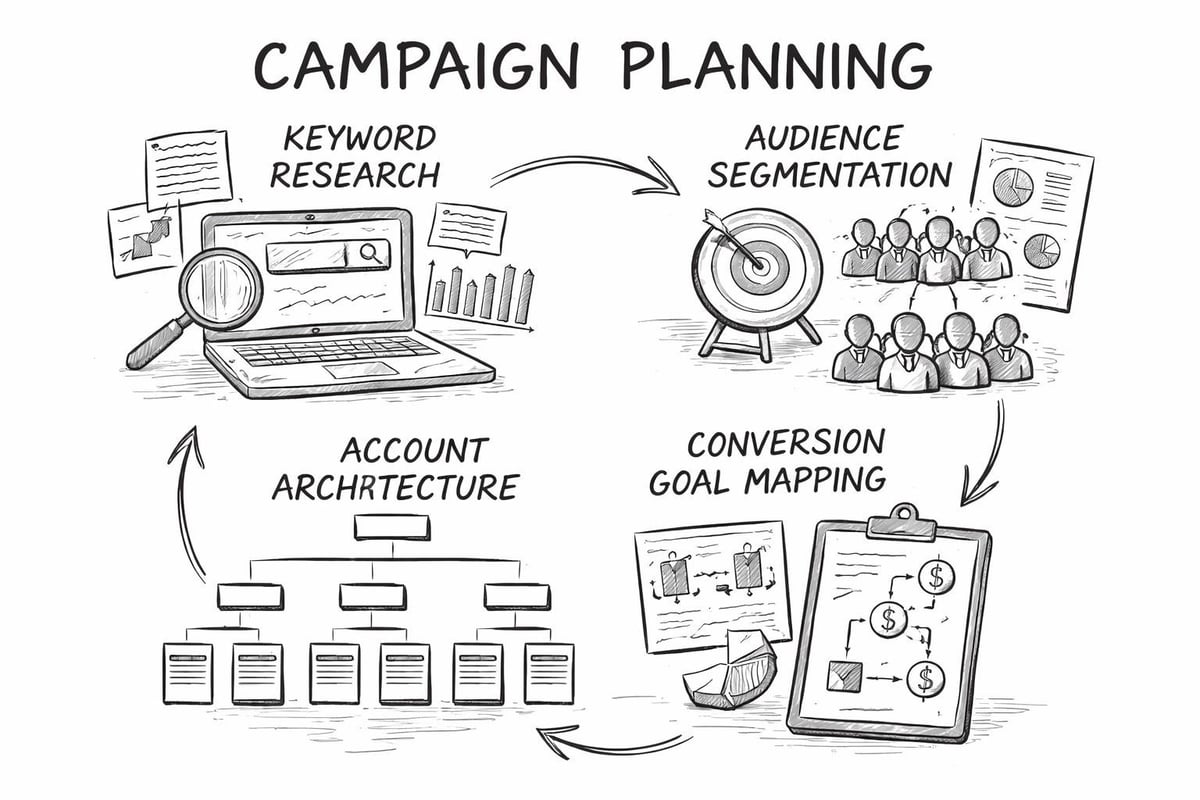
The foundation of successful PPC campaigns begins with comprehensive planning. Professional agencies conduct thorough market research, competitor analysis, and audience profiling before launching any campaigns. This groundwork ensures advertising budgets target the right prospects at the right time with messaging that resonates.
Account structure matters significantly for long-term performance. Well-organised campaigns enable granular control over budgets, testing, and optimisation. Agencies create logical hierarchies that separate brand and non-brand terms, segment services or products, and group keywords by intent and theme.
Evaluating Agency Expertise and Specialisation
Not all pay per click advertising agency partners offer the same level of specialisation or industry knowledge. Australian businesses benefit from working with agencies that understand local market dynamics, regulatory requirements, and consumer behaviour patterns specific to their sector.
| Evaluation Criteria | What to Look For | Why It Matters |
|---|---|---|
| Industry Experience | Case studies from your sector | Faster campaign setup, industry-specific insights |
| Platform Certifications | Google Partner status, platform badges | Verified technical competency |
| Team Structure | Dedicated account managers | Consistent communication and strategy |
| Reporting Transparency | Real-time dashboard access | Visibility into performance and spending |
| Technology Stack | Automation and tracking tools | Efficiency and accuracy in management |
Sector-Specific Knowledge Requirements
Professional services firms require different approaches than aged care facilities or NDIS providers. A quality agency recognises these distinctions and tailors strategies accordingly. For example, retirement villages need campaigns that address both decision-makers and their adult children, requiring multi-generational messaging and longer consideration cycles.
Financial services face strict advertising regulations that demand compliance expertise. Trades businesses often benefit from location-based targeting and mobile-first strategies. Understanding these nuances separates competent agencies from exceptional ones.
Campaign Types and Platform Selection
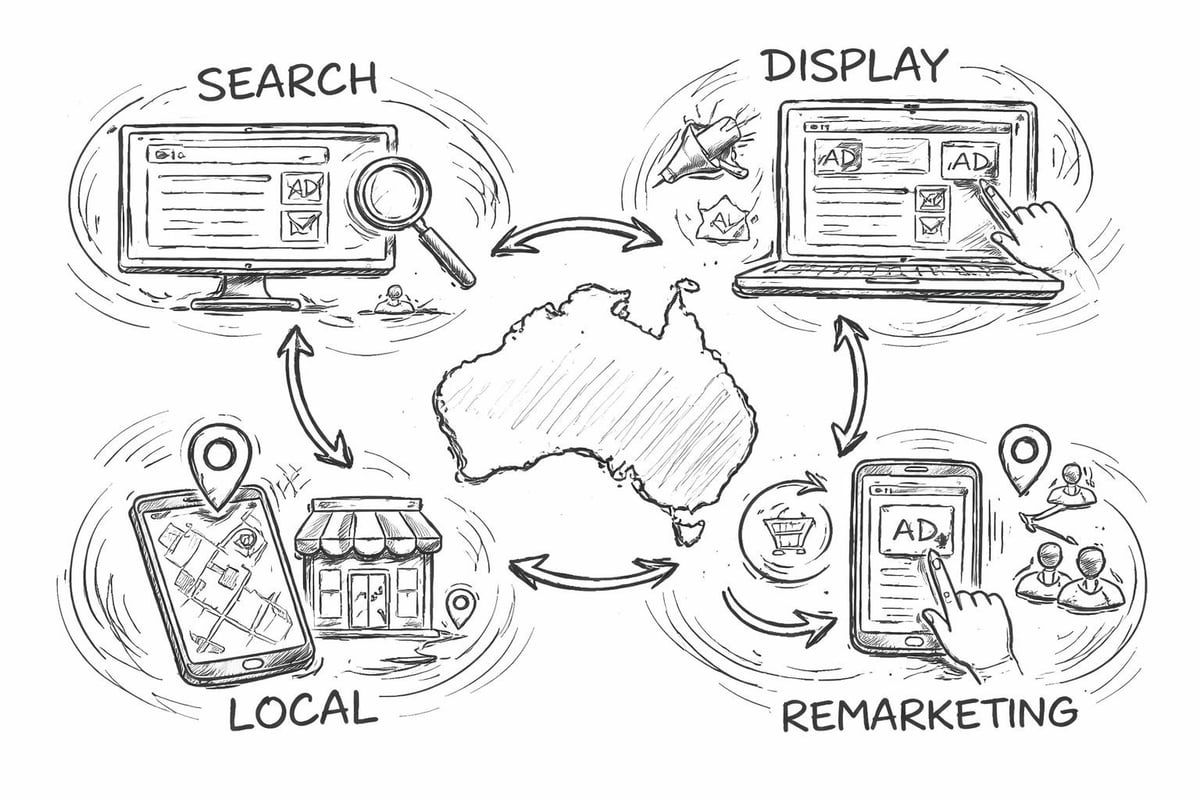
Modern PPC extends far beyond basic Google search ads. A comprehensive pay per click advertising agency offers expertise across multiple campaign types and platforms to maximise reach and efficiency.
Search Network Campaigns
Search campaigns capture high-intent prospects actively looking for solutions. These campaigns target specific keywords and phrases, displaying text ads above and below organic search results. The immediate value lies in reaching people already interested in your services.
Effective search campaigns require continuous refinement of keyword lists, negative keywords to filter irrelevant traffic, and ad copy that differentiates your offering. Quality Score, Google’s metric for ad relevance and landing page experience, directly impacts cost-per-click and ad position.
Display and Remarketing Initiatives
Display campaigns build awareness and maintain visibility across the Google Display Network’s millions of websites, apps, and video platforms. While conversion rates typically run lower than search campaigns, display advertising strengthens brand recognition and supports remarketing efforts.
Remarketing specifically targets people who previously visited your website. These campaigns achieve higher conversion rates and lower costs because they focus on warm prospects already familiar with your business. For NDIS providers and aged care facilities with extended decision-making processes, remarketing campaigns maintain engagement throughout lengthy consideration periods.
Shopping and Local Campaigns
E-commerce businesses benefit enormously from Google Shopping campaigns that showcase products with images, prices, and ratings directly in search results. For businesses selling physical products, these visual ads drive qualified traffic more effectively than text-based alternatives.
Local campaigns combine search, display, and map placements to drive foot traffic to physical locations. Trades businesses and professional services with office locations use these campaigns to dominate local search results and Google Maps, capturing nearby prospects ready to engage.
Budget Management and ROI Optimisation
Effective budget management separates successful partnerships from disappointing ones. A skilled pay per click advertising agency doesn’t simply spend your allocated budget; they optimise every dollar for maximum return.
Budget allocation strategies include:
- Starting with conservative daily budgets to gather performance data
- Identifying high-performing campaigns for increased investment
- Pausing or restructuring underperforming elements
- Adjusting bids based on time-of-day and device performance
- Allocating seasonal budgets for peak demand periods
Performance Metrics That Matter
Clicks and impressions provide surface-level insights, but conversion metrics reveal campaign effectiveness. Cost-per-acquisition (CPA), return on ad spend (ROAS), and conversion rate indicate whether campaigns generate profitable results.
For lead-generation businesses like professional services or trades, tracking phone calls, form submissions, and consultation bookings provides complete attribution. Advanced tracking connects PPC activity to closed sales and customer lifetime value, demonstrating true business impact beyond initial conversions.
Integration with Broader Marketing Strategies
PPC campaigns deliver optimal results when integrated with other digital marketing services rather than operating in isolation. A sophisticated pay per click advertising agency understands these connections and leverages them strategically.
SEO and PPC Synergy
While search engine optimisation builds long-term organic visibility, PPC delivers immediate results. Using both simultaneously creates comprehensive search engine dominance. Keyword data from PPC campaigns informs SEO priorities, while organic rankings data identifies gaps where paid advertising provides the most value.
Landing pages optimised for both organic search and paid traffic conversion benefit both channels. Similarly, content created for SEO purposes supports PPC quality scores through improved landing page relevance.
Website Design and Conversion Optimisation
The best PPC campaigns fail without effective landing pages. Your web design directly impacts conversion rates, with factors like page load speed, mobile responsiveness, clear calls-to-action, and trust signals influencing whether clicks become customers.
Agencies focused on holistic performance collaborate with design teams to create landing page experiences that align with ad messaging and guide prospects toward conversion. A/B testing different layouts, headlines, and form designs continuously improves conversion rates over time.
| Integration Area | Benefit | Example Application |
|---|---|---|
| Email Marketing | Retargeting list building | Capture emails from PPC traffic for nurture sequences |
| Social Media | Consistent messaging | Align paid social and search messaging |
| Content Marketing | Educational touchpoints | Drive PPC traffic to valuable content assets |
| CRM Systems | Lead quality tracking | Connect PPC conversions to sales outcomes |
Technical Implementation and Tracking
Proper technical setup determines whether you can accurately measure campaign performance and optimise effectively. A competent pay per click advertising agency handles complex tracking implementations that many businesses struggle to manage independently.
Conversion Tracking Configuration
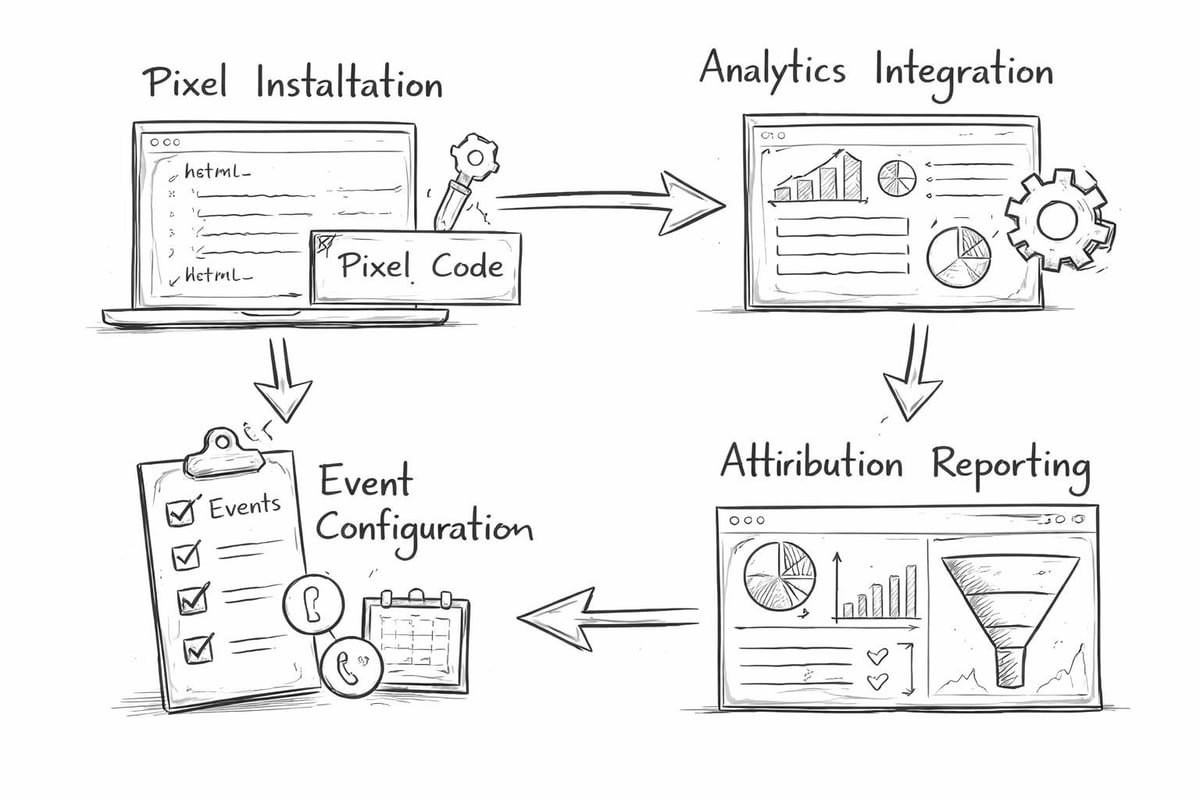
Conversion tracking monitors specific actions visitors take after clicking ads, including form submissions, phone calls, downloads, purchases, and consultation bookings. Without accurate tracking, you’re essentially advertising blind, unable to determine which keywords, ads, or campaigns drive valuable results.
Implementation requires placing tracking codes on key pages, configuring conversion actions within advertising platforms, and testing to verify accuracy. Advanced setups track multiple conversion types with different values, enabling sophisticated bid strategies based on conversion quality.
Analytics Integration and Attribution
Connecting Google Ads with Google Analytics 4 provides deeper insights into user behaviour beyond the initial click. You can analyse how PPC visitors navigate your site, which pages they view, how long they engage, and whether they return before converting.
Attribution modelling reveals the customer journey across touchpoints. For businesses with longer sales cycles like aged care facilities, understanding that prospects often click multiple ads before converting helps justify continued investment in awareness-building campaigns.
Agency Communication and Reporting Standards
Transparency and communication distinguish exceptional agencies from mediocre ones. Regular reporting keeps you informed about performance, spending, and strategic adjustments while building confidence in your partnership.
Reporting Frequency and Format
Monthly reports represent the industry standard, providing sufficient data for meaningful analysis without overwhelming you with information. Comprehensive reports include performance metrics, budget utilisation, conversion data, strategic insights, and recommendations for upcoming periods.
Real-time dashboard access allows you to monitor campaigns between formal reports. Modern agencies provide client portals or shared analytics access for complete transparency.
Essential report components:
- Campaign performance summaries with period-over-period comparisons
- Conversion volume and cost-per-acquisition trends
- Keyword performance analysis showing top performers and optimisation opportunities
- Ad copy testing results and recommendations
- Budget pacing and forecasting
- Strategic recommendations for the next period
Proactive Communication Practices
The best agency relationships involve proactive communication rather than reactive responses. Your agency should reach out with opportunities, market changes affecting campaigns, and strategic recommendations rather than waiting for you to initiate contact.
Regular strategy sessions, quarterly business reviews, and annual planning meetings align PPC efforts with evolving business goals. These conversations ensure campaigns adapt as your priorities shift.
Selecting the Right Agency Partner
Choosing a pay per click advertising agency requires evaluating multiple factors beyond cost. The right partner understands your industry, communicates effectively, demonstrates proven expertise, and aligns with your business values and goals.
Questions to Ask Prospective Agencies
- What experience do you have managing campaigns for businesses in our industry?
- Which team members will work on our account, and what are their qualifications?
- How do you approach initial campaign setup and ongoing optimisation?
- What performance metrics do you prioritise, and why?
- How frequently will we receive reports and strategic updates?
- What contract terms do you require, and what’s your cancellation policy?
- Can you provide case studies or references from similar clients?
Understanding Service Agreements
Service agreements outline expectations, responsibilities, deliverables, and costs. Review these carefully before committing. Understand whether quoted fees represent management charges separate from advertising spend or all-inclusive costs.
Clarify who owns the accounts, conversion tracking, and historical data if the relationship ends. Some agencies retain control of these assets, creating complications when transitioning to new partners. Ensure you’ll retain access to your advertising accounts and accumulated data.
Platform-Specific Expertise Requirements
Different advertising platforms require specialised knowledge. While Google Ads dominates Australian search advertising, comprehensive agencies also manage Microsoft Advertising, social media advertising, and emerging platforms.
Google Ads Mastery
Google Ads complexity has increased significantly with the introduction of automated bidding strategies, responsive search ads, and performance max campaigns. Agencies must understand when automation enhances results versus when manual control delivers better outcomes.
Smart campaigns and automated features work well for some businesses but limit control for others. Experienced agencies know which automation tools to leverage and which to avoid based on your specific situation.
Alternative Platform Opportunities
Microsoft Advertising often delivers lower costs-per-click than Google while reaching a valuable demographic. For many B2B service providers and professional services, the Microsoft network represents untapped opportunity.
For e-commerce businesses, platforms like Talk Shop’s community of Shopify merchants and experts provide valuable insights into advertising strategies specific to online retail, helping inform PPC approaches for product-based businesses.
Platform Certification and Partnership Status
Google Partner and Premier Partner badges indicate agencies meet performance thresholds and maintain certified team members. While not guarantees of quality, these designations provide baseline verification of platform expertise.
Microsoft Advertising offers similar partnership programs. Certifications demonstrate investment in ongoing education and platform knowledge that benefits client campaigns.
Industry-Specific Campaign Strategies
Australian service businesses face unique challenges and opportunities that generic campaign approaches fail to address effectively. A quality pay per click advertising agency tailors strategies to industry-specific requirements.
Professional Services Campaigns
Lawyers, accountants, consultants, and other professional service providers need campaigns that establish credibility and expertise. Ad copy emphasises qualifications, experience, and specific service areas rather than generic claims.
Conversion tracking must account for consultation bookings and phone calls rather than e-commerce transactions. Landing pages require trust signals like credentials, client testimonials, and professional affiliations.
Trades and Home Services Approaches
Plumbers, electricians, builders, and other trades benefit from location-focused campaigns emphasising rapid response, licensing, and availability. Mobile-first strategies acknowledge that many searches occur from job sites or homes requiring immediate service.
Call tracking becomes essential for trades businesses where phone contact initiates most jobs. Dynamic number insertion and call recording provide insights into lead quality and conversion rates.
Aged Care and NDIS Provider Considerations
Retirement villages, aged care facilities, and NDIS providers navigate extended decision cycles involving multiple stakeholders. Campaigns must address both service recipients and their family members or support coordinators.
Remarketing campaigns maintain engagement throughout lengthy consideration periods. Content addressing common concerns, facility features, and care philosophies supports informed decision-making. Compliance with healthcare advertising regulations requires careful attention to claims and messaging.
Emerging Trends and Future Considerations
The PPC landscape continues evolving with new technologies, platform features, and consumer behaviours. Forward-thinking agencies stay current with developments that impact campaign performance and client results.
Artificial Intelligence and Automation
Machine learning increasingly powers bidding strategies, ad creation, and audience targeting. Smart bidding uses historical performance data to optimise bids in real-time based on conversion likelihood.
Responsive search ads automatically test headline and description combinations to identify top performers. Performance max campaigns combine multiple ad formats and placements under single campaigns managed by Google’s algorithms.
While automation delivers efficiency, human oversight remains essential. Agencies must know when to trust algorithms and when strategic judgment outperforms automated decisions.
Privacy Changes and Tracking Limitations
Browser privacy enhancements and regulatory requirements increasingly limit tracking capabilities. Cookie deprecation, iOS privacy features, and regulations like Australia’s Privacy Act affect conversion measurement and audience targeting.
Agencies must implement first-party data strategies, server-side tracking, and privacy-compliant measurement approaches that maintain performance visibility despite evolving limitations.
Voice Search and Visual Search Impact
Voice-activated searches via smart speakers and mobile assistants represent growing query volumes. These searches use natural language patterns that differ from typed queries, requiring keyword strategies that account for conversational phrasing.
Visual search technology allowing image-based queries introduces new opportunities for businesses with visual products or services. Agencies monitoring these trends position clients for emerging search behaviours.
Cost Structures and Pricing Models
Understanding how pay per click advertising agency services are priced helps evaluate proposals and compare options effectively. Pricing models vary significantly, with different structures suiting different business sizes and needs.
Management Fee Structures
Percentage-of-spend models charge fees based on advertising expenditure, typically ranging from 10-20% of monthly ad spend. This structure aligns agency revenue with campaign budgets but can incentivise higher spending rather than efficiency.
Flat monthly fees provide cost predictability regardless of spending fluctuations. This model works well for businesses with consistent budgets and established campaigns.
Hybrid approaches combine flat base fees with performance bonuses tied to conversion goals. These arrangements align agency incentives with client results while maintaining baseline compensation.
Minimum Investment Requirements
Most professional agencies require minimum monthly commitments ensuring sufficient budget for meaningful testing and optimisation. Minimums typically start around $2,000-$5,000 monthly combined advertising spend and management fees.
Lower minimums limit campaign scope and testing capabilities. If budget constraints prevent meeting agency minimums, digital advertising education and self-management might provide better interim solutions until budgets support professional management.
| Pricing Model | Advantages | Disadvantages | Best For |
|---|---|---|---|
| Percentage of Spend | Scales with budget | Can incentivise overspending | Variable budget businesses |
| Flat Monthly Fee | Predictable costs | Doesn’t scale with results | Consistent budget operations |
| Performance-Based | Aligned incentives | Complex tracking requirements | Results-focused partnerships |
| Hybrid Approach | Balanced incentives | More complex agreements | Mature PPC programs |
Measuring Long-Term Partnership Success
Successful agency relationships deliver compound benefits over time as strategies mature, data accumulates, and optimisation compounds. Measuring partnership value requires looking beyond monthly metrics to long-term business impact.
Key Performance Indicators Beyond Clicks
Customer acquisition cost trends reveal whether efficiency improves over time. Decreasing costs indicate successful optimisation, while increasing costs signal competitive pressure or diminishing returns requiring strategic adjustments.
Customer lifetime value attributed to PPC sources demonstrates true channel profitability. Acquiring customers with higher retention rates and purchase frequencies justifies higher initial acquisition costs.
Market share growth in paid search results shows competitive positioning strength. Impression share metrics indicate what percentage of available opportunities your campaigns capture versus competitors.
Strategic Value Creation
The best agency relationships create strategic value beyond tactical campaign management. Agencies become trusted advisors who understand your business, anticipate market changes, and proactively identify opportunities.
This strategic partnership develops through consistent communication, shared goals, and mutual investment in success. Over time, agencies gain institutional knowledge about what works for your specific business, accelerating results and reducing trial-and-error learning.
Partnering with the right pay per click advertising agency transforms digital advertising from a cost centre into a growth engine that delivers measurable returns and competitive advantages. The expertise, technology, and strategic thinking professional agencies provide enable businesses to navigate increasingly complex advertising platforms while focusing internal resources on core operations. If you’re ready to accelerate your business growth through strategic PPC management tailored to Australian service businesses, My Heart Studio brings deep expertise across professional services, trades, aged care, and NDIS sectors with transparent reporting and proven results that drive sustainable client acquisition.