
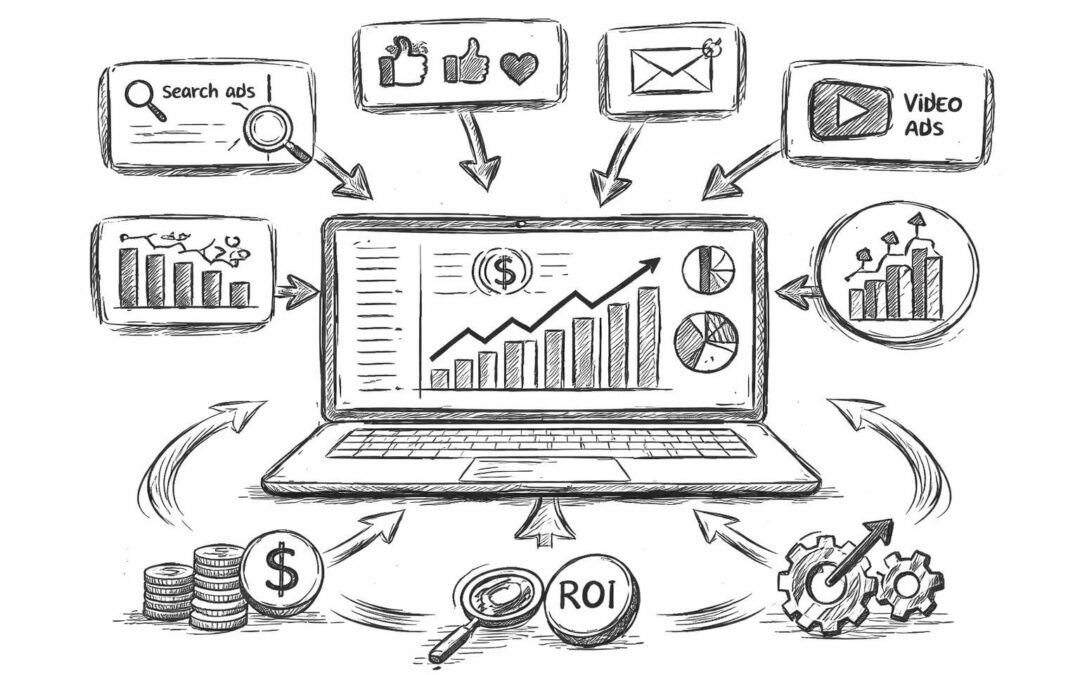
The marketing landscape has undergone a dramatic transformation over the past decade, shifting from traditional brand awareness campaigns to measurable, data-driven strategies. At the heart of this evolution stands the performance marketer, a specialist who focuses exclusively on achieving quantifiable results for businesses. Unlike conventional marketing approaches that rely on impressions and reach, performance marketing demands accountability at every stage, with payment tied directly to specific actions such as clicks, leads, or sales. For Australian businesses seeking to maximise their marketing investment, understanding the role and value of a performance marketer has become essential.
What Defines a Performance Marketer
A performance marketer operates at the intersection of creativity, analytics, and strategic thinking. This professional orchestrates campaigns where every dollar spent must demonstrate clear returns through measurable outcomes.
The fundamental difference lies in accountability. Traditional marketers might celebrate brand lift or awareness metrics, but a performance marketer tracks conversions, cost per acquisition, and return on ad spend with precision. This results-oriented approach has reshaped how businesses allocate marketing budgets.
Core Responsibilities and Daily Activities
Performance marketers manage multiple responsibilities that blend technical expertise with strategic vision:
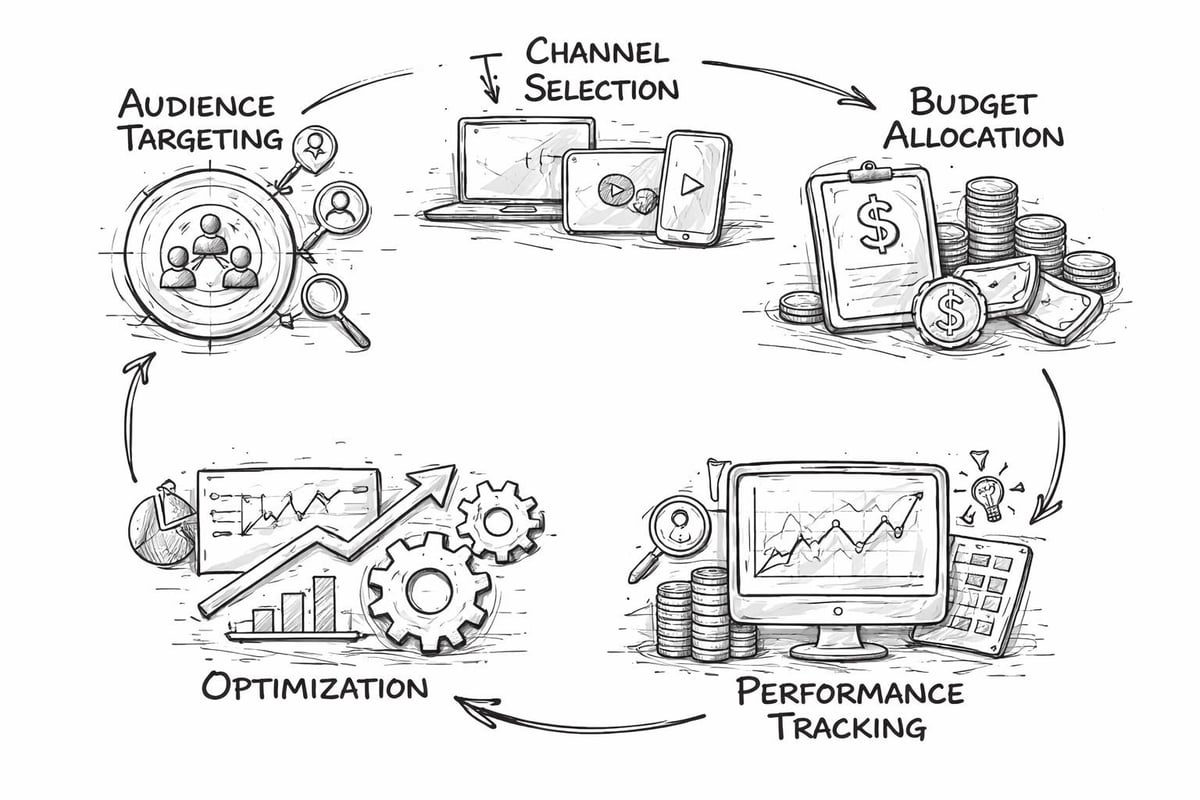
- Designing and implementing multi-channel campaigns across paid search, social media, display advertising, and affiliate networks
- Analysing campaign data to identify optimization opportunities and improve conversion rates
- Managing advertising budgets to maximise efficiency and minimize wasted spend
- Conducting A/B tests on landing pages, ad creative, and audience targeting parameters
- Building attribution models that accurately track customer journeys across touchpoints
- Collaborating with creative teams to develop compelling ad content that drives action
Each day involves reviewing performance dashboards, adjusting bids, refining audience segments, and making data-informed decisions that directly impact bottom-line results.
Essential Skills for Performance Marketing Excellence
Success in performance marketing requires a unique blend of analytical capabilities and creative problem-solving. The modern performance marketer must navigate complex platforms whilst maintaining strategic focus on business objectives.
Technical Proficiency and Platform Mastery
Platform expertise separates exceptional performance marketers from average practitioners. Professionals must demonstrate proficiency across:
| Platform Category | Key Tools | Primary Applications |
|---|---|---|
| Paid Search | Google Ads, Microsoft Advertising | Search campaigns, Shopping ads, Display network |
| Social Advertising | Meta Ads Manager, LinkedIn Campaign Manager, TikTok Ads | Audience targeting, retargeting, social commerce |
| Analytics | Google Analytics 4, Adobe Analytics | Conversion tracking, attribution modeling, user behavior analysis |
| Marketing Automation | HubSpot, Marketo, Pardot | Lead nurturing, email campaigns, workflow automation |
Beyond platform knowledge, technical skills include implementing tracking pixels, configuring conversion events, and interpreting UTM parameters. Understanding how data-driven decision-making influences market performance provides a competitive advantage in today's digital landscape.
Analytical Thinking and Data Interpretation
Numbers tell stories for those who know how to listen. A skilled performance marketer transforms raw data into actionable insights that drive campaign improvements.
This involves understanding statistical significance when evaluating test results, identifying trends before they become obvious, and recognizing when correlation suggests causation versus coincidence. The ability to build predictive models based on historical performance helps forecast outcomes and allocate resources more effectively.
Many successful performance marketers follow established best practices for data analysis and optimization to maintain campaign effectiveness.
Strategic Approaches That Deliver Results
Effective performance marketing extends beyond tactical execution. Strategic frameworks guide long-term success and sustainable growth for businesses across Australia.
Customer Lifecycle Marketing
Rather than treating each conversion as an isolated event, sophisticated performance marketers map the entire customer journey. This approach recognizes that acquisition costs represent just one metric in a larger equation.
Key lifecycle stages include:
- Awareness campaigns that introduce prospects to brand solutions
- Consideration-stage content that educates and builds trust
- Conversion-focused tactics that reduce friction at purchase points
- Retention strategies that maximize customer lifetime value
- Advocacy programs that transform satisfied customers into brand ambassadors
By integrating PPC and SEO strategies, businesses create comprehensive digital presences that support customers throughout their decision-making process.
Multi-Channel Attribution Modeling
Understanding which touchpoints deserve credit for conversions represents one of the greatest challenges in performance marketing. Attribution models assign value across the customer journey, revealing which channels drive results.
Common models include:
- First-touch attribution: Credits the initial interaction that introduced the customer
- Last-touch attribution: Assigns full value to the final touchpoint before conversion
- Linear attribution: Distributes credit equally across all interactions
- Time-decay attribution: Gives more weight to touchpoints closer to conversion
- Data-driven attribution: Uses machine learning to assign credit based on actual impact
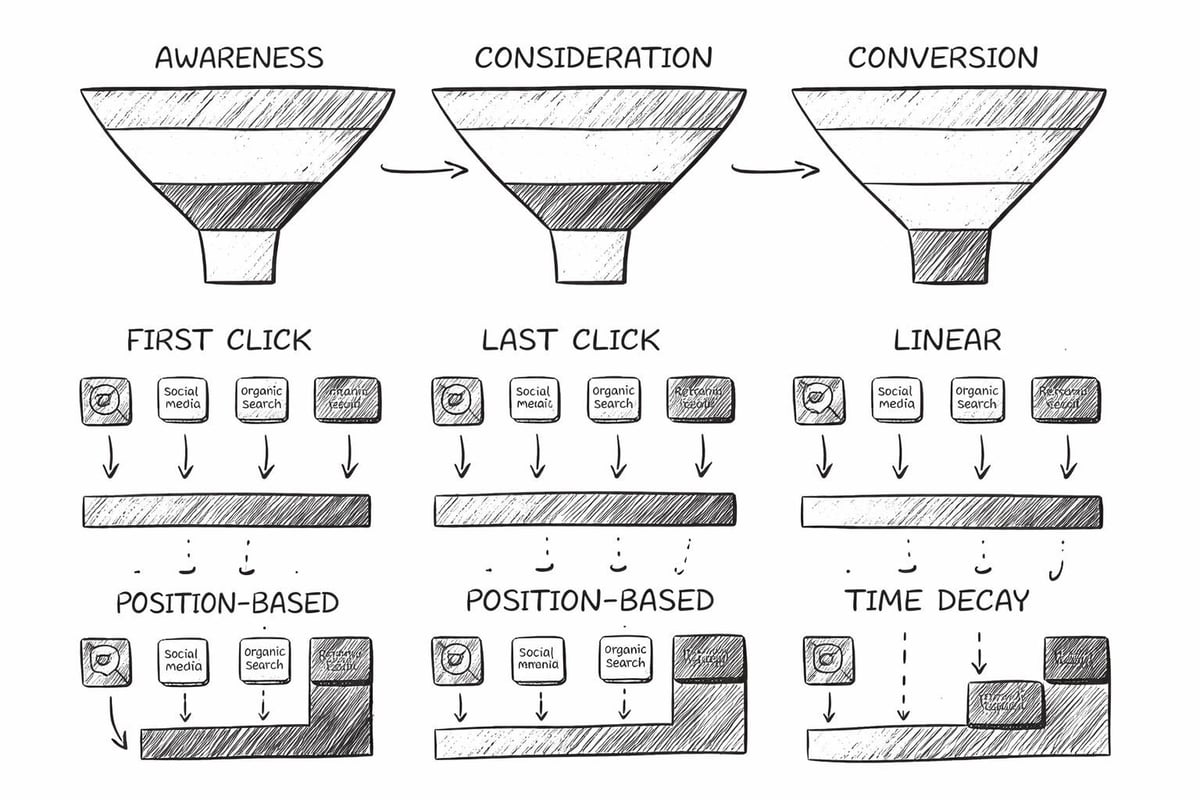
Selecting the appropriate model depends on business goals, sales cycle length, and channel mix. For businesses with longer consideration periods, multi-touch models provide more accurate insights than single-touch alternatives.
Building Effective Performance Marketing Campaigns
Campaign development follows a structured methodology that balances creativity with analytical rigour. Successful performance marketers refine this process through continuous iteration and learning.
Campaign Planning and Objective Setting
Every campaign begins with clearly defined objectives that align with broader business goals. Vague aspirations like "increase sales" lack the specificity needed for performance marketing success.
Instead, effective objectives follow the SMART framework:
- Specific: Target particular audience segments or product categories
- Measurable: Quantify expected outcomes with precise metrics
- Achievable: Set realistic targets based on historical data and market conditions
- Relevant: Ensure alignment with strategic business priorities
- Time-bound: Establish clear deadlines and measurement periods
Once objectives are established, performance marketers develop detailed campaign briefs that outline target audiences, value propositions, channel strategies, and success metrics. This foundation guides all subsequent decisions.
Audience Targeting and Segmentation
Reaching the right people at the right time with relevant messages determines campaign efficiency. Modern performance marketers leverage sophisticated targeting capabilities across digital platforms.
Segmentation approaches include:
- Demographic targeting: Age, gender, location, income level, education
- Behavioral targeting: Past purchases, website interactions, content consumption
- Psychographic targeting: Interests, values, lifestyle preferences, attitudes
- Contextual targeting: Page content, keywords, topics, placement categories
- Lookalike audiences: Algorithmically identified prospects similar to existing customers
The most effective campaigns combine multiple segmentation criteria to create highly specific audience profiles. This precision reduces wasted impressions and improves conversion rates.
Optimization Techniques for Maximum ROI
Performance marketing demands constant refinement. Static campaigns quickly lose effectiveness as audience behavior shifts and competitive dynamics evolve.
Systematic Testing Methodologies
A/B testing represents the foundation of performance marketing optimization. By comparing variations against control elements, marketers identify what resonates most effectively with target audiences.
| Test Element | Variables to Compare | Impact Potential |
|---|---|---|
| Ad Headlines | Message focus, value proposition, urgency indicators | High |
| Call-to-Action | Button text, color, placement, size | Medium-High |
| Landing Page Layout | Form length, imagery, content hierarchy | High |
| Audience Targeting | Demographic parameters, interest categories | Very High |
| Bid Strategy | Manual vs. automated, target CPA, ROAS goals | High |
Testing requires discipline and patience. Running tests for insufficient durations or with inadequate sample sizes produces unreliable results that mislead decision-making. The implementation of conversion optimization techniques accelerates improvement cycles whilst maintaining statistical validity.
Budget Allocation and Bid Management
How a performance marketer distributes budget across channels and campaigns significantly impacts overall returns. Sophisticated practitioners employ portfolio approaches that balance risk and opportunity.
Initial budget allocation typically follows the 70-20-10 rule:
- 70% to proven performers: Channels and campaigns with demonstrated ROI receive majority funding
- 20% to growth opportunities: Promising but unproven tactics get moderate investment for testing
- 10% to experimental initiatives: Novel approaches and emerging platforms receive small allocations
This framework ensures stability whilst enabling innovation. As campaigns mature and performance data accumulates, allocations shift to reflect actual results rather than assumptions.
Common Challenges and Solutions
Even experienced performance marketers encounter obstacles that threaten campaign effectiveness. Recognizing these challenges and implementing proven solutions separates successful practitioners from struggling ones.
Rising Customer Acquisition Costs
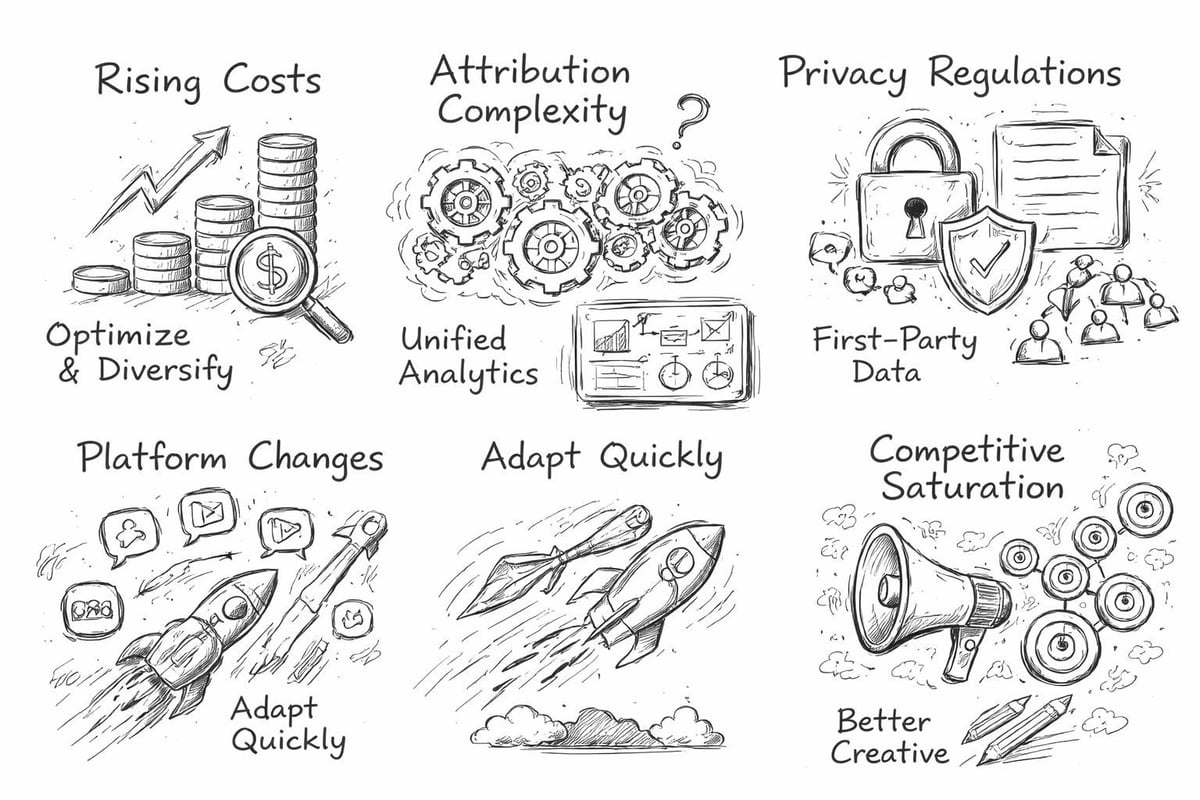
Increased competition across digital channels has driven acquisition costs upward in recent years. Businesses face pressure to maintain profitability whilst markets become more expensive.
Solutions include:
- Expanding into emerging channels before saturation occurs
- Improving conversion rates to offset higher traffic costs
- Focusing on customer lifetime value rather than initial acquisition costs
- Implementing retargeting strategies that re-engage prospects at lower costs
- Developing owned media assets that reduce platform dependency
Many Australian businesses partner with specialists in digital marketing services to navigate these challenges more effectively than internal teams can manage alone.
Privacy Regulations and Tracking Limitations
Privacy legislation like GDPR and evolving browser policies have restricted tracking capabilities that performance marketers historically relied upon. Cookie deprecation and iOS privacy features limit audience targeting and conversion attribution.
Adaptation strategies include:
- Implementing first-party data collection through owned channels
- Utilizing server-side tracking to maintain measurement accuracy
- Building consent management frameworks that respect user preferences
- Developing contextual targeting approaches that don't depend on individual tracking
- Investing in predictive modeling that infers behavior from aggregated data
These changes require performance marketers to balance measurement precision with ethical data practices and regulatory compliance.
The Future of Performance Marketing
Emerging technologies and shifting consumer behaviors continue reshaping performance marketing practices. Forward-thinking professionals adapt their approaches to capitalize on new opportunities.
Artificial Intelligence and Automation
Machine learning algorithms now power bidding strategies, audience targeting, and creative optimization across major advertising platforms. Performance marketers who leverage these capabilities gain significant competitive advantages.
AI applications include:
- Automated bid adjustments based on conversion probability and value
- Dynamic creative optimization that personalizes ad content for individual viewers
- Predictive analytics that forecast campaign performance and customer behavior
- Chatbots and conversational marketing that engage prospects in real-time
- Anomaly detection that identifies performance issues before they significantly impact results
According to recent beginner-focused performance marketing guidance, successful practitioners balance automation with strategic oversight rather than surrendering complete control to algorithms.
Influencer Marketing Integration
Performance-based influencer partnerships represent growing opportunities for measurable brand building. Rather than paying for exposure alone, businesses increasingly structure collaborations around conversion metrics.
This approach aligns perfectly with performance marketing principles. Influencers receive compensation tied to actual sales, leads, or downloads they generate through unique tracking links and promo codes. Performance-driven influencer case studies demonstrate how brands achieve measurable outcomes through creator collaborations.
Building a Performance Marketing Career
For professionals considering this specialization, understanding career pathways and development requirements helps chart successful trajectories within the field.
Educational Foundation and Certifications
While formal degrees in marketing, business, or analytics provide valuable foundations, practical platform experience often matters more than academic credentials in performance marketing roles.
Valuable certifications include:
- Google Ads Certifications (Search, Display, Shopping, Video, Measurement)
- Google Analytics Individual Qualification
- Meta Blueprint Certifications
- HubSpot Inbound Marketing and Content Marketing
- Amazon Advertising Certifications
These credentials demonstrate platform proficiency to potential employers and clients whilst building practical skills through structured learning paths.
Developing Specialized Expertise
As performance marketing matures, specialists who develop deep expertise in particular channels, industries, or business models command premium compensation. Generalists face increasing competition from automated solutions and offshore talent.
Specialization opportunities include:
- E-commerce performance marketing focused on online retail challenges
- B2B lead generation for complex sales cycles and high-value transactions
- Mobile app marketing with unique attribution and engagement dynamics
- Local business performance marketing serving brick-and-mortar establishments
- SaaS growth marketing emphasizing trial conversions and retention metrics
For Australian businesses seeking local search optimization or lead generation expertise, partnering with specialists who understand regional market dynamics delivers superior results.
Measuring Success Beyond Surface Metrics
Sophisticated performance marketers look beyond immediate conversion metrics to evaluate true campaign effectiveness and business impact.
Advanced Performance Indicators
While clicks, conversions, and cost per acquisition provide essential feedback, comprehensive evaluation requires deeper analysis:
| Metric Category | Key Indicators | Strategic Value |
|---|---|---|
| Efficiency | ROAS, CPA, CPL | Immediate campaign profitability |
| Quality | Customer LTV, Retention Rate | Long-term value assessment |
| Growth | New customer percentage, Market share | Business expansion indicators |
| Engagement | Time on site, Pages per session | Audience interest and fit |
| Brand Health | Search volume, Direct traffic | Long-term awareness building |
This multidimensional approach recognizes that not all conversions deliver equal value. A customer acquired at $50 who generates $500 lifetime revenue vastly outperforms one acquired at $25 who makes a single $75 purchase.
Balancing Short-Term Results with Long-Term Growth
The pressure to demonstrate immediate returns sometimes conflicts with sustainable business building. Exceptional performance marketers navigate this tension by establishing clear expectations with stakeholders about investment horizons.
Certain tactics deliver quick wins but limited scalability. Others require patience before producing results yet create durable competitive advantages. Effective performance marketing strategies blend both approaches within balanced portfolios.
Industry-Specific Applications
Performance marketing principles apply across sectors, yet implementation varies significantly based on business models and customer behaviors.
E-commerce and Retail
Online retailers represent ideal candidates for performance marketing given clear conversion events and measurable transaction values. Shopping campaigns, dynamic product ads, and abandoned cart retargeting drive immediate sales with trackable attribution.
Success requires tight integration between advertising platforms and e-commerce systems. Product feeds must stay current, inventory availability needs reflection in campaigns, and pricing updates should trigger bid adjustments automatically.
Service-Based Businesses
Professional services, consultancies, and B2B providers face longer sales cycles and higher-value transactions. Performance marketing in these contexts emphasizes lead quality over quantity.
Multi-stage nurturing sequences move prospects from initial awareness through consideration and eventually conversion. Content marketing, email automation, and strategic retargeting play crucial roles. Understanding customer needs and behaviors becomes essential for effective messaging.
Local and Regional Businesses
Location-based targeting enables performance marketers to reach customers within specific geographic areas. Local service providers, restaurants, and retail locations benefit from proximity-based campaigns that drive foot traffic.
Geo-fencing, local search ads, and location extensions ensure visibility when potential customers actively seek nearby solutions. Mobile optimization becomes critical as most local searches occur on smartphones.
Performance marketing represents the future of digital advertising, demanding accountability and delivering measurable returns for businesses willing to embrace data-driven approaches. By focusing on quantifiable outcomes rather than vanity metrics, performance marketers help organizations maximize their marketing investments and achieve sustainable growth. Whether you're looking to build internal capabilities or seeking expert partnership, My Heart Studio brings Adelaide-based expertise to businesses across Australia, offering strategic digital marketing services that prioritize performance and deliver results you can measure.